Soldiers deployed to forward operating bases might be fed by robots in an automated kitchen that arrives in a box about the size of a shipping container.
The Army is experimenting with a robotic system called Sustained Autonomous Meals, or SAM, that prepares hot, fresh meals inside a shipping container-sized box. The technology was first introduced to soldiers at the Camp Walker, South Korea, dining facility in November 2025, and a transportable version is now being tested.
“That includes places where soldiers may not have convenient access to a dining facility or hot meals, such as motor pools, remote work areas, port operations, training areas, or other dispersed locations,” Chief Warrant Officer 3 River Mitchell, food advisor for the 19th Expeditionary Sustainment Command, told Task & Purpose.
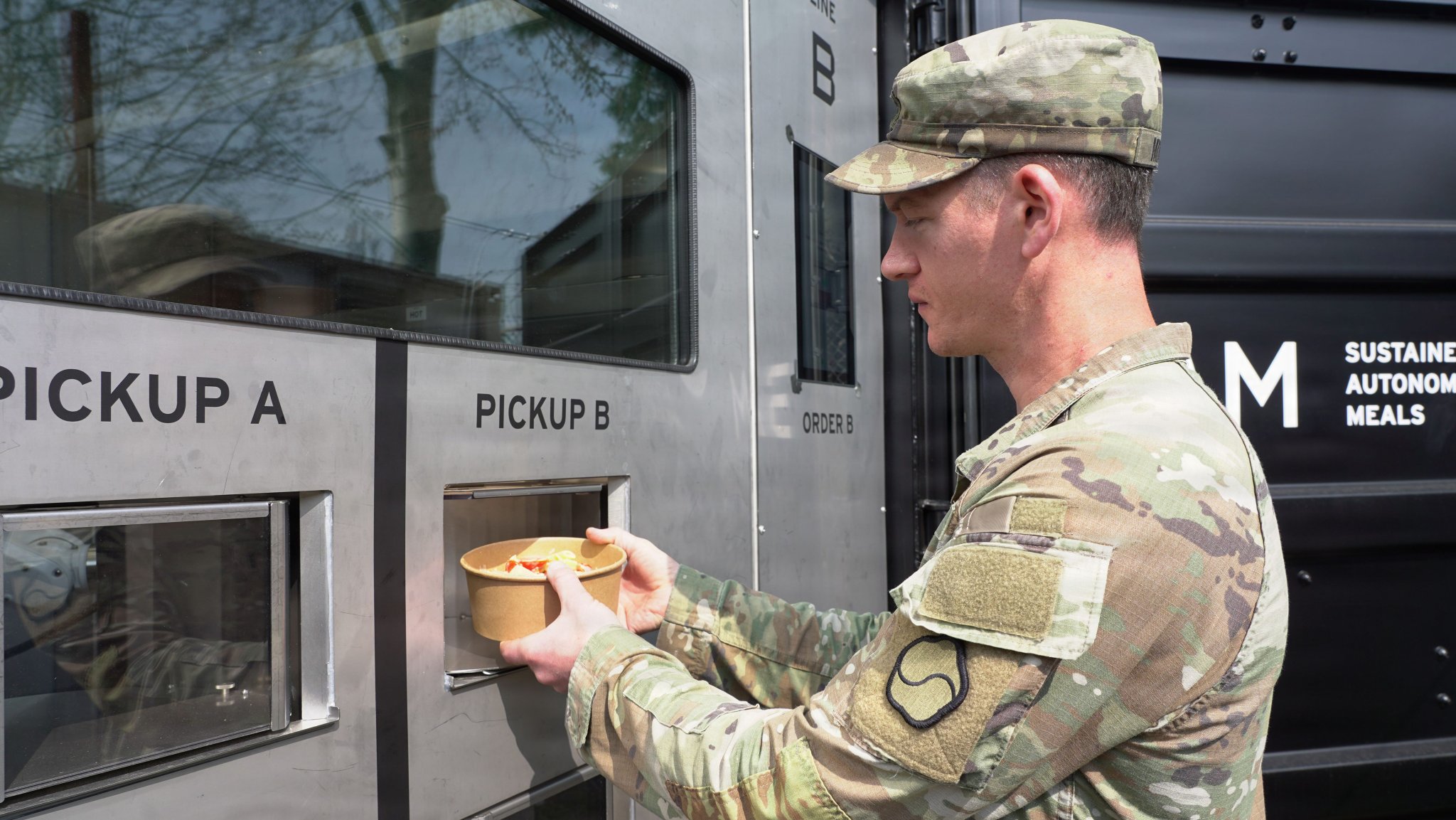
At Camp Walker, the system has refrigerated storage, eight induction stoves and two robotic arms that prepare and plate meals behind the scenes. On the other end, the meal appears in a matter of minutes inside a heated food locker where soldiers pick it up. The food cubby resembles a concept that commercial restaurants and universities have adopted as a contact-free way of ordering food.
SAM’s robot food prep is now done inside of a transportable container — so in addition to being autonomous, the military can also slap “expeditionary” on its description, too. SAM uses the same robot technology that the Army brought to Camp Walker.
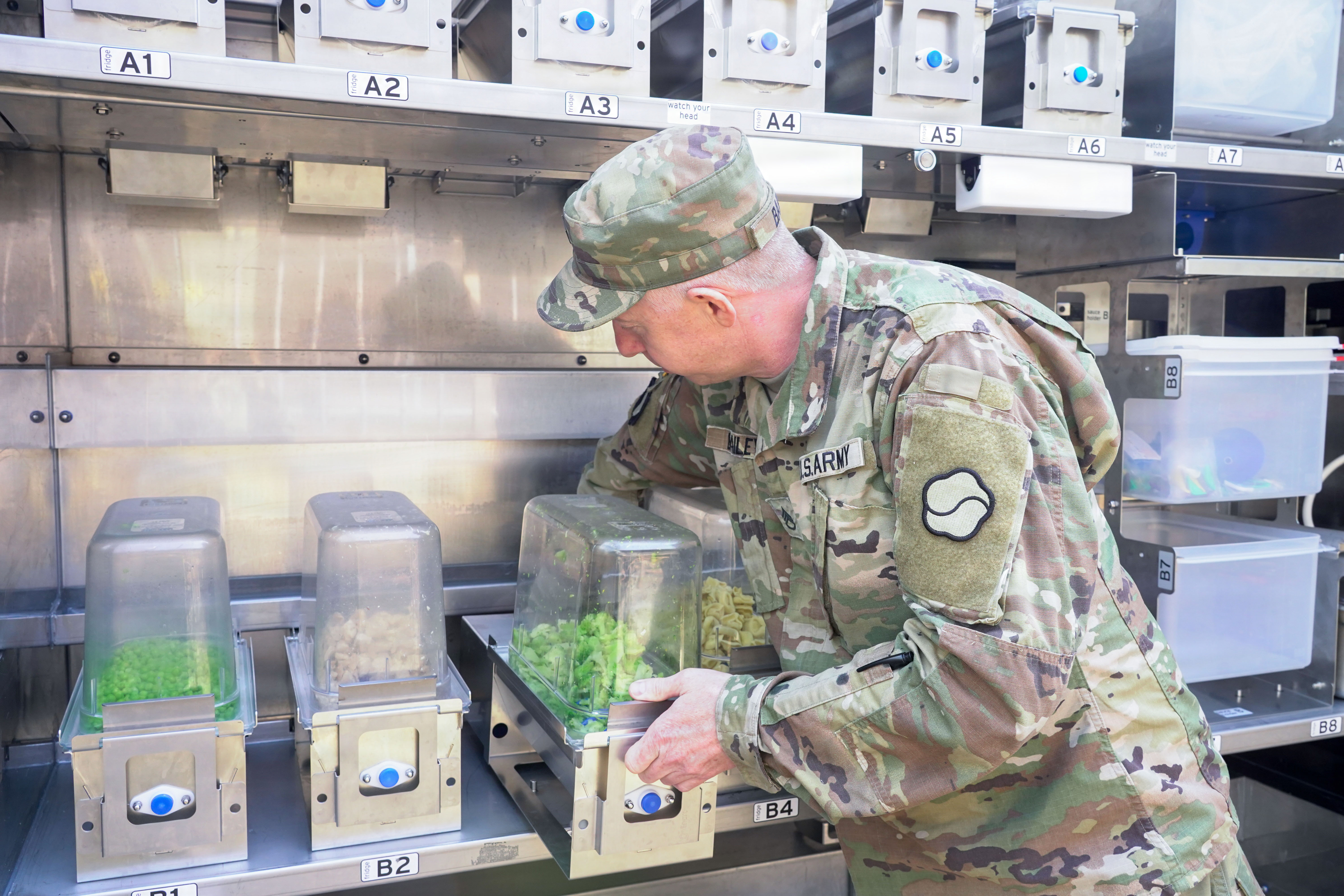
“This is essentially the same autonomous cooking system, but now in a 20-foot container that can go where dining facilities can’t,” Mitchell said in a release. “It allows us to bring freshly prepared meals directly to soldiers, even in austere locations.”
SAM can make more than 120 meals an hour and requires only a small team to help with ingredient preparation and overseeing the robot chef, according to Army officials.
“The goal is not to remove food service personnel from the equation, but to explore how automation can complement their work,” Mitchell said. “One of the things we are trying to learn is how autonomous systems can extend reach and access while still relying on food service expertise.”
The Camp Walker robots, as well as SAM, are built by goodBytz, a company based in Germany. The system refrigerates ingredients with an integrated cooling system that can use a small generator that’s comparable to a refrigerated truck’s cooling system, according to a company release. The system can be hooked up to external water supplies and powered by a generator.
“This flexibility allows SAM to operate in environments where traditional kitchen infrastructure is unavailable,” the company said in its release.
Soldiers have long been fed Meals-Ready-to-Eat, MREs in the field, but as part of the experiments, Mitchell said, they want to see if SAM can provide operational rations over the pre-packaged items that need hot water or a microwave to come to life.
“That would help us better understand its utility in more expeditionary feeding scenarios. There are still policy and process considerations we are working through on that front,” he said. “The beginning of the experiment, the focus is on learning how the platform performs in practical locations where soldiers would benefit from fresh, made-to-order meals but may not otherwise have that access.”