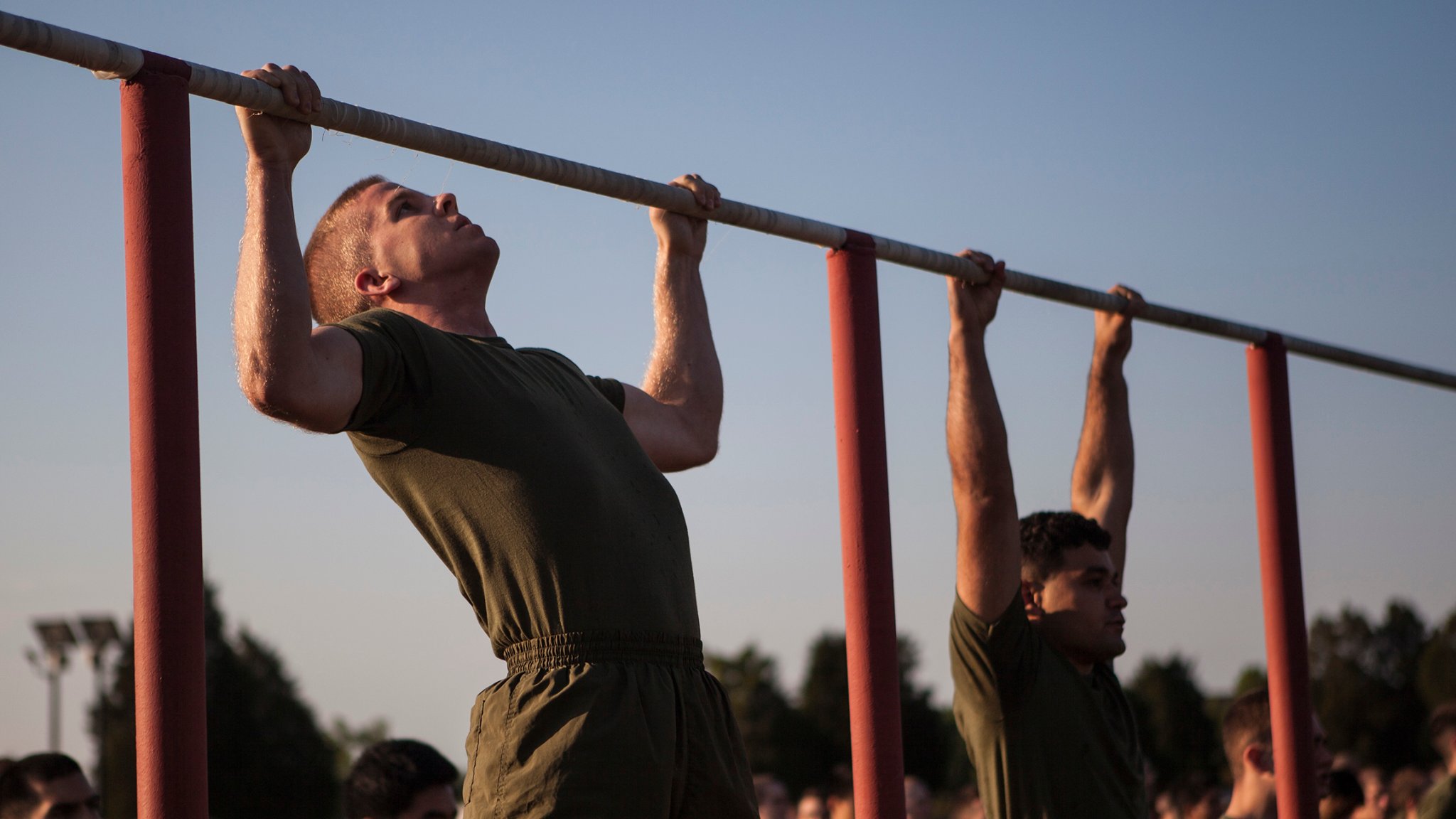
Under new Marine Corps body composition rules released on Thursday, Marines now must be slightly skinnier than Pentagon standards announced in January. For Marines of fairly average height, that will mean keeping their waistlines somewhere between 2 and 3 inches below the military-wide requirement.
“This change to body composition program will help us balance the health and performance of our Marines,” Marine Corps Commandant Gen. Eric Smith said in a statement.
In January, the Defense Department directed the military services to start using the waist-to-height ratio to estimate troops’ percentage of fat, muscle and bone. The Pentagon required that troops’ waist-to-height ratio be no more than 0.55, meaning that a service member’s waist measurement can be only slightly more than half of their height.
In the rules released Thursday, the Marine Corps went slightly further, requiring a waist-to-height ratio of 0.52 or less.
“The 0.52 [waist-to-height ratio] standard represents a balance between health and performance. From a health perspective, it serves as an initial screening to identify Marines for further evaluation before they reach higher health risk categories,” said Maj. Hector Infante, a spokesman for Training and Education Command. “From a performance perspective, studies show that a high percentage of Marines below this threshold achieve first-class fitness scores.”
That skinnier standard means that a 6-foot Marine would be required to keep a waistline no bigger than 37 inches (the Marine requirements published with the rule are calculated in half-inches). Troops in a service that meet the Pentagon’s 0.55 standard would get two-and-a-half more inches around the waist, at 39.6 inches.
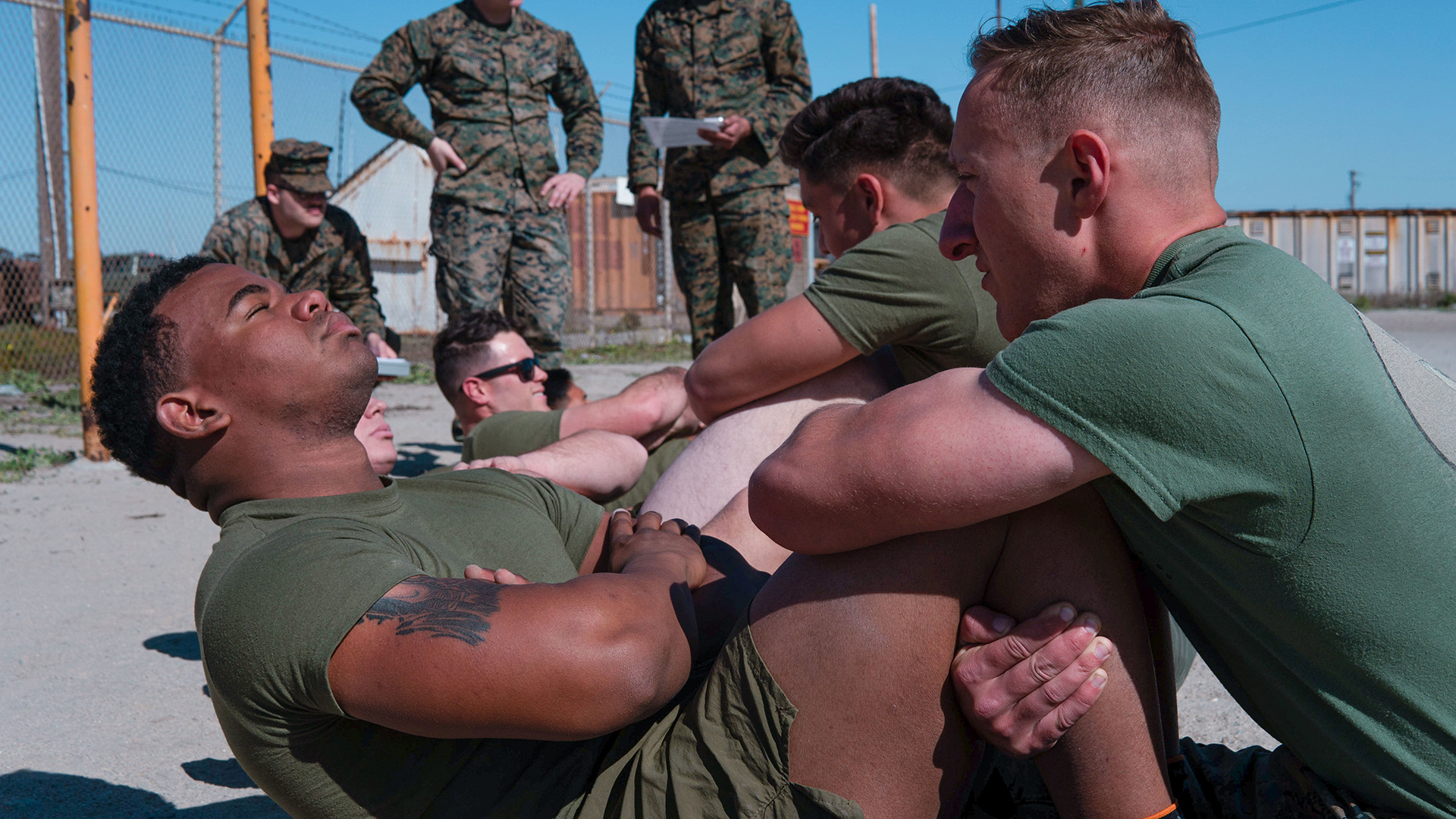
Marine Corps photo by Cpl. Marcus Melara.
Exemptions for high PT performers
Marines will be evaluated twice a year under the new standards, which are effective as of Jan. 1, according to a Marine Administrative Message, or MARADMIN, released on Thursday. Any Marines who completed height and weight measurements before the MARADMIN was released need to be reevaluated under the waist-to-height ratio method, the Corps-wide message says.
If Marines do not meet the new standards, they will undergo a body fat evaluation to determine if they will be enrolled in the Corps’ Body Composition Program, the message says.
Those Marines will be assessed by either a tape test or a bioelectrical impedance analysis, according to the MARADMIN. That analysis, which sends a weak electrical signal through the body” to measure muscle and fat mass, will eventually replace the tape test once enough required machines have been fielded, the message says.
The military’s prior practice of setting troops’ maximum weights using height and weight tables led to complaints from service members that they were being deemed overweight due to their muscle mass rather than their body fat.
Undersecretary of Defense for Personnel and Readiness Anthony J. Tata appeared to address this concern in a Dec. 18 memo, writing that, “High performers on fitness tests may be granted allowances, but only within defined limits as prescribed by each Military Service.”
Under the new guidelines, Marines who score at least 285 on the Physical and Combat Fitness Tests but do not meet the weight-to-height ratio of 0.52 or less won’t be assigned to the Marine Corps’ Body Composition Program if they are within the maximum amount of body fat permissible: 26% for men and 36% for women, a Marine Corps news release says.
As part of the latest changes, Marines who are currently assigned to or being processed for the Marine Corps’ Body Composition Program will also be reevaluated, and any Marines who have been assigned to the program since Jan. 1 and found to be within the new standards will have their assignment “deleted as erroneous,” Thursday’s MARADMIN says.
“This update reinforces the Marine Corps’ commitment to fitness, but most importantly, promotes improved long-term health and well-being for our Marines,” Sgt. Maj. of the Marine Corps Carlos Ruiz said in a statement.