If there’s one constant in the military, it’s that every older generation will insist they had it worse than the new one. Enter: the “stress card,” a card that recruits could hold up during training to take a pause. It’s a thing everyone has heard about, but hardly anybody seems to have personally witnessed. The reason being: They’re a bit of a myth.
Stress cards, which are once again back in the news cycle, crop up every several years as a way to decry the slipping of standards, how things aren’t the same now that troops don’t qualify with their rifles using iron sights, or how drill instructors can’t just gut-punch recruits, à la “Full Metal Jacket.”
Starting in the 1990s and lasting through the wars in Afghanistan and Iraq, rumors have swirled within the ranks that there was a time when recruits could get out of being disciplined or forced to exercise by simply showing their instructors a “stress card,” which signified that they were overburdened by the rigors of military training.
Even though these “stress cards” have been repeatedly debunked as folklore, they remain a persistent myth among troops and veterans. The legend appears to be based on cards previously issued by the Army and Navy that have been misinterpreted as the “stress cards” that an entire generation of troops and veterans who went to war after the Sept. 11, 2001, terrorist attacks continue to believe in.
Case in point: Defense Secretary Pete Hegseth recently brought up the issue while speaking with Fox News Host Laura Ingraham about his plans to make basic training tougher.
“The tactics drill sergeants used in the 70s, 80s, and 90s — they forged generations of young Americans that went and fought wars courageously,” Hegseth told Ingraham on Monday. “Now we’re handing out — in the past, we’re handing out stress cards: Are you too stressed? Do you need some counseling for that?”
The reality is more nuanced. During a brief experiment in the 1990s, Navy recruits were issued “Blues Cards” that contained information about where they could get help if they were thinking about quitting. These are sometimes conflated with “Stress Control Cards” issued to Army trainees many years ago that allowed them to indicate their levels of anxiety.
Blues Cards
Neither card was intended to allow recruits to be excused from physical training or being yelled at. However, a 1997 report from a committee that examined issues with having male and female recruits train together found that some Navy recruits were using Blues Cards — which it referred to as “stress cards” — to show they wanted a break.
“The Navy issues a card to every new recruit that includes information about whom to contact ‘if things pile up,’” the report found. “The committees [sic] recognizes the importance of informing new recruits about support services upon their arrival at basic training. But concerns were raised by Navy trainers about Navy recruits who raise their cards while being disciplined as a way of signaling a time-out.”
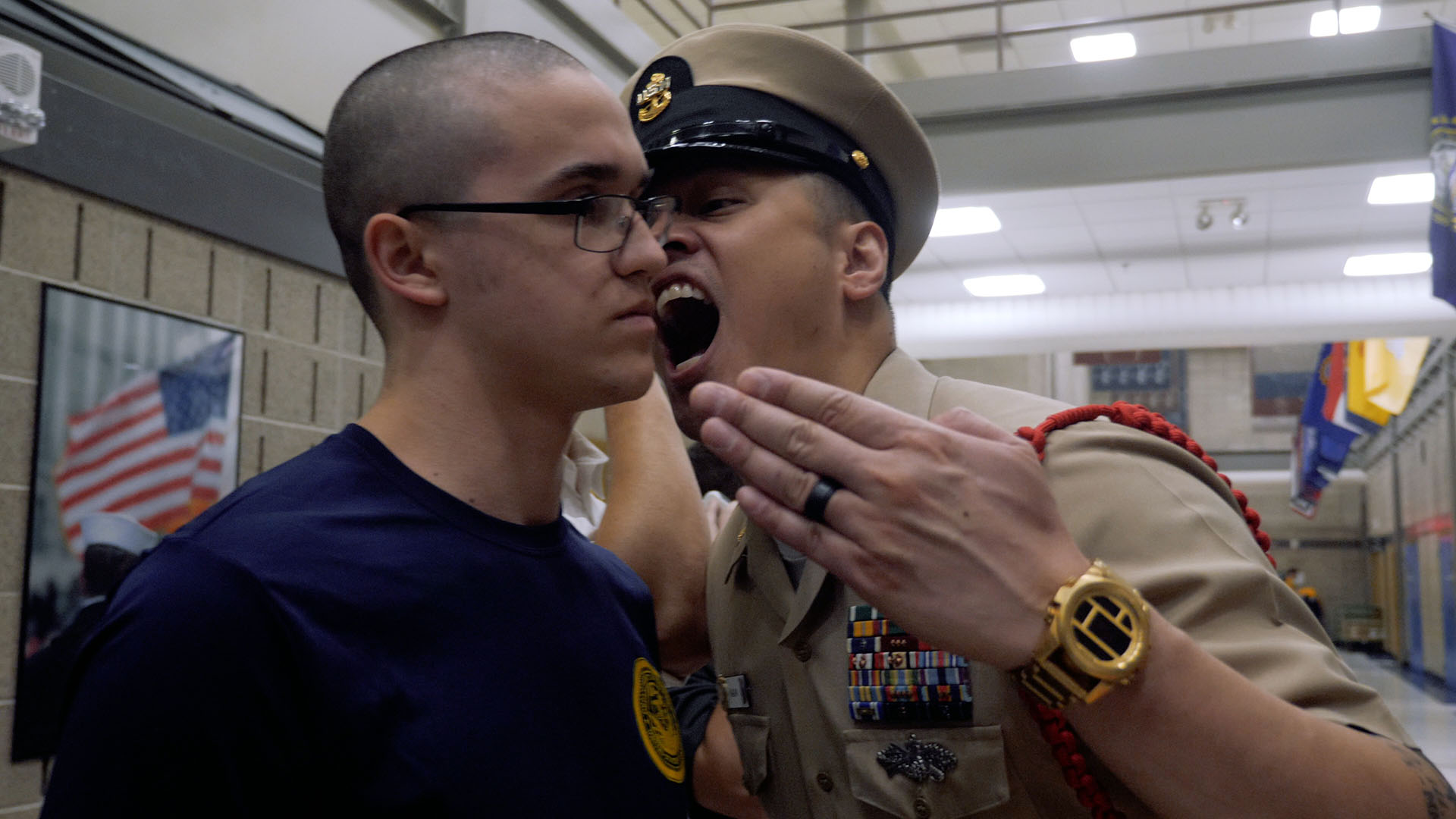
A Navy recruit division commander yells at a recruit during boot camp. Navy photo by Austin Rooney.
From the report, it is unclear if Navy boot camp instructors actually granted recruits who showed the cards a temporary reprieve, but the committee recommended that the Navy stop “the use of these cards by recruits as a means of ending a disciplining or training session.”
During a March 1998 Pennews conference, then-Defense Secretary William Cohen told reporters that the Navy’s “policy” on Blue Cards was over.
“The notion that a drill sergeant cannot grab a rifle out of the hand of a recruit without asking permission is no longer going to be tolerated,” Cohen said. “Those things have to change, and they will change.”
Stress Control Cards
Even dating back to 2007, the Army attempted to debunk stress cards in a press release, writing, “There are many stigmas in today’s military. We’ve all heard them. We’ve all heard the jokes about ‘’stress cards’’ rumored to be handed out during basic training.”
Former drill sergeants who spoke with Task & Purpose echoed that message, while also emphasizing that military service is, to the surprise of no one, inherently stressful.
“Basic training is putting a newly recruited civilian into a stressful environment, giving them the correct tools, drill sergeants and attitude to fight and win our nation’s wars,” said retired Army 1st Sgt. David Siedschlag, who served as a senior drill sergeant at Fort Jackson, South Carolina in 2022. “Stress is our natural way of saying what we are doing is dangerous. Of course, war is dangerous. So the stress card is a myth and needs to stay a myth.”
Top Stories This Week
But rumors are notoriously hard to kill, and so the myth about stress cards persisted into the Global War on Terrorism era, perpetuated in part by Stress Control Cards that the Army once issued.
Trainees were not given stress cards to show their drill sergeants that they were too stressed to respond to commands, according to the Army. A handout created by an Army health and fitness program had sensors that soldiers could press their fingers against to measure their stress levels. These were similar to charts that remind soldiers to stay hydrated.
A former drill sergeant who is currently serving in the Army told Task & Purpose he has never seen trainees with stress control cards, and he doesn’t know how widely they were used, but he saw a senior noncommissioned officer carrying one in 2010 and then saw another displayed in a clinic in 2013.
“I believe it was a behavioral health item for regular people to self-assess their stress level and then employ distress tolerance tools,” said the soldier, who spoke to Task & Purpose on condition of anonymity because he is on active duty. “It was basically a mood ring that would change colors depending on how warm (calm) or cold (stressed) you were.”
The lack of information about these stress control cards — including exactly who issued them and when — can fuel the myth that they were stress cards, the former drill sergeant said.
Other former drill sergeants told Task & Purpose that they had not seen stress control cards.
Because the legend of stress cards endured into the Global War on Terrorism, it is likely to remain a cautionary — if apocryphal — tale about the danger of going so soft on recruits that they become namby-pamby troops.