
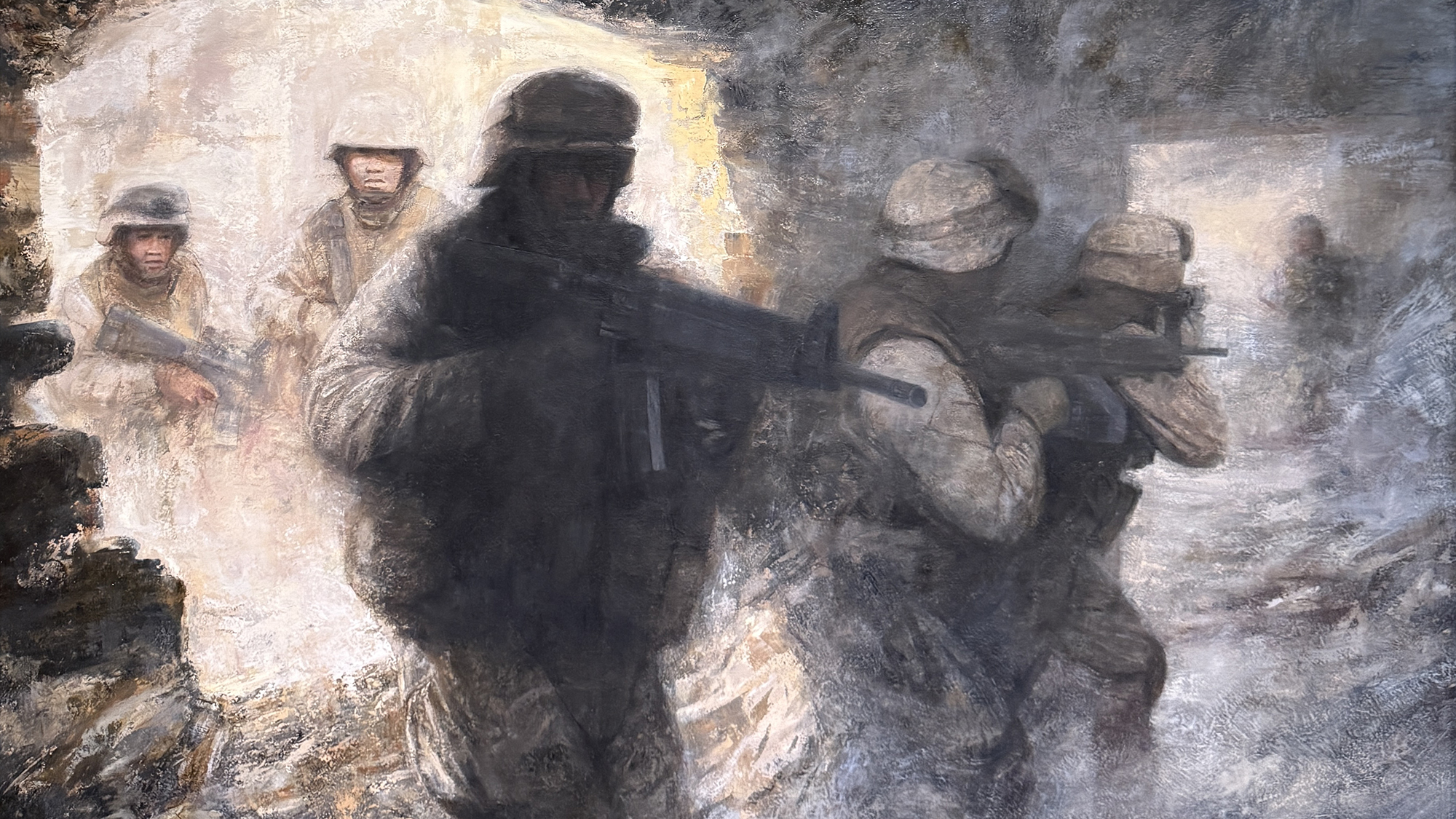
A new painting at the National Museum of the Marine Corps in Triangle, Virginia, depicts the dust, darkness, and confusion of the brutal house-to-house fighting that defined the Second Battle of Fallujah in late 2004.
The artwork shows several Marines entering a dark room with two others outside in the light. Those Marines in the forefront are diffuse and begin to blend in with the shadows. A human-like figure appears in a doorway, but it is unclear whether it poses a threat.
“There’s not a lot of detail in the faces, there’s not a lot of detail on the figures, and I’m trying to let the paint and the light do a lot so that it can be a little more every person — everyone that was in those situations,” said former Marine Staff Sgt. Kristopher Battles, the artist who depicted the scene
Battles deployed to both Iraq and Afghanistan as a combat artist, and he is currently the National Museum of the Marine Corps’ artist in residence. His painting “Operation Phantom Fury — Fallujah 2004” is part of a new exhibit at the museum that opened on June 27 and covers the Marine Corps’ entire 250-year history. The exhibit was recently showcased by PBS News Hour.
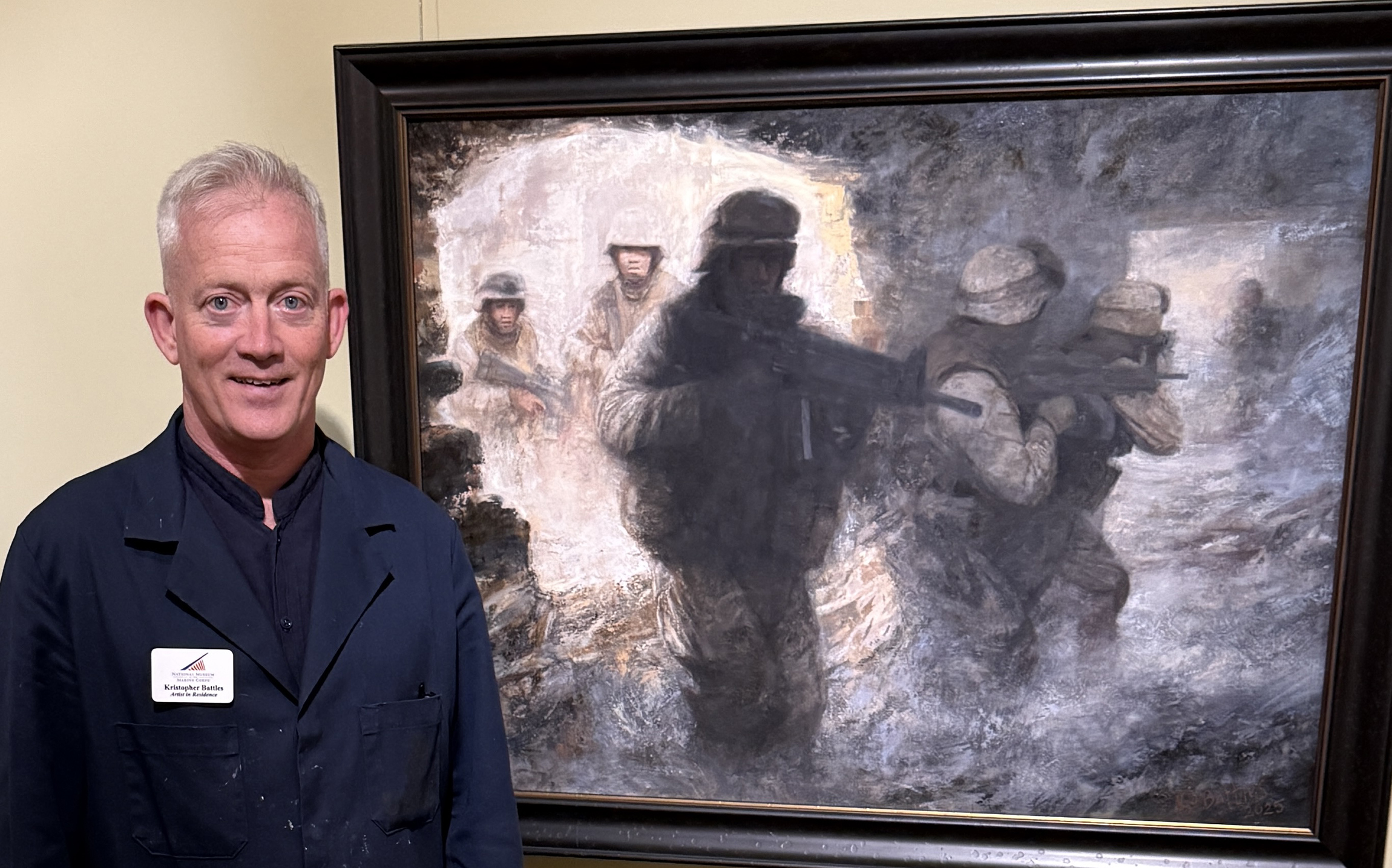
Right now, Battles is making a series of illustrations for the Marine Corps about post-Vietnam conflicts, including the Global War on Terrorism, he said.
The U.S. military fought two battles for Fallujah Iraq in 2004. The first began on March 31, 2004, following the murder of Blackwater contractors, but it was called off due to protests by Iraqi politicians, and then al-Qaida took control of the city,
Operation Phantom Fury, the second battle for the city, lasted from Nov. 7 to Dec. 23 of that year. More than 100 coalition forces were killed and about 600 were wounded. Army Staff Sgt. David Bellavia later became the first living Iraq veteran to be awarded the Medal of Honor for single-handedly killing five insurgents while clearing a house in Fallujah on Nov. 10, 2004.
For his painting of Fallujah, Battles interviewed Marine veterans who took part in the battle and tried to capture their experiences on canvas. He found it was difficult to capture all the sights, smells, and other aspects of that kind of fierce urban combat.
“They describe the rubble, they describe the dust, they describe the fatigue,” Battle said. “One of the veterans I talked to described the difference between starting out and ending. At first, it’s fearful and it’s all these things. But then by the time you’re done, he’s mentioning being so exhausted and of course dirty. He was having trouble coming up with the words to describe the exhaustion and the stress that it had by the end of it.”
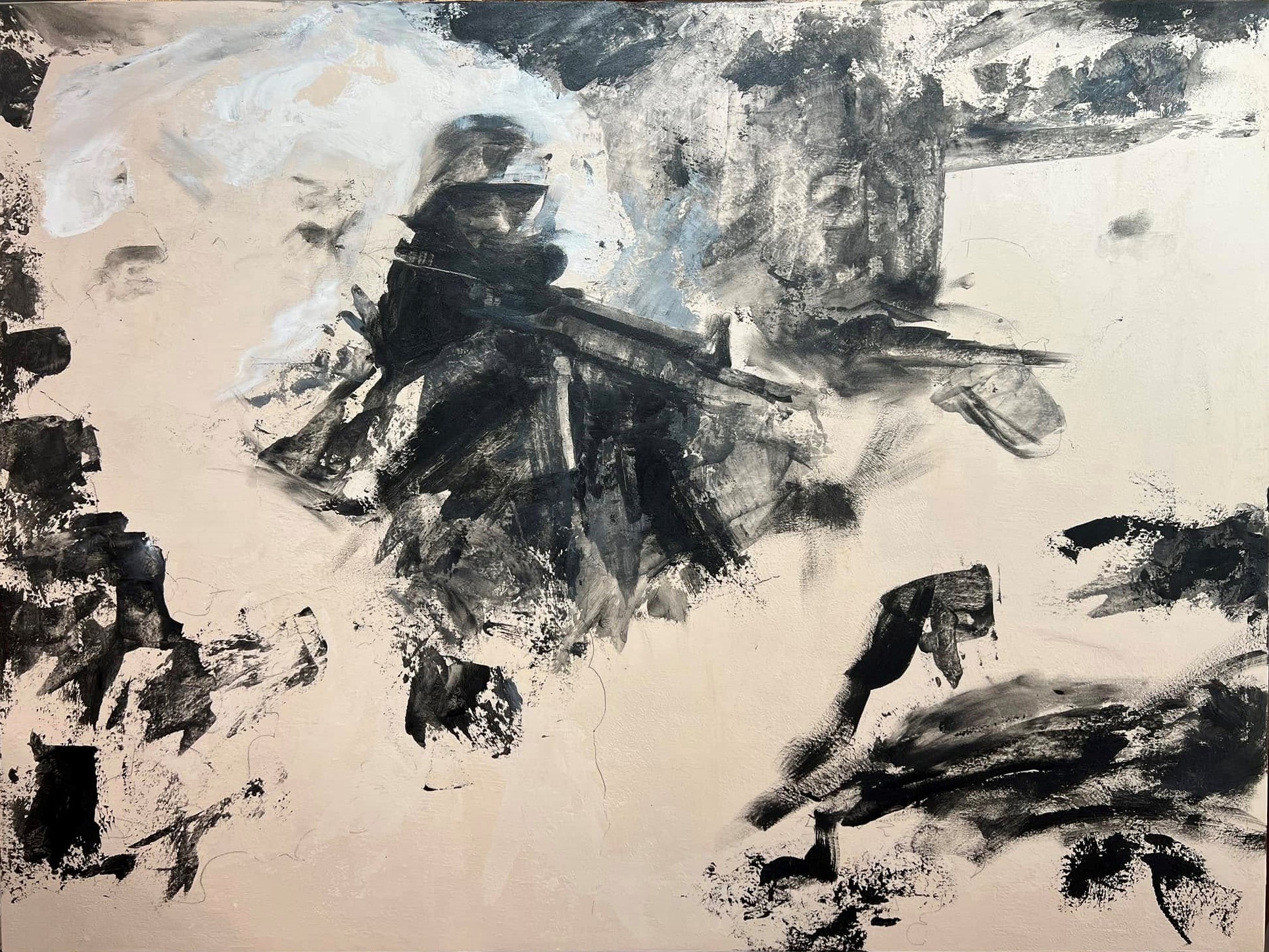
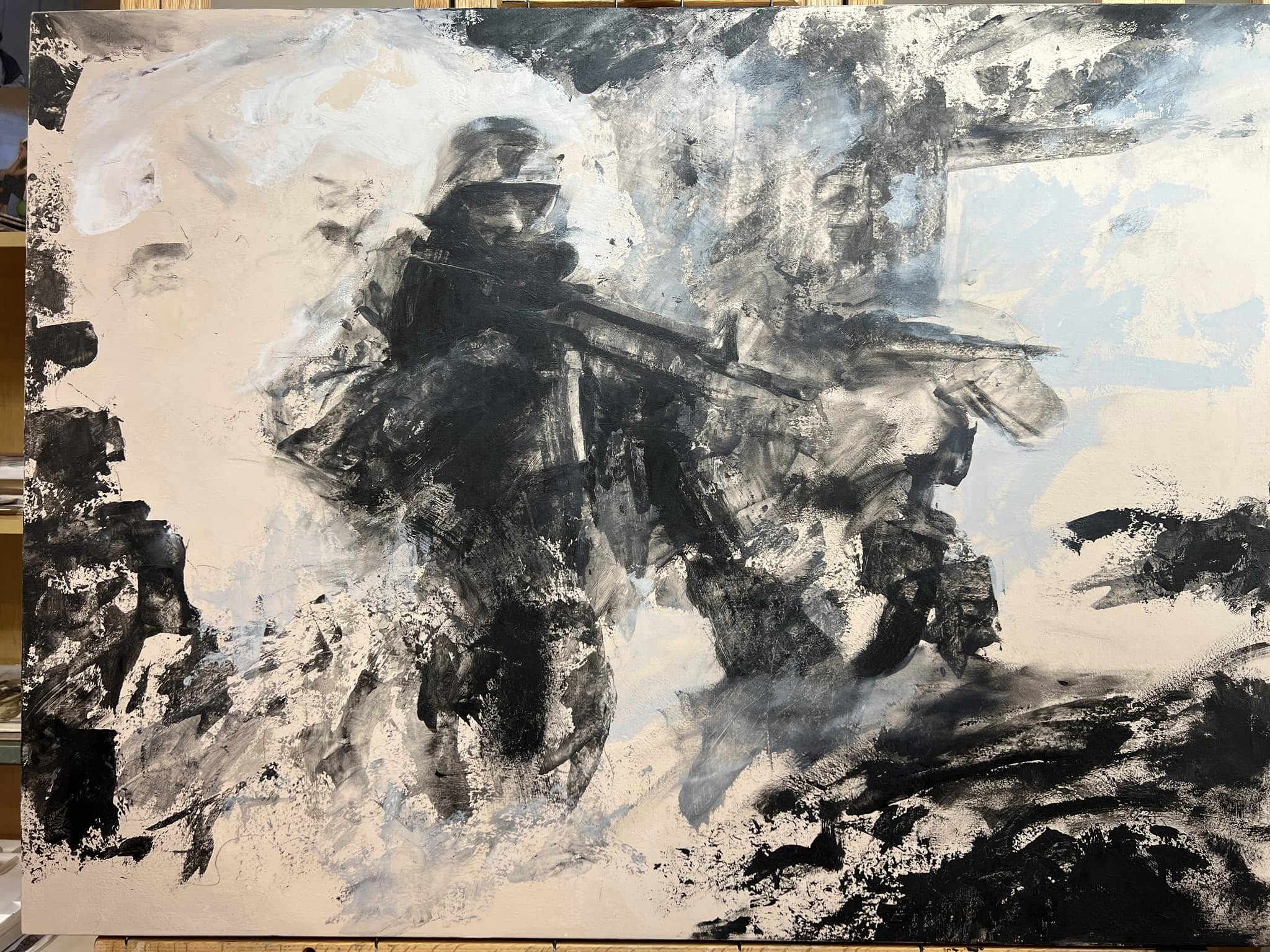


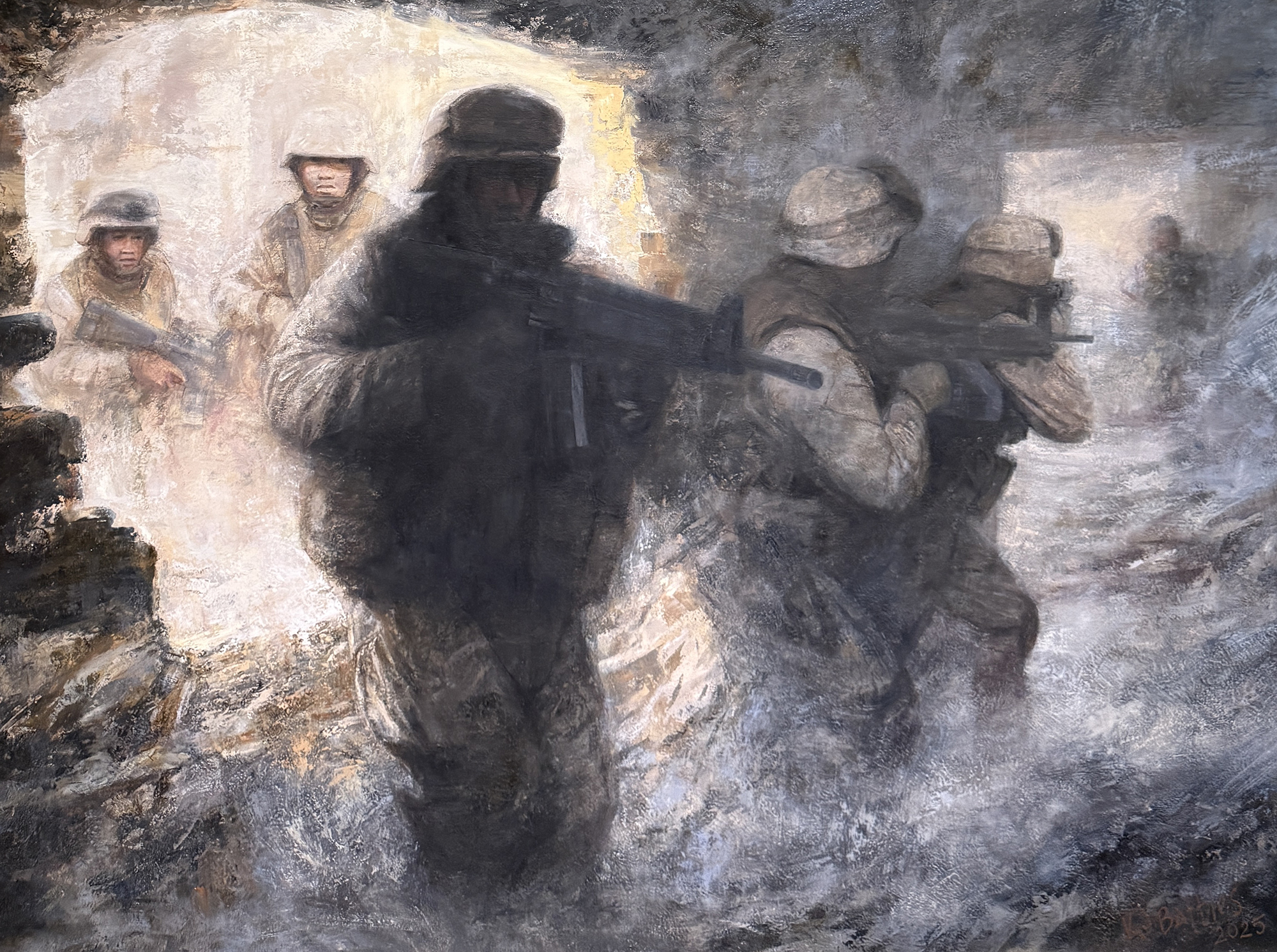
Because these types of experiences are so hard to explain and depict, Battles’ portrayal of the house fight is less naturalistic and realistic than his combat art, he said.
“I was painting with palette knife and scraping, and I was using my fingers, and I was putting the paint down in ways that were very visceral and physical,” Battles said. “I didn’t try to get too detailed with any one part of the painting. I wanted to have light. and I wanted to have darkness, and I wanted to have dust and confused, jumbled things involved, because what I’ve gathered from talking to people and from seeing things is that it is very chaotic and unknown. One moment you’re in the light and the next moment you’re in the dark, and you don’t know what’s going to happen — you can’t even see.”
The Second Battle of Fallujah produced one of the most iconic images of the Iraq war, when photographer Lucian Read took a picture of 1st Sgt. Bradley Kasal, who had been shot seven times and been hit by 43 pieces of grenade shrapnel, being helped by two other Marines as he limped out of a building in Fallujah known as the “Hell House.”
While Battles admires the power of that photograph of Kasal, he made clear that his painting does not depict that scene or any other specific event in Iraq.
“This house that I depicted, it is every hell house,” Battles said. “It is meant to be, in a sense, a symbol for every time they had to gather the courage and go in — and they got very good at it, of course, over the course of the battle in Iraq.”
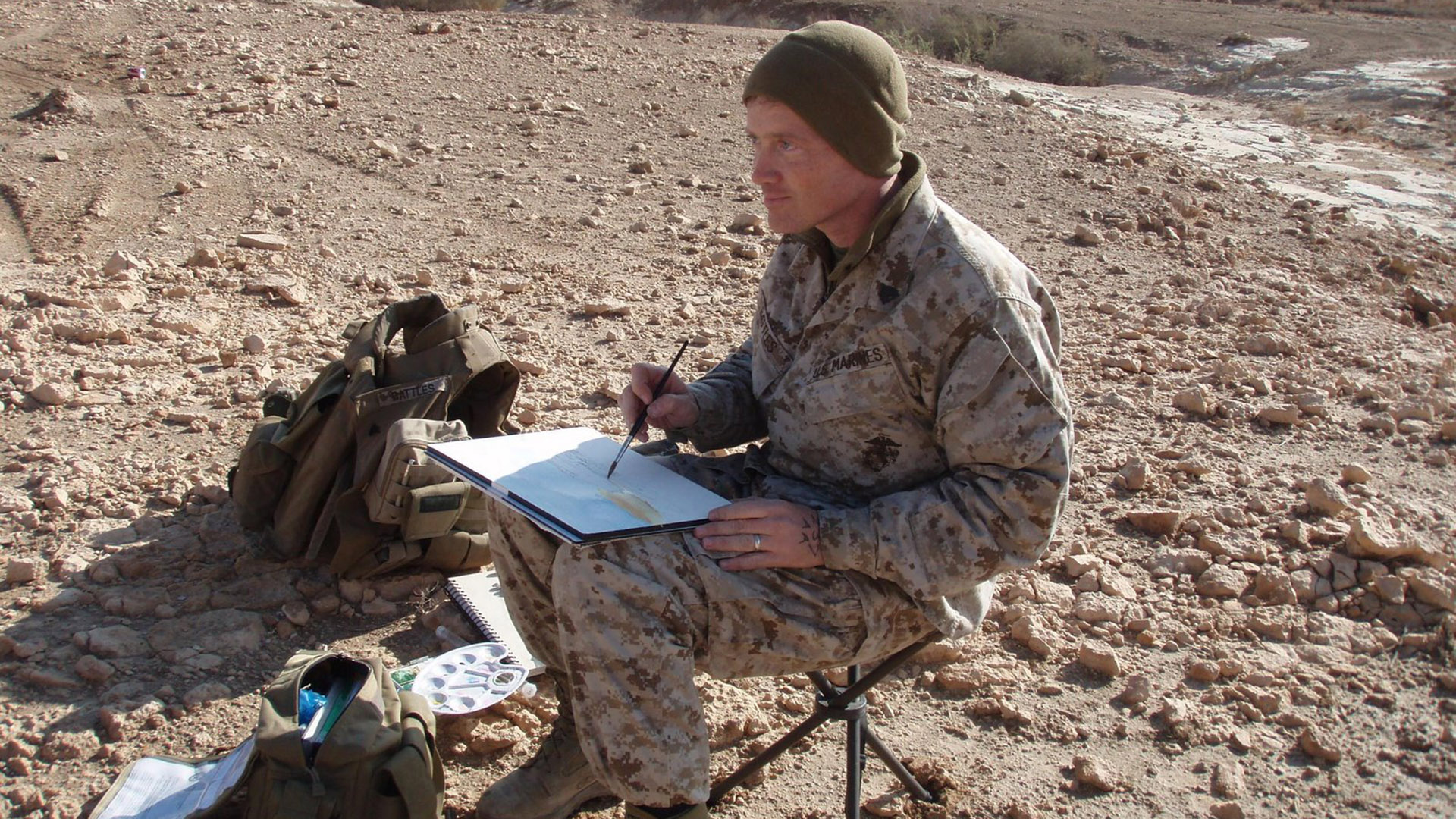
With most of his art, Battles tries to paint for every Marine and sailor so that all veterans can relate to the scenes he portrays.
By telling their stories Battles and other combat artists allow veterans’ families to learn about what their loved ones went through, he said.
“For the veterans who are in those houses and in those streets and in those convoys, having to go to these towns and do these things, the idea that the Marine Corps feels that they have a valuable story to tell and will take the time to tell it — we want that to resonate with those Marines so that is something they can know: That their story is being preserved, and that the Marine Corps cares enough to create these images about their exploits,” Battles said.
The latest on Task & Purpose
- Sergeant Major of the Marine Corps learns an old lesson: Don’t mess with Audie Murphy
- A breakdown of safety procedures ‘directly contributed’ to an 82nd Airborne paratrooper’s death
- WWII Marine Raider who fought at Iwo Jima, Guadalcanal wants cards for 100th birthday
- Navy identifies special warfare sailor killed while parachuting
- Pentagon appears to pause renaming of Navy ships
Loading comments…
Comments couldn’t be loaded. Please refresh the page.