
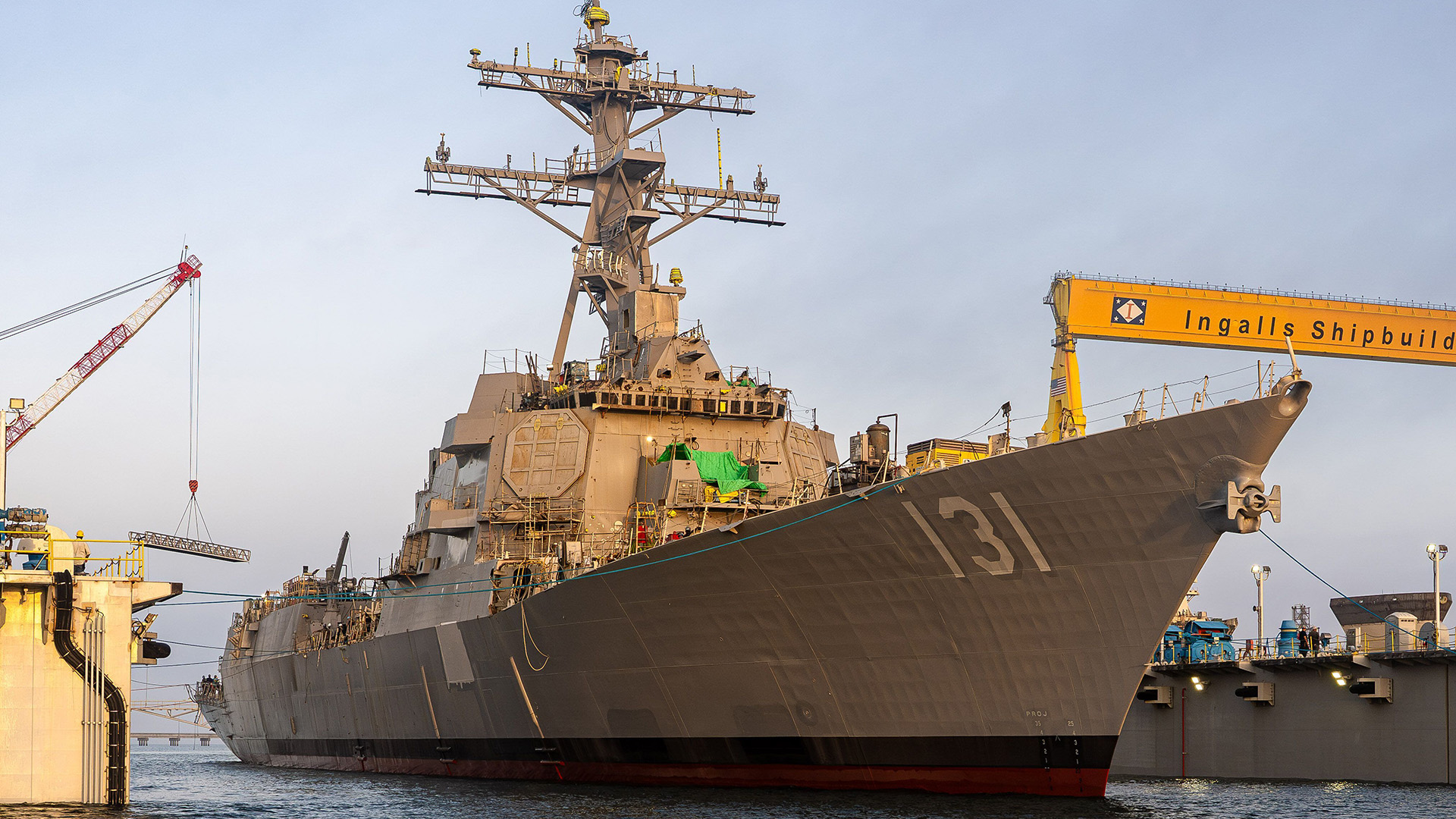
George Milton Neal joined the Navy at 17 and by 1951 was one of the only Black sailors in the service assigned to fly on search and rescue helicopters. When a Marine pilot was downed deep in North Korean mountains, he volunteered for the mission to rescue the aviator and then helped his crew evade capture for nine days after Neal’s helicopter was also shot down.
On Saturday, the Navy christened a future destroyer named for Neal, who was later awarded the Navy Cross for the mission.
The helicopter’s pilot, Lt. j.g. John Kelvin Koelsch, who was injured in the crash and eventually died in captivity, was posthumously awarded the Medal of Honor. A Navy frigate was named for Koelsch in 1968 and retired in 1989.
Top Stories This Week
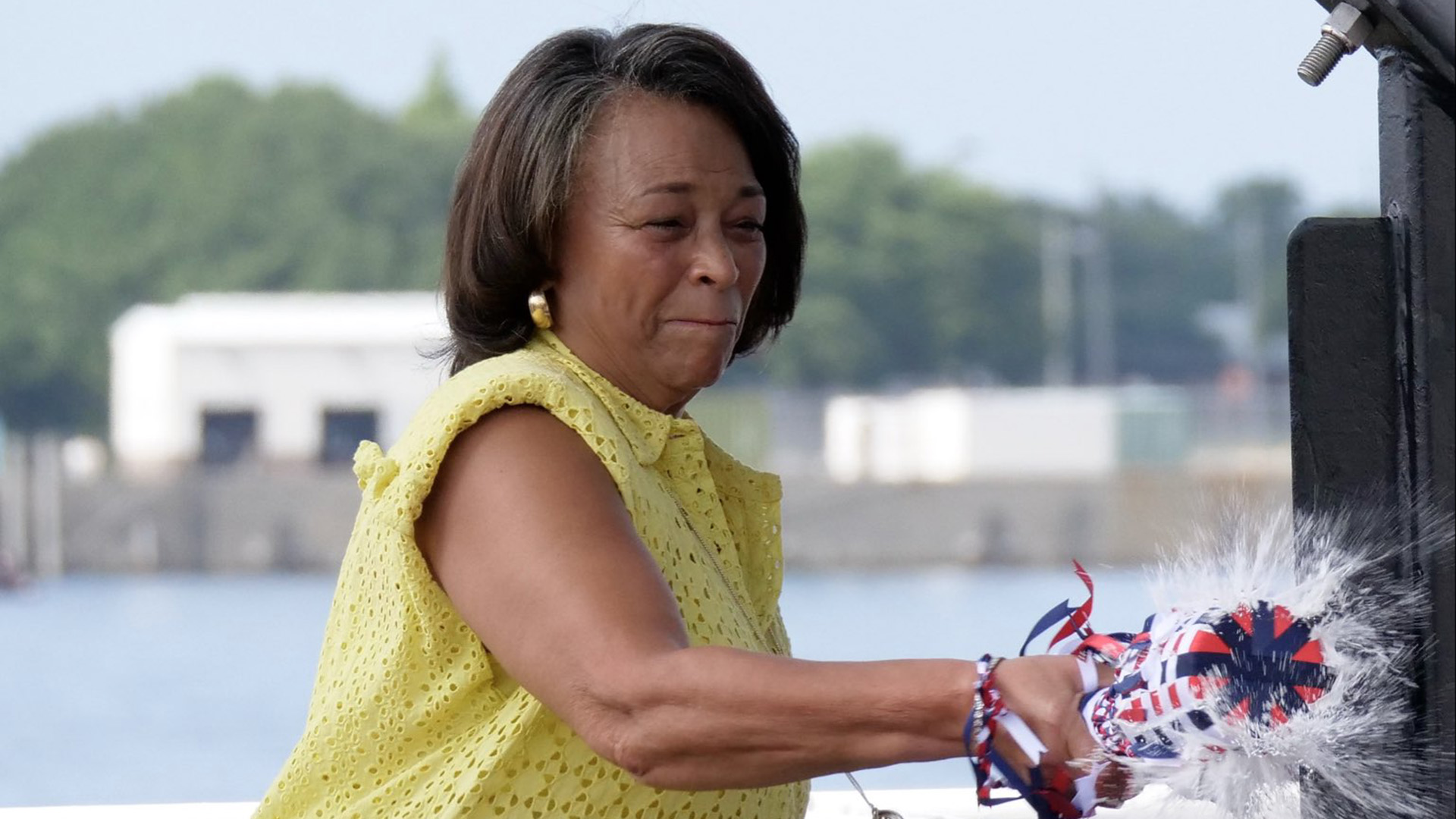
On Saturday, Neal’s daughter, Kelley Neal Gray, formally christened the future destroyer USS George M. Neal at a ceremony in Pascagoula, Mississippi at Huntington Ingalls Industries Inc. Shipbuilding.
“On behalf of my family, I express my deepest gratitude to the United States Navy, to the incredible honor, for this magnificent destroyer after my father, George Milton Neal,” Gray said at the ceremony. “We are forever grateful that his life of service, sacrifice and courage will be remembered through a ship that will one day defend our nation and carry his legacy throughout the world.”
Neal enlisted in the Navy at 17 and became one of the service’s first Black aircrewmen, according to the U.S. Naval Institute
On July 3, 1951, Neal was serving with a helicopter rescue unit aboard the Australian aircraft carrier HMAS Sydney when he volunteered for a mission to rescue Marine Capt. James Wilkins, whose F4U Corsair had been downed about 35 miles southeast of Wonsan, North Korea.
Koelsch and Neal flew deep into the mountains of North Korea. The low cloud cover prevented U.S. fighter aircraft from escorting their helicopter, Neal’s Navy Cross citation reads.
After they were initially unable to locate Wikins, they flew into the area for a second time, encountering intense enemy fire. Even though nightfall was coming, they managed to spot Wilkins, and Neal “fearlessly exposed himself to the intense enemy gunfire” to lower the rescue sling.
But as Neal was hoisting Wilkins into the helicopter, the aircraft was damaged by enemy fire and crashed. Neal then helped Koelsch and Wilkins, who was badly burned, to avoid enemy troops for the next nine days.
“The small party effectively evaded the enemy forces for nine days under the most adverse conditions during which time Aviation Machinist’s Mate Third Class Neal contributed immeasurably to the success of the maneuver by his unflagging physical endurance, courageous persistence and fighting spirit which did much to maintain the morale of his companions,” Neal’s Navy Cross citation reads.
They were later captured while trying to find food and water in a village. Koelsch died in October 1951 while in a prison camp. His Medal of Honor citation says that he “steadfastly refused to aid his captors in any manner and served to inspire his fellow prisoners by his fortitude and consideration for others.”
Both Neal and Wilkins were released in 1953.
“The future USS George M. Neal honors a legacy of extraordinary courage and sacrifice,” William Toti, performing the duties of the Undersecretary of the Navy, said in a statement. “As we christen this ship, we mark another step toward building the Navy our nation needs.”
Loading comments…
Comments couldn’t be loaded. Please refresh the page.