
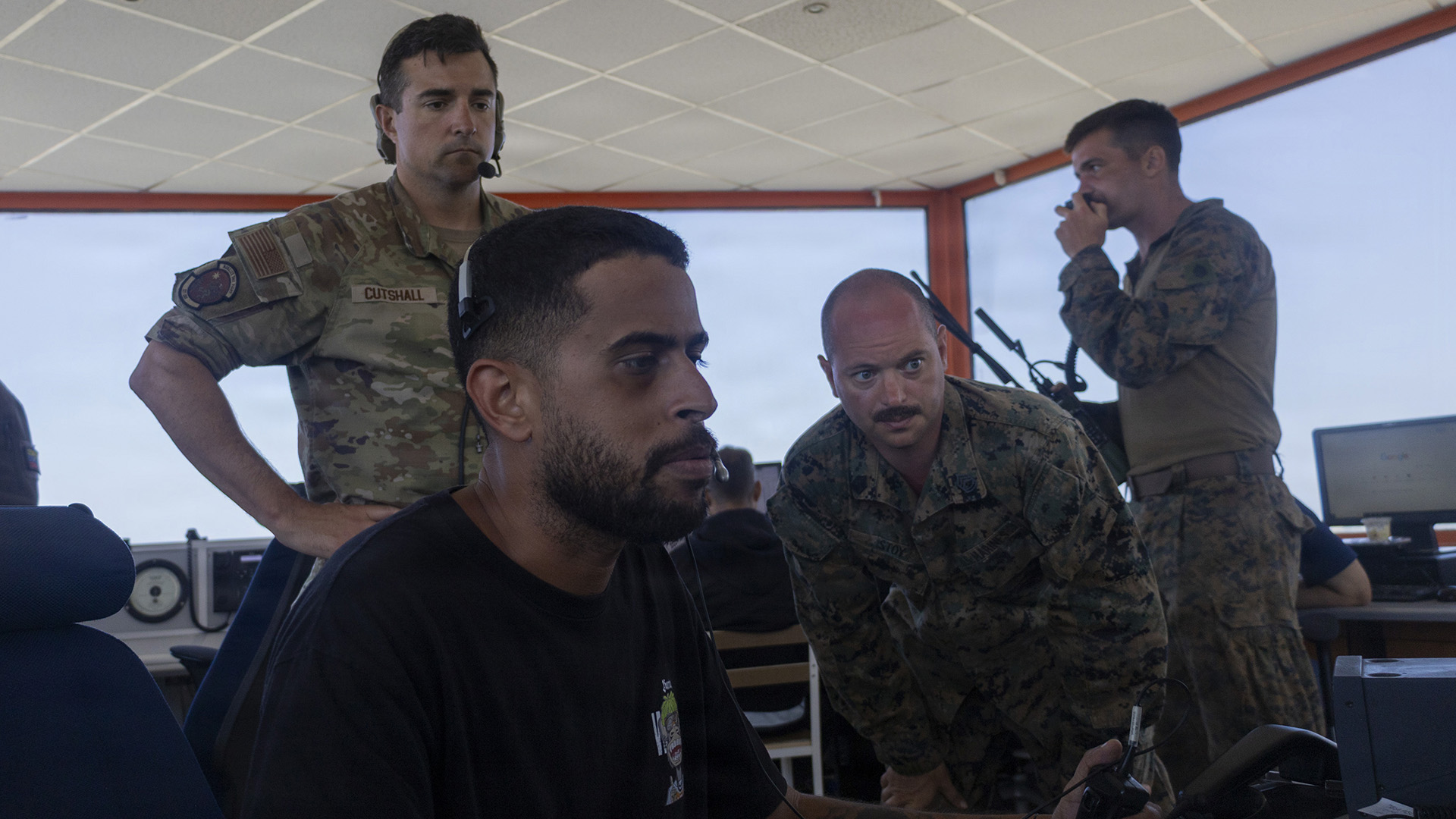
U.S. airmen and Marines have been helping to staff the air traffic control tower at Venezuela’s main international airport, the primary lifeline for airlifted aid following two major earthquakes, according to U.S. Southern Command, or SOUTHCOM.
U.S. military photos published over the weekend showed airmen with a Contingency Response Element from the 621st Contingency Response Wing and Marines from Littoral Combat Force-24 in the control tower at Simón Bolívar International Airport on July 1. The pictures show both Venezuelan air traffic controllers using the control tower’s equipment and U.S. controllers from both services using tactical radio sets in the airport’s control tower in the days following the June 24 quakes.
A SOUTHCOM official deferred questions to the Venezuelan government about why such specialized troops were needed in the airport’s tower, what duties they were asked to perform, and the status of the equipment in the tower. American airmen trained in air traffic control have a long history of using their military radios to perform civilian air control in conflict zones or after major disasters.
Top Stories This Week
“Our service members are there to assist Venezuelan personnel, at the request of the Venezuelan government through the U.S. Department of State,” said Hansel Pintos, a spokesperson for SOUTHCOM. “Venezuela, as the host country, continues to have control of their tower operations.”
About 2,000 U.S. troops in total are currently supporting the American government’s earthquake relief mission to Venezuela, including roughly 900 in the country, Pintos told Task & Purpose on Monday.
The airmen with the Contingency Response Element, or CRE, are helping to clear any “logistical bottlenecks” by helping to manage ground and tower operations at Simón Bolívar International Airport, according to a news release from the 621st Contingency Response Wing.
The airport, which is roughly a dozen miles outside of the country’s capital city of Caracas, was damaged by two powerful earthquakes on June 24 that killed more than 3,300 people.
“The Contingency Response Airfield Assessment Team evaluated the airfield’s structural integrity and runway load-bearing capacity to ensure heavy cargo aircraft could land safely,” the news release says. “Once verified, the remaining CRE elements arrived to establish airfield operations.”
Role of Marines in relief
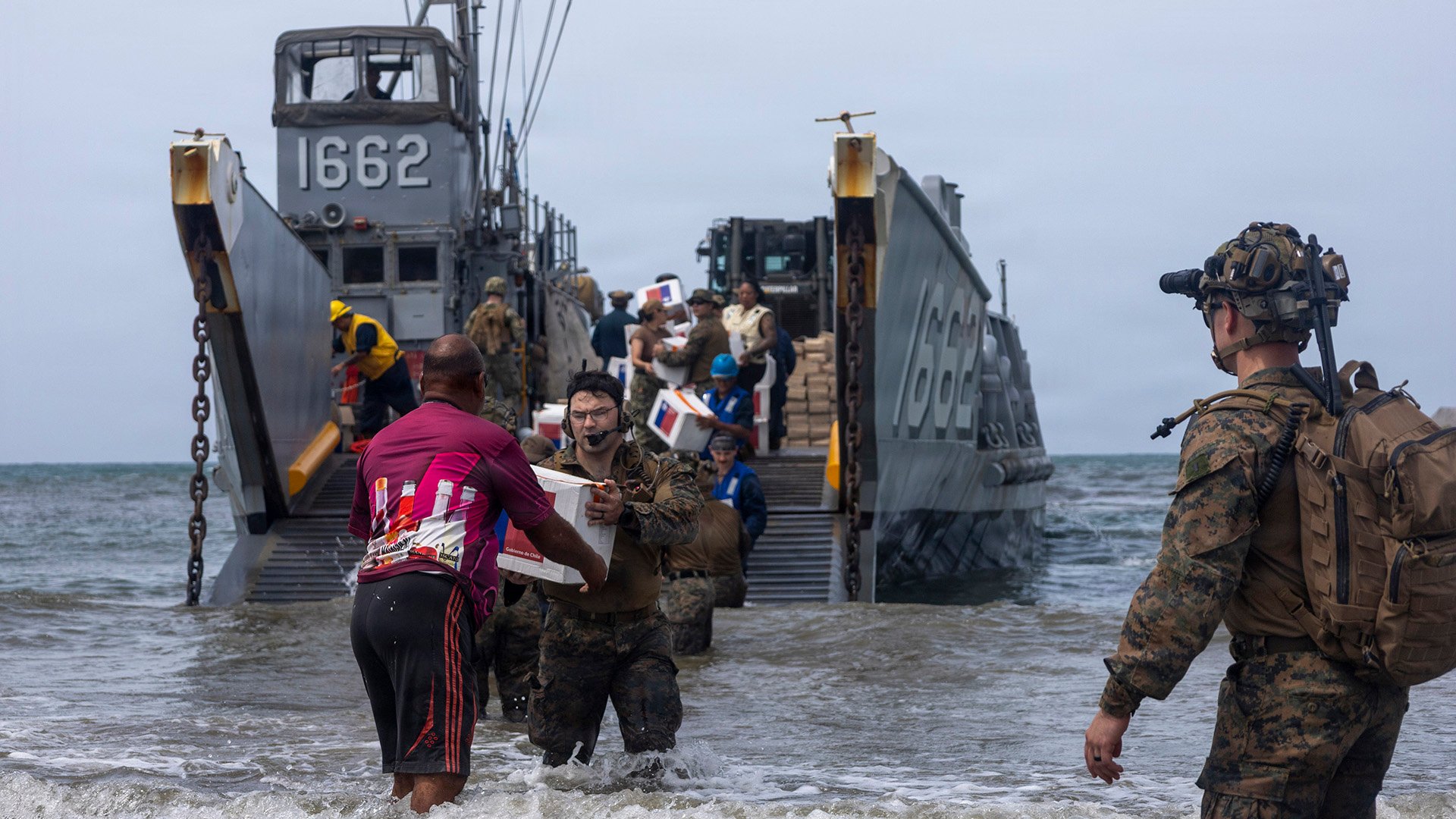
A unit of Marines who specialize in rapid humanitarian response is also in Venezuela. Marines from the 24th Marine Expeditionary Unit were also in the Bolivar tower and have also been bringing supplies ashore with landing craft.
The 24th MEU deployed to the Caribbean in May, and has been operating from bases in Puerto Rico and the amphibious transport dock USS Fort Lauderdale. Notably, the unit is not embarked on a traditional three-ship Amphibious Ready Group, which includes big deck amphibious assault ships such as the USS Iwo Jima,\n.
The Marine unit is serving as SOUTHCOM’s quick reaction force for disaster relief and other operations as needed, according to the command. Since last month’s earthquakes, air traffic controllers and other members of Marine Medium Tiltrotor Squadron 365 – an MV-22B Osprey unit that serves as the 24th’s aviation combat element – have been working to make sure relief supplies are delivered to Venezuela. Marines and sailors have also brought in supplies through the country’s main port at La Guaira, along with search and rescue duty with other U.S. and Venezuelan teams.
The LCF-24 Marines, said Col. Ryan Lynch, the unit’s commanding officer, said the Marines are well-equipped to deliver disaster relief quickly. “Roads are destroyed, airports are damaged, and infrastructure collapses,” Lynch, said in a statement. “By operating from the sea and forward nodes, we can insert experts, equipment, and medical support directly into the hardest-hit areas.”
Loading comments…
Comments couldn’t be loaded. Please refresh the page.