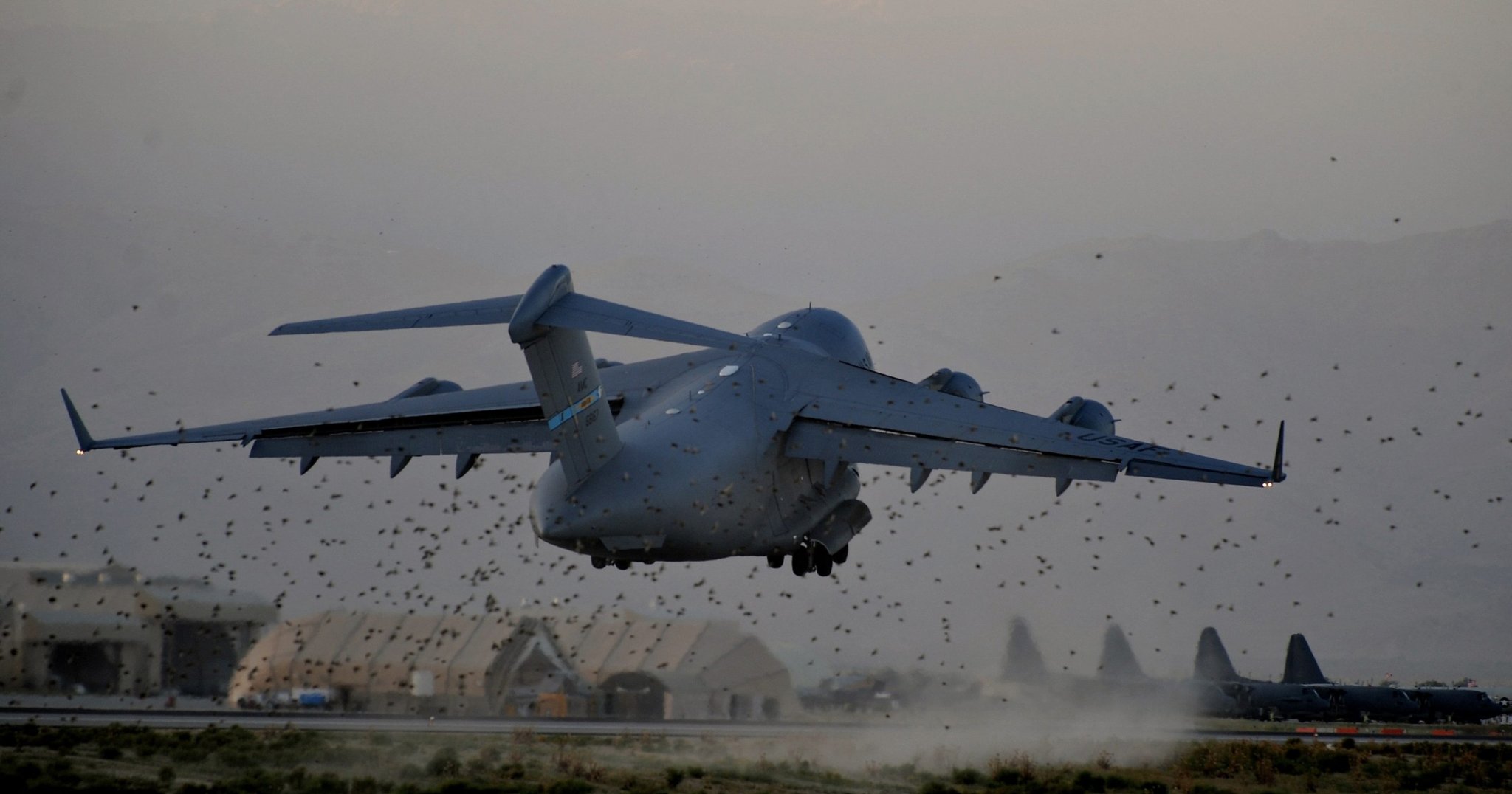
Bagram Airfield was the gateway to Afghanistan for a generation of U.S. service members. The last U.S. troops quietly withdrew from the base in July 2021, shortly before the Taliban took control of the entire country.
Now the United States may be seeking to reclaim Bagram Airfield from the Taliban, President Donald Trump said on Thursday.
“We were going to keep Bagram, the big air base, one of the biggest air bases in the world,” Trump said. “We gave it to them for nothing. We’re trying to get it back, by the way, okay? That could be a little breaking news.”
The topic came up as President Trump spoke with reporters during a news conference with British Prime Minister Keir Starmer in London. Trump described the U.S. military’s withdrawal from Afghanistan in 2021 as a “total disaster.”
Top Stories This Week
“We’re trying to get it back, because they need things from us,” Trump continued. “We want that base back. But one of the reasons we want the base is — as you know — it’s an hour away from where China makes its nuclear weapons. So, a lot of things are happening.”
Taliban has not responded to Trump
Chief Pentagon Spokesman Sean Parnell provided the following statement on Thursday evening about Trump’s comments about Bagram Airfield: “The Department of War is a planning organization and routinely reviews how the Department would respond to a variety of contingencies across the globe. We are always ready to execute any mission at the President’s direction.”
The Taliban has not yet issued a statement in response to Trump’s remarks, a Taliban government official told Task & Purpose.
For veterans of the Afghanistan War, the prospect of reopening Bagram Airfield is likely to bring back an avalanche of memories, given the prominence of the base in the U.S. military’s efforts during 20 years of war. With the largest and best-defended runway in the country, the base was where a generation of troops from every service arrived in Afghanistan and from where they later departed the country.
The U.S. military’s decision to hand over Bagram Airfield to Afghan security forces in July 2021 remains controversial. Once American troops had left the base — which they did with almost no notice — only Hamid Karzai International Airport in Kabul was available as the staging area for the massive evacuation of Americans and Afghans as the Taliban overran the country.
Trump did not elaborate on exactly how the U.S. government might secure Bagram Airfield or if the United States has opened negotiations with the Taliban on the matter. It is also unclear how exactly reopening Bagram would allow U.S. troops to counter China’s nuclear weapons program.
Trump has linked Bagram to China in past
Thursday was not the first time that Trump linked Bagram to the U.S.’s increasingly hostile relationship with China.
In May, he brought up Bagram during a speech at the National Day of Prayer event at the White House.
“Now, China occupies Bagram,” Trump said. “So sad. So crazy.”
It’s also unclear what facility Trump is referencing in his claim that China “makes its nuclear weapons” an hour from the base. China has dramatically increased the size of its nuclear weapons program in the last decade, according to both U.S. military and civilian disarmament and nonproliferation experts, but nearly all of China’s nuclear weapons facilities are in the center or eastern part of the country, roughly as far from Bagram as the base is from Europe.
One testing facility, known as Lop Nur, is in western China, about 2,000 kilometers from Bagram. Lop Nur was a major testing site for China in the 1960s and 1970s, but was shuttered in recent decades. However, the Pentagon’s 2024 “Military and Security Developments involving the People’s Republic of China” report confirmed the view of many civilian experts that the facility is being put back in service.
“The PRC’s possible preparation to operate its Lop Nur nuclear test site year-round and lack of transparency on its nuclear testing activities have raised concerns regarding its adherence” to test ban treaties, the report said.
UPDATE: 09/19/2025; this story was updated with a statement from Chief Pentagon Spokesman Sean Parnell.