The Navy’s budget request for the 2026 fiscal year is its most ambitious shipbuilding push in years. After asking Congress for just six new ships in the last fiscal year, and nine in the one before that, the service now wants 19 more. That includes attack submarines, destroyers, amphibious ships, and support vessels totaling about $47.3 billion.
At $292.2 billion, the Navy’s proposed budget request is $11 billion more than last year. It includes new emphasis on developing hypersonic missiles, directed energy weapons, unmanned systems, and undersea capabilities. The central focus is still on building more ships to help close the gap with China’s rapidly growing navy.
The 2026 fiscal year request includes one Columbia-class ballistic missile submarine, two Virginia-class attack submarines, two Arleigh Burke-class destroyers, one San Antonio-class amphibious transport dock, one America-class amphibious assault ship, nine medium landing ships, two John Lewis-class replenishment oilers, and one Impeccable-class ocean surveillance ship. Taken together, that makes it the single-largest request for new ships in 25 years.
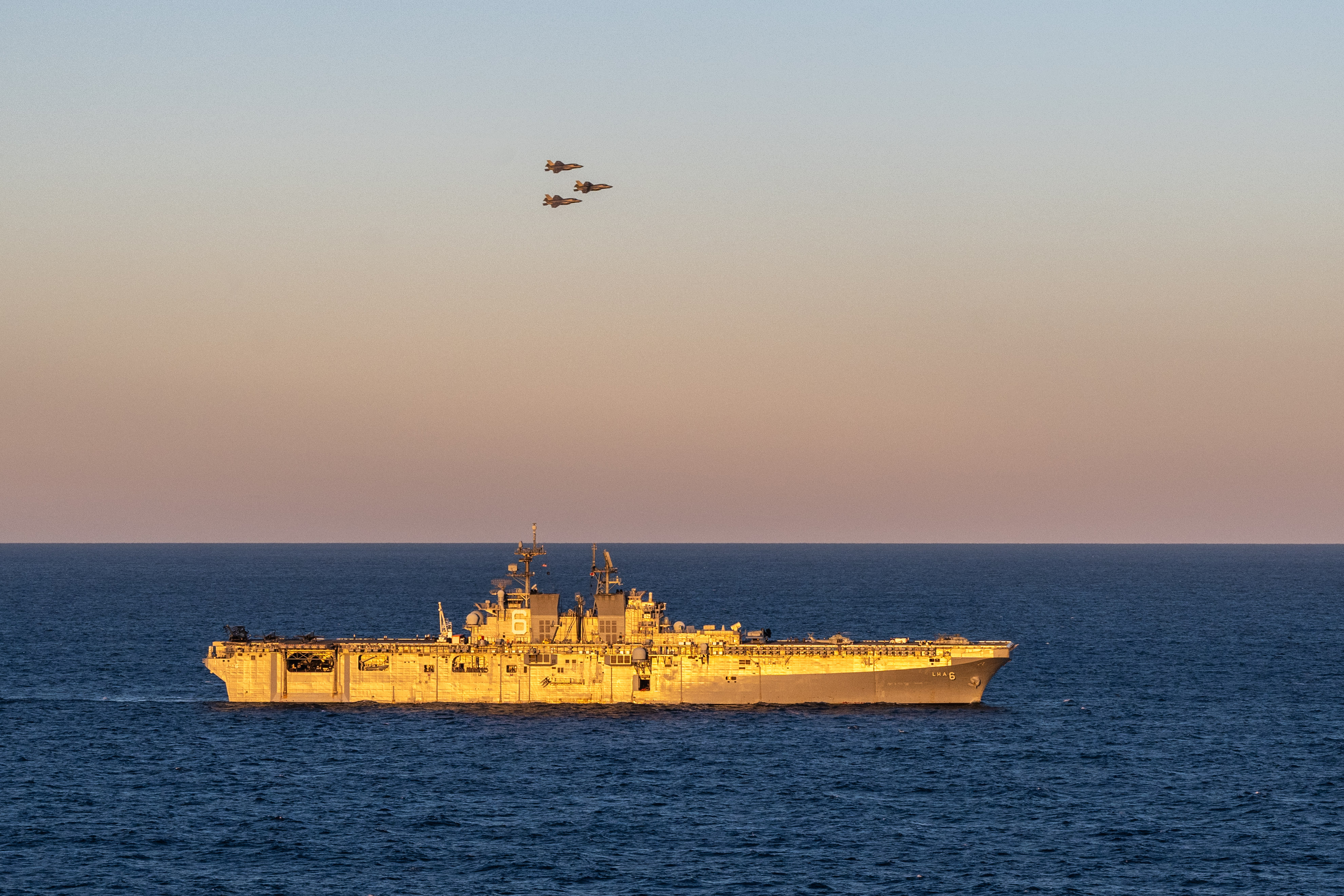
This year’s budget request aligns with the Navy’s 2025 plan to grow the fleet to 390 ships by 2054 and aligns with President Donald Trump’s statements going back to his first term in 2016, calling for a much larger fleet. But turning budget documents and stump speeches into ships has been a challenge, and will likely continue to be one.
The Navy is currently struggling with significant delays and cost overruns in its shipbuilding programs. According to a Government of Accountability Office report this year, the seafaring branch has failed to grow its fleet despite its shipbuilding budget doubling over the last 20 years. Nearly every major program, including Virginia-class submarines and Arleigh Burke-class destroyers, is now years behind schedule. The reasons include a lack of shipyards with enough space to facilitate the Navy’s requests and a shortage of skilled workers at those shipyards.
On April 9, Trump signed the “Restoring America’s Maritime Dominance” executive order, which called for a review of the maritime industrial base. This order promised a coordinated surge across regulations, trade, investment, workforce training, and industrial capacity to reverse decades of decline.
In turn, the Navy is asking for $989 million in funding for the Shipyard Infrastructure Optimization Program, compared to last year’s request of $513 million. The program focuses on modernizing the Navy’s four shipyards in Norfolk, Virginia, Portsmouth, Maine, Puget Sound, Washington, and Pearl Harbor, Hawaii, which the GAO reported in 2019 were, on average, 76 years old.

The Arleigh Burke-class guided-missile destroyer USS Hopper waits to undock at Pearl Harbor Naval Shipyard and Intermediate Maintenance Facility, March 11, 2025. Navy photo by Mike Wilson
But even with nearly a billion dollars set aside to modernize its shipyards, the Navy faces a steep climb. Aging dry docks, outdated layouts, and workforce shortages are not problems that can be fixed quickly, these are issues that will take years to sort out.
In this week’s Task & Purpose YouTube video, we dive into the Navy’s shipbuilding efforts, what hurdles it faces, and where things might stand once those ships actually join the fleet — and if they’ll be ready in time for any new threats that emerge.
The latest on Task & Purpose
- Sergeant Major of the Marine Corps learns an old lesson: Don’t mess with Audie Murphy
- A breakdown of safety procedures ‘directly contributed’ to an 82nd Airborne paratrooper’s death
- WWII Marine Raider who fought at Iwo Jima, Guadalcanal wants cards for 100th birthday
- Navy identifies special warfare sailor killed while parachuting
- Pentagon appears to pause renaming of Navy ships