
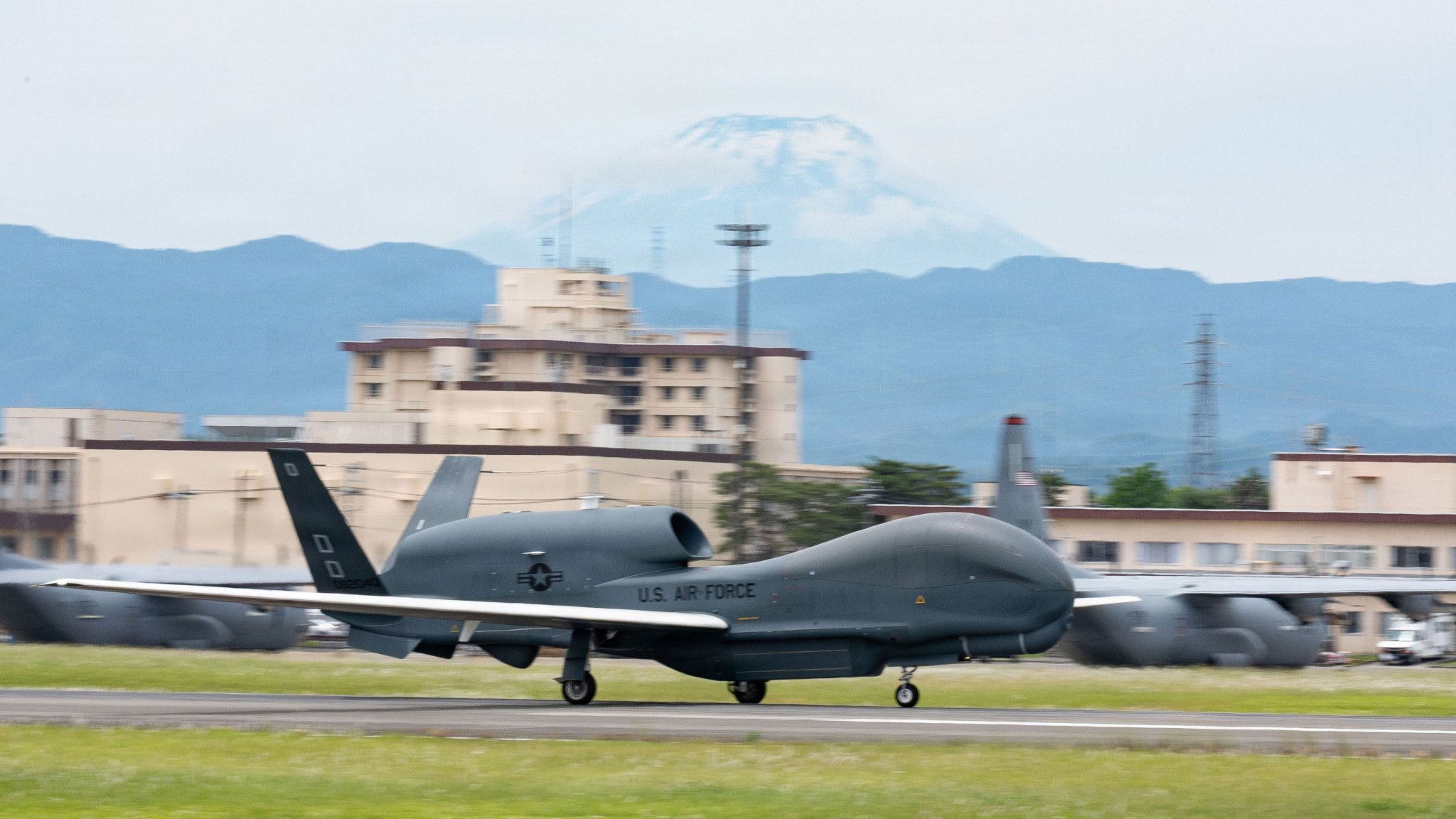
The Air Force is permanently moving three of its RQ-4 Global Hawk surveillance drones to Yokota Air Base in Japan, after more than a decade of being stationed in Guam.
The 4th Reconnaissance Squadron, 319th Operation Group began relocating the RQ-4s to Japan in late May, with the first arriving in the Tokyo-area base on May 27, although the 374th Airlift Wing only officially announced the transfer this week.
The squadron has made seasonal visits to Yokota, but this permanently stationed it at the base, after spending 16 years operating out of Andersen Air Force Base on Guam. Alongside the drones themselves, roughly 150 Air Force personnel transferred to Japan, according to Japan’s defense ministry.
“Yokota Air Base is the right location to support current and future RQ-4 operations in the theater, while upholding the quality of life of our Airmen and families,” Lt. Col. Adam Otten, 4th Reconnaissance Squadron commander, said in the Air Force’s release.
The base is home to the Fifth Air Force’s headquarters and includes the 374th Airlift Wing, flying C-130J Hercules and C-12J Huron planes.
Top Stories This Week
The RQ-4 Global Hawk is a massive drone, weighing nearly 15,000 pounds and with a 130.9-foot wingspan. It is equipped with an array of cameras and sensors meant to cover large swathes of area, making it an important part of the Air Force’s intelligence, surveillance, and reconnaissance operations. According to the Air Force, the unit’s mission will be to “support theater-wide operations,” including “peacetime, contingency, and crisis operations.” The service noted the drone and its operators’ role in the response to Japan’s 2011 9.0-magnitude earthquake as an example of its work in the country.
The Air Force also cited weather conditions as a reason for the move. Japan’s “more favorable weather” during typhoon season helps the squadron’s operations, the Air Force said. Guam regularly deals with rough typhoons during the summer, with this spring’s Typhoon Sinlaku dealing significant damage to the island. It also is a rare shift of assets away from Guam, as the military has been putting more resources into the island’s military infrastructure, including missile defense and fuel and weapons depots.
The Global Hawk is a massive aircraft. It is designed to fly for more than 30 hours at high altitudes, around 60,000 feet, and operates a similar role to the long-serving U-2 Dragon Lady spy plane. The RQ-4 has made a number of temporary deployments to Japan over the years.
It’s the latest shift of drones and surveillance units to east Asia. Last year the Air Force permanently deployed MQ-9 Reaper drones to South Korea to conduct reconnaissance missions, while the Marine Corps temporarily deployed MQ-9As to the Philippines to monitor the South China Sea.
“This ensures persistent reconnaissance in a region where challenges to a free and open Indo-Pacific continue to increase,” the Air Force’s statement on the transfer said.
Loading comments…
Comments couldn’t be loaded. Please refresh the page.