Army drill sergeants are now banned from making social media posts with trainees during basic training, according to a new policy.
An August update to the handbook Army drill sergeants use to train new recruits at boot camp, known as TR 350-6, now says Army trainers are “prohibited from creating social media content that includes Trainees.”
“All soldiers must understand that when they are logged on to a social media platform, they still represent the U.S. Army and should uphold the Army values,” Hunter Rhoades, a spokesperson for the Army’s Center for Initial Military Training, said in a statement. “The use of electronic communication to inflict harm, to include hazing, bullying, harassment, etc., directly undermines the core Army values of dignity and respect.”
The changes come after the Army opened an investigation into a drill sergeant who posted a video in July of soldiers drill instructors making trainees exercise under a flag referencing a political campaign slogan used by President Donald Trump. On a TikTok video, trainees are seen doing push-ups and burpees under a banner that reads, “This Is Ultra MAGA Country.” In a subsequent video, he showed the same view without the flag and a caption that said, “Cry about it.”
It was not a single incident that led to the regulation update, Rhoades said, adding that soldiers on social media need to abide by the Uniform Code of Military Justice and Army policies about online misconduct “even when off duty.”
Other drill sergeants have taken to TikTok and Instagram to post videos of trainees in basic marching in formation or doing “corrective training,” which soldiers commonly refer to by several nicknames, including being ‘smoked’ — a phrase which is now off-limits according to the regulation.
Former drill sergeant and retired Army Sgt. 1st Class Jonathan Huff said he never personally made social media posts with recruits, but that the policy is “probably a good idea.”
“My problem lies with the drills that are ‘on the trail’ right now,” Huff said, referring to drill sergeants engaged in training new recruits. “Dude, you have a job to do. It’s already hard enough.”
Top Stories This Week
The regulation also included another new policy dictating how drill sergeants should conduct themselves in the digital space when it comes to their interactions with soon-to-be soldiers on social media. It expressly forbids “friending” or “requesting to be a ‘friend’” with a trainee on any social media platform. The same applies to trainers developing personal relationships over phone calls, texts, instant messages or social media, with future trainees, according to the regulation.
The military as a whole has policies that recognize the power imbalances that can come from relationship dynamics between commanders and subordinates, and even between the enlisted ranks and officer corps. The prohibitions even extend to recruiters and potential recruits which have led to some facing Uniform Code of Military Justice charges.
Those off-limit dynamics are now bleeding into the digital space.
Drill sergeants get a break from PT
The regulation update also removed a requirement that drill sergeants “perform physical corrective action with trainees,” like doing push-ups, wind sprints or burpees. And, per the regulation, drill sergeants should “not refer to this type of administrative corrective measure as ‘smoking’ or ‘smoke sessions.’”
Huff, who served as a drill sergeant from 2017 to 2019 at Fort Benning in Georgia, said the ban on terms like “smoke sessions” was “bureaucratic nonsense.”
The changes come as Secretary of Defense Pete Hegseth has called out evolutions to the military’s basic training as a sign that the services have gotten “woke” or “soft.” Last month, in a Fox News interview, he referenced the long-debunked myth of “stress cards” in which recruits could get out discipline or forced exercise by showing off a card to signal their overwhelm.
Troops and veterans have long challenged the toughness of successive generations entering basic training. While basic training norms at one point were almost a form of “sanctioned abuse,” modern training has added accountability on the military services to prevent trainers from taking their roles to dangerous extremes.
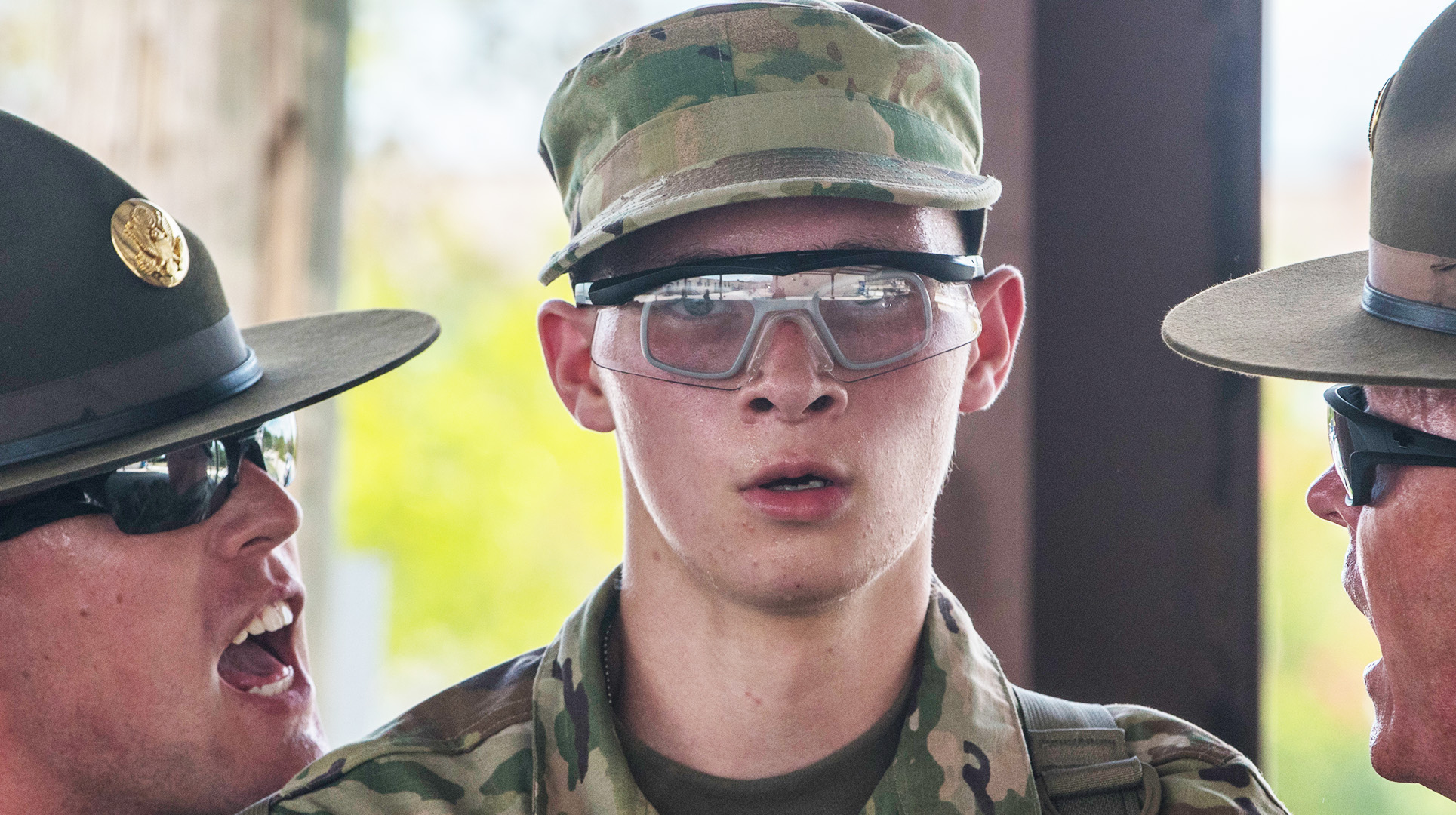
Since taking over the Pentagon, Hegseth has floated the idea of bringing back older basic training rituals in an effort to ruggedize younger troops. In August, he hinted at the possibility of reviving “shark attacks” which is the practice of several drill sergeants surrounding trainees and yelling at them at the outset of their basic training journey.
Huff is not so sure that basic training has gone ‘soft.’ He believes that the current version has improved over previous decades when the Army pushed through trainees to meet manpower requirements of wars in Iraq, Afghanistan and elsewhere.
“Dude, if I hear a GWOT dude talk about how hard his basic was, I’m like, you’re full of shit, bro,” Huff said. “Shit was a puppy mill, dog.”