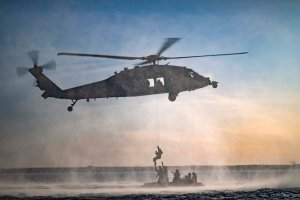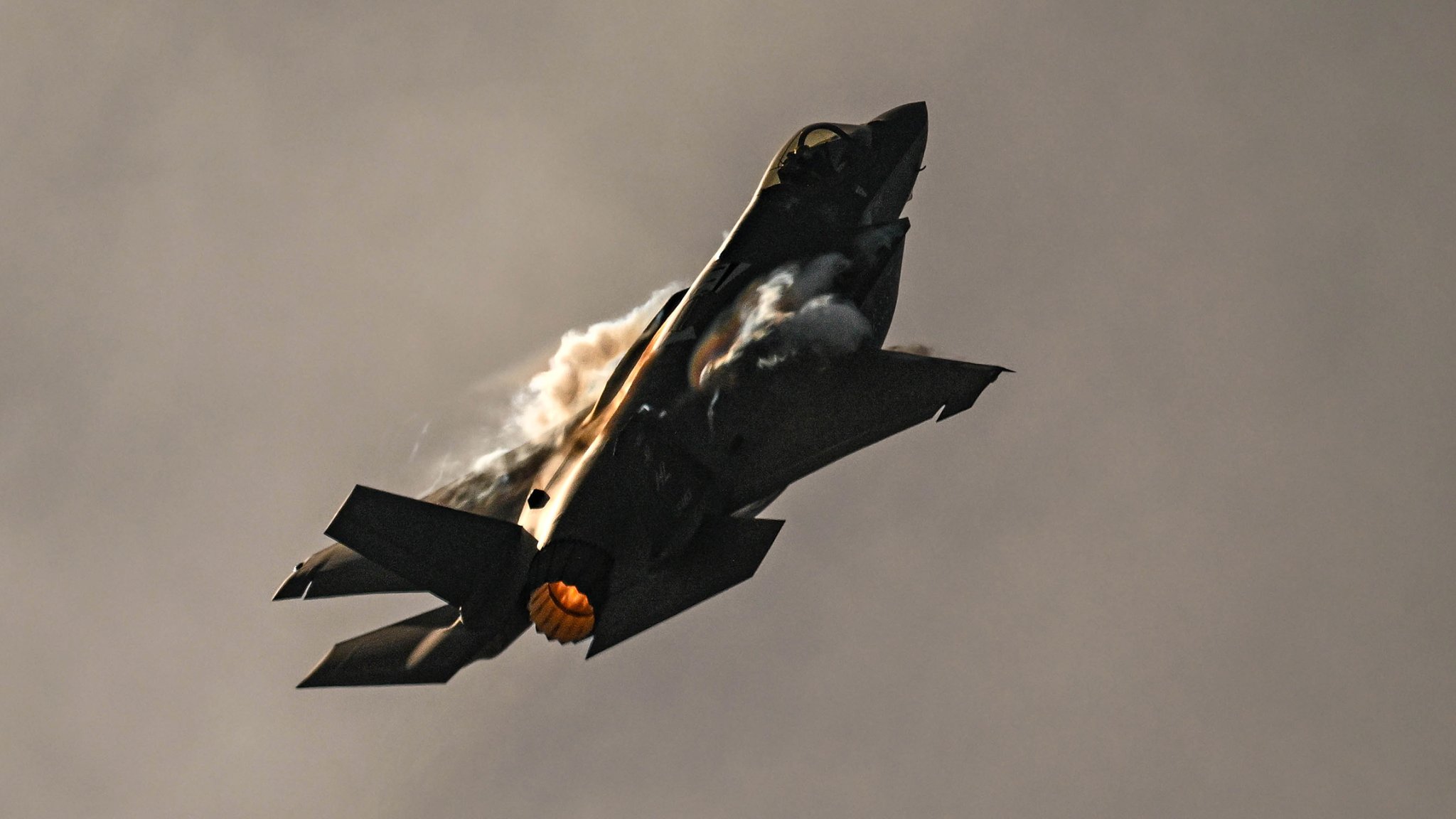
The United States is deploying ten F-35 fighter jets to Puerto Rico in the latest surge of military power in the Caribbean over the last month.
The U.S. military has sent several Navy ships to the region, but the F-35s are the first land-based strike aircraft deployed specifically to operate in the theater.
The move, first reported by Reuters, comes amid a buildup of U.S. military forces in the Caribbean in what Pentagon officials have called anti-drug trafficking operations. That operation led to the U.S. bombing a boat in the Caribbean that the U.S. said was a drug vessel coming from Venezuela.
The F-35s will fly to Puerto Rico, where they will support naval forces in the region, according to Pentagon officials. It is not clear what branch they belong to or where they are flying from. The largest military airfield on the island is Muñiz Air National Guard Base in San Juan, which is home to the Puerto Rico Air National Guard.
The Air Force, Marine Corps and Navy all fly the F-35 as a strike fighter.
The move comes after two Venezuelan F-16s buzzed the Navy destroyer the USS Jason Dunham on Thursday. In response to the naval buildup in the Caribbean, Venezuela President Nicolas Maduro has deployed ships and drones to the coast; Colombia and Venezuela both have moved troops to their shared border in declared anti-drug trafficking operations.
President Donald Trump told reporters on Friday that U.S. military commanders have the freedom to respond as they see fit if Venezuelan aircraft fly over Navy ships again, adding, “If they do put us in a dangerous position, they’ll be shot down.”
On Tuesday, U.S. forces destroyed a boat in the Caribbean with an airstrike, killing 11 people on board. The Trump administration claimed that the crew of the boat were part of Tren de Aragua narco-gang and that the ship was carrying drugs, though U.S. authorities have refused to discuss the evidence behind that claim and no public statement has been made about any wreckage recovered.
The United States claims that Maduro runs the Tren de Aragua gang; in February the Trump administration designated the cartel a foreign terrorist organization.
On Friday, Trump put forward a War Powers report to Congress, arguing legal justification for the strike under Article II of the Constitution as “Commander in Chief and Chief Executive.” On Thursday, Defense Secretary Pete Hegseth said that a drug cartel “is no different than al-Qaida” and that drug traffickers pose an “imminent threat.”
The administration has repeatedly called traffickers “narcoterrorists.” The 2001 Authorization for the Use of Military Force has been widely used as the legal basis for increasingly broad military operations in the last 24 years, but it is not clear if Trump intends to claim authority for Caribbean operations under it.
Top Stories This Week
This week Secretary of State Marco Rubio said that interdictions of drug vessels, a regular tactic done by the Coast Guard, “doesn’t work,” and defended the use of force. However the Coast Guard and Department of Homeland Security have regularly highlighted large-scale drug interdictions that have seized millions in narcotics, including a record-breaking offloading last week.
In August, the U.S. Navy quietly began moving several assets into the southern Caribbean. At least eight naval vessels are in the region. Three Aegis-class destroyers (the USS Sampson, USS Gravely and USS Jason Dunham) deployed, as well as the Ticonderoga-class guided-missile cruiser the USS Lake Eerie. The fast-attack submarine the USS Newport News also was sent, as was the three-ship Iwo Jima Amphibious Ready Group. That ARG is carrying the roughly 2,200-Marine-strong 22nd Marine Expeditionary Unit.