The Marine Corps has released the service records for two veterans — one a former reconnaissance Marine, the other a mechanic — who are accused of carrying out separate mass shootings in North Carolina and Michigan over the weekend, ending in a total of at least eight dead.
Both men left the Marines more than 15 years ago at relatively junior ranks after enlistments that included deployments to Iraq.
Experts cautioned that both men’s similar military service did not suggest a connection between the attacks, either in motive or as a link to a cause within their status as veterans.
In North Carolina, Nigel Edge, was charged with first-degree murder for allegedly shooting into a crowded bar Saturday night on the town’s popular waterfront. Edge left the Marines in 2009 after serving for six years. Edge allegedly opened fire from a boat into a waterfront bar, killing three people and wounding another five, before fleeing down the coast. Edge was detained by the Coast Guard at a public boat ramp in a neighboring town and turned over to local police.
Top Stories This Week
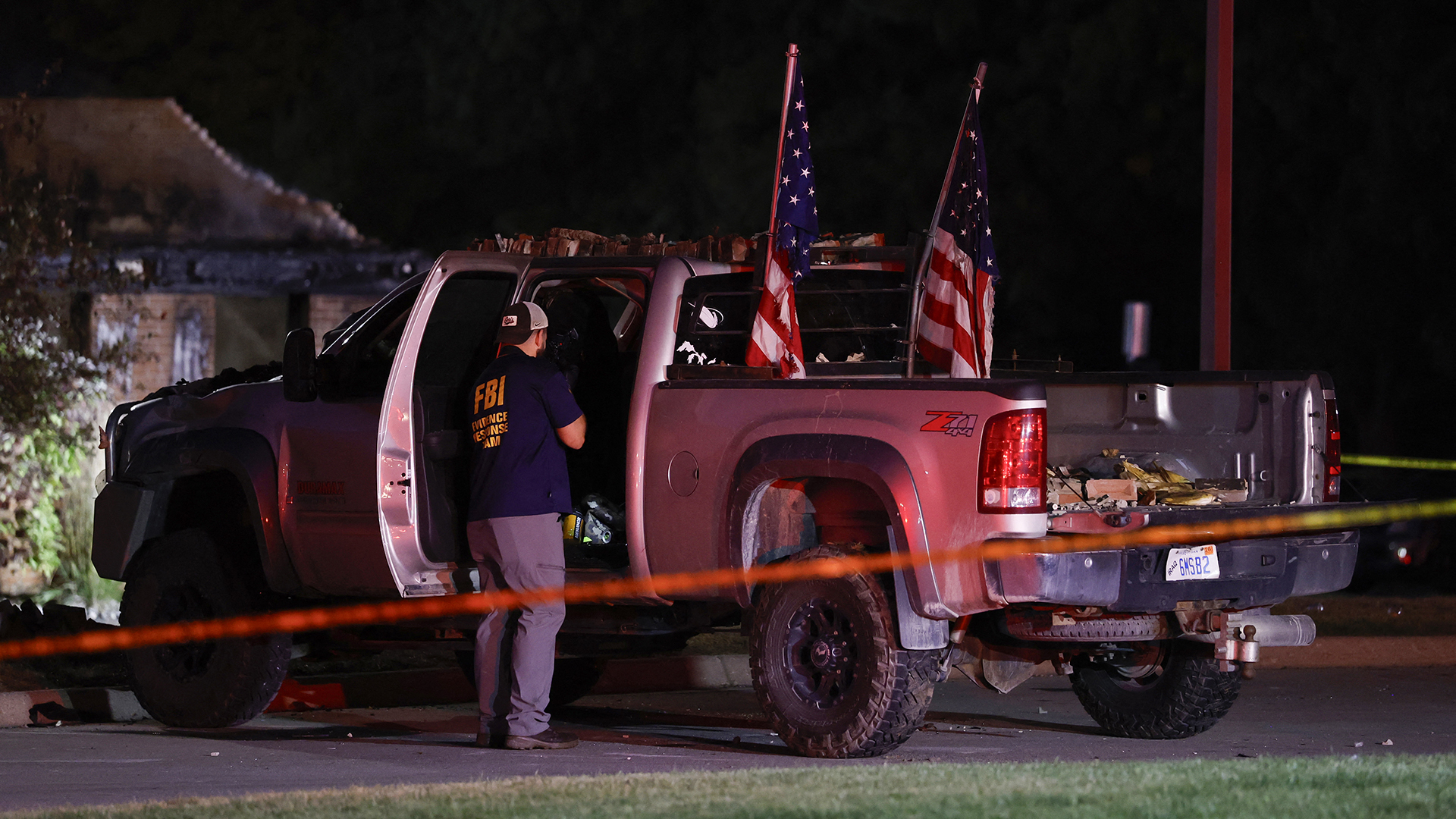
In Michigan, Thomas Jacob Sanford allegedly killed four people and wounded eight others after driving his truck into a Mormon church on Sunday. The Marine Corps confirmed that Sanford served a four-year enlistment ending in 2008. Sanford was shot and killed by police after allegedly setting a fire that eventually burned the church to the ground.
Edge served in the Marines from 2003 to 2009 under the name Sean William Debevoise. He changed his name to Edge after leaving the service. In the Marines, Edge reached the rank of sergeant, according to his service record, which was provided to Task & Purpose. Marine Corps records indicate that he served as both an infantry assaultman and a reconnaissance Marine. “Infantry assaultman” was a heavy weapons and demolition-focused military occupational specialty, or MOS, within Marine Corps infantry units that was discontinued in 2020. Edge deployed to Iraq from January to August 2005 and again from March to May 2006.
No details were available on Edge’s operational career, but his military awards indicate that he saw combat while in uniform. His awards and decorations include the Purple Heart, Combat Action Ribbon, Iraq Campaign Medal with two bronze stars and Marine Corps Good Conduct Medal. His last duty assignment was with Wounded Warrior Battalion East, II Marine Expeditionary Force at Camp Lejeune in North Carolina.
Edge wrote in a self-published book he sold on Amazon, “Headshot,” that he also deployed to Haiti in 2004, but no deployment matching that description was mentioned in service records provided by the Marine Corps. A 2007 story on Edge in the Star-News of Wilmington interviewed Edge as he underwent treatment for a head injury suffered in Iraq. The newspaper said Edge had been shot in the head in Iraq, and the bullet remained in his brain. Doctors, the newspaper said, had told him he would walk with a cane.
Sanford served in the Marines from June 2004 to June 2008 as an organizational automotive mechanic and a vehicle recovery operator, his service record says. He deployed to Iraq from August 2007 to March 2008, and his military awards include the Marine Corps Good Conduct Medal, Sea Service Deployment Ribbon, Iraq Campaign Medal, Global War on Terrorism Service Medal, and National Defense Service Medal.
He left the Marine Corps as a sergeant, and his last duty assignment was with the 2nd Maintenance Battalion, Combat Logistics Regiment 25, 2nd Marine Logistics Group at Camp Lejeune.
Two veterans but no clear motives
With so little information about why the two men allegedly carried out the attacks, people should avoid drawing conclusions about what their motives might have been, said Luke Baumgartner, a research fellow at the Program on Extremism at George Washington University.
“The only data point that the two share between one another is that they’re both veterans,” Baumgartner told Task & Purpose on Monday.
While both of the suspects in the shootings are veterans, the news media should avoid overemphasizing their military identity, said Russell Midori, board chair of Military Veterans in Journalism, a non-profit group that advocates for news outlets to hire veterans.
“The vast majority of veterans live peaceful, law-abiding lives after they serve,” Midori said in a statement to Task & Purpose on Monday. “Editors should reject sensationalized storytelling about their veteran status that would unfairly stigmatize millions of men and women who have served. Each of these tragedies should be seen for what it is—the actions of an individual, not a reflection of veterans as a whole.”