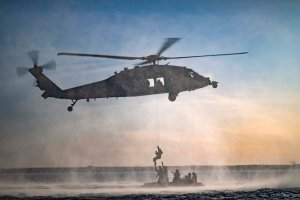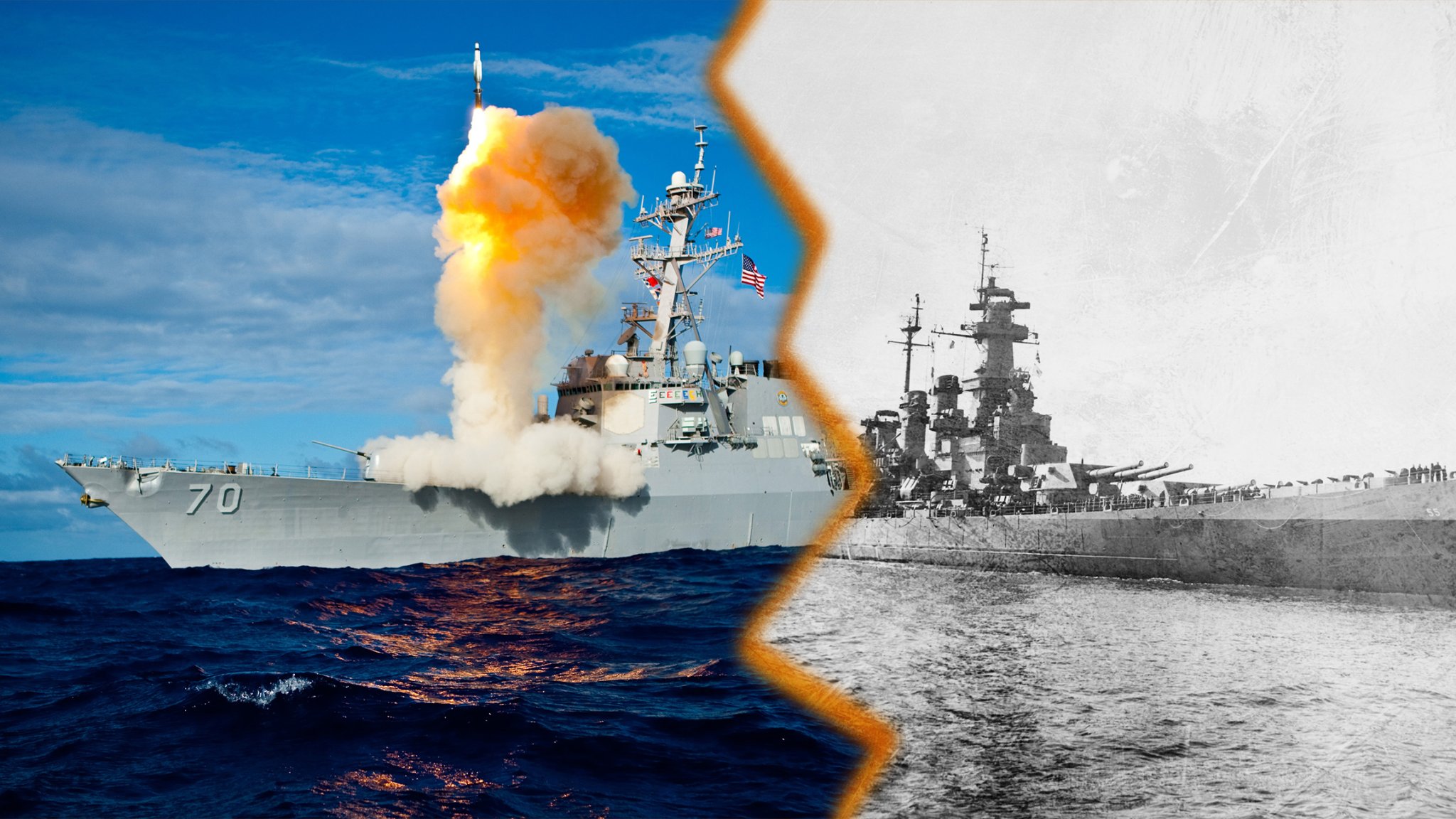
The Navy has been heavily involved in combat operations in recent years, including two lengthy campaigns against Houthi rebels in Yemen, during which sailors were pitted against enemy drones, missiles, unmanned boats, and other threats.
U.S. sailors have not faced a peer adversary since World War II, when the Navy fought against German submarines, helped the Allies come ashore in North Africa and Europe, and waged titanic battles against the Japanese across the Pacific. But the sheer variety of threats facing sailors today has not been seen since then, said retired Navy Capt. Bradley Martin, a senior policy researcher with the RAND Corporation.
“The threats can come from multiple domains — sea, air, space, ground-based systems, cyber — and might come in numbers sufficient to overwhelm ship systems,” Martin told Task & Purpose.
As the technology and nature of warfare continue to evolve, sailors could find that the line between combat and non-combat situations is becoming increasingly blurred, even at home. Given the range of modern weapons and the numerous technologies to track ship movements, there would be very few “safe havens” for Navy ships and sailors if the United States and China went to war, Martin said.
“Ships train for wartime scenarios, but it likely is true that the Navy overall would find the scale of modern combat daunting, with dilemmas it hasn’t faced in decades, such as dealing with the consequences of ships being damaged or sunk,” Martin said.
‘Defining combat is only going to get harder’
As warfare continues to change, it will become increasingly difficult to tell the difference between combat and noncombat missions at sea, said James Holmes, the J. C. Wylie Chair of Maritime Strategy at the U.S. Naval War College in Newport, Rhode Island.
“Part of the reason for the blurring is deliberate choice on the part of state adversaries like China and Russia, which resort to ‘gray-zone’ strategies to get their way without open war,” Holmes told Task & Purpose. “They prefer not to use conventional military forces, and they stop just short of deploying violent force.”
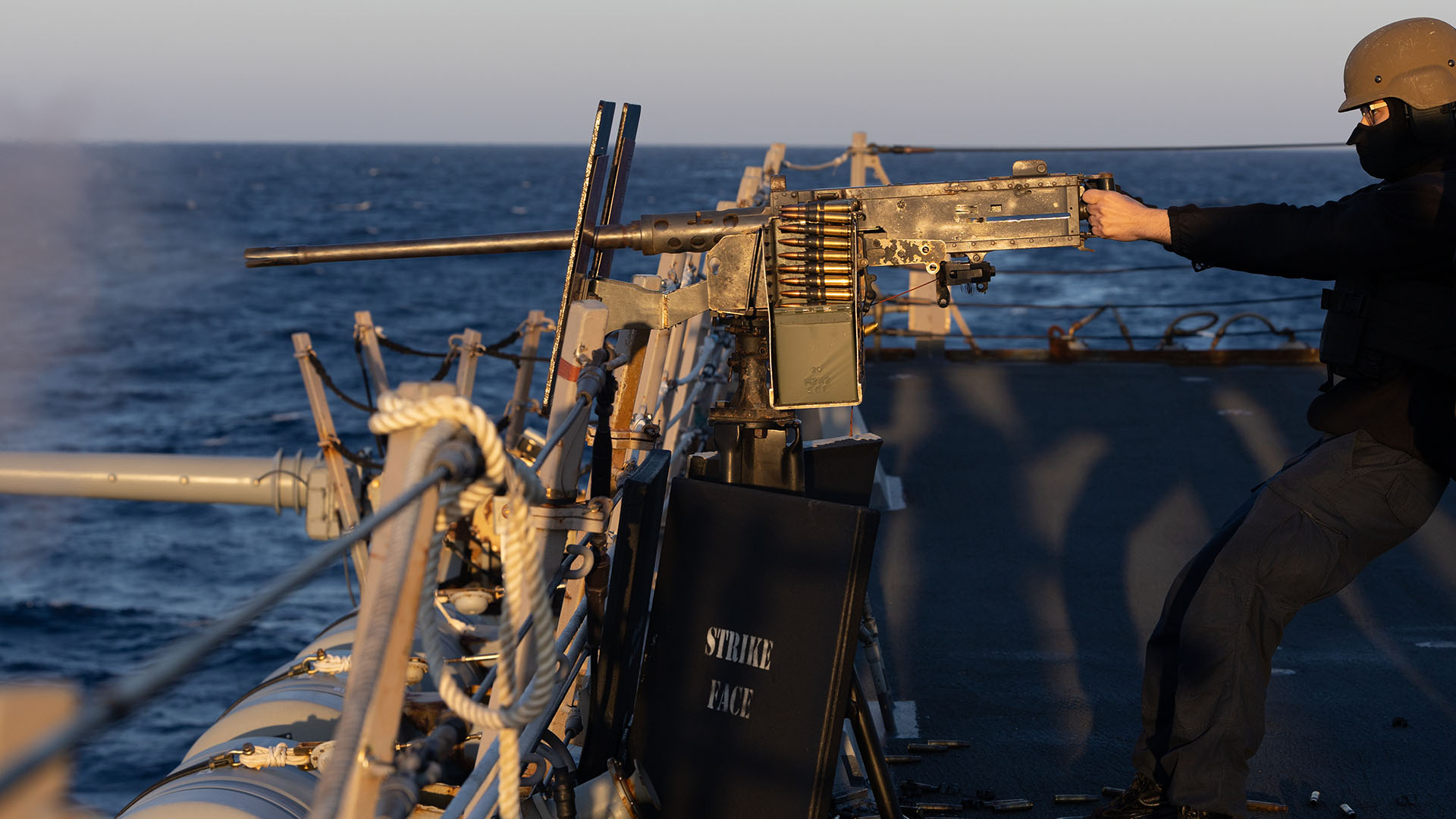
China, for example, has built several artificial islands since 2013 and stationed troops on them to claim that its territorial waters encompass about 90% of the South China Sea.
The U.S. military has responded by sending ships and aircraft on “freedom of navigation operations” in the South China Sea, leading to a close encounter in 2018 when the Navy destroyer USS Decatur had to change course to avoid a Chinese warship, which came within 45 yards of Decatur’s bow.
Long-range weapons are making the line between combat and combat support missions “very faint,” said Martin, who added, “At some point, the Navy will likely have to revisit whether there’s ever that much of a distinction for deployed ships operating in areas outside their immediate homeports.”
Other factors that are blurring the line on what is considered combat include non-state actors like the Houthi rebels having access to advanced weaponry, and the proliferation of cheap drones that any adversary can afford, Holmes said.
“We are having to think about defending our domestic bases against drones now,” Holmes said. “Defining combat is only going to get harder.”
Future threats
For the Navy, the future of combat at sea could look similar to the past.
A war between the United States and China would involve the type of naval combat that last took place during World War II, said retired Navy Capt. Thomas Shugart, an adjunct senior fellow with the Center for a New American Security think tank in Washington, D.C.
“I think it’s worth considering that no one has fought a true peer-on-peer, high-end naval war since the Battle of Leyte Gulf in 1944,” Shugart told Task & Purpose.
Top Stories This Week
However, the technology and concepts of naval warfare have evolved considerably since then. China has an arsenal of sophisticated weapons with very long ranges, including the DF-27 missile, which can hit targets on land or sea up to 8,000 kilometers away, according to the most recent Defense Department report on Chinese military power.
U.S. sailors would also likely face attacks from Chinese submarines, bombers, and surface ships, Shugart told Task & Purpose.
A war between the United States and China could mark the first time that hypersonic weapons are used against ships in combat, Shugart said. It could also involve other firsts in modern warfare, including combat between submerged submarines using homing torpedoes and peer-on-peer adversaries using aircraft carriers with jets, spy satellites, and artificial intelligence against each other.
“There are countless technologies and operational concepts that have never actually been deployed in combat in a peer-on-peer fight,” Shugart told Task & Purpose. “So, the one thing we can be assured of is that there are going to be surprises on both sides.”