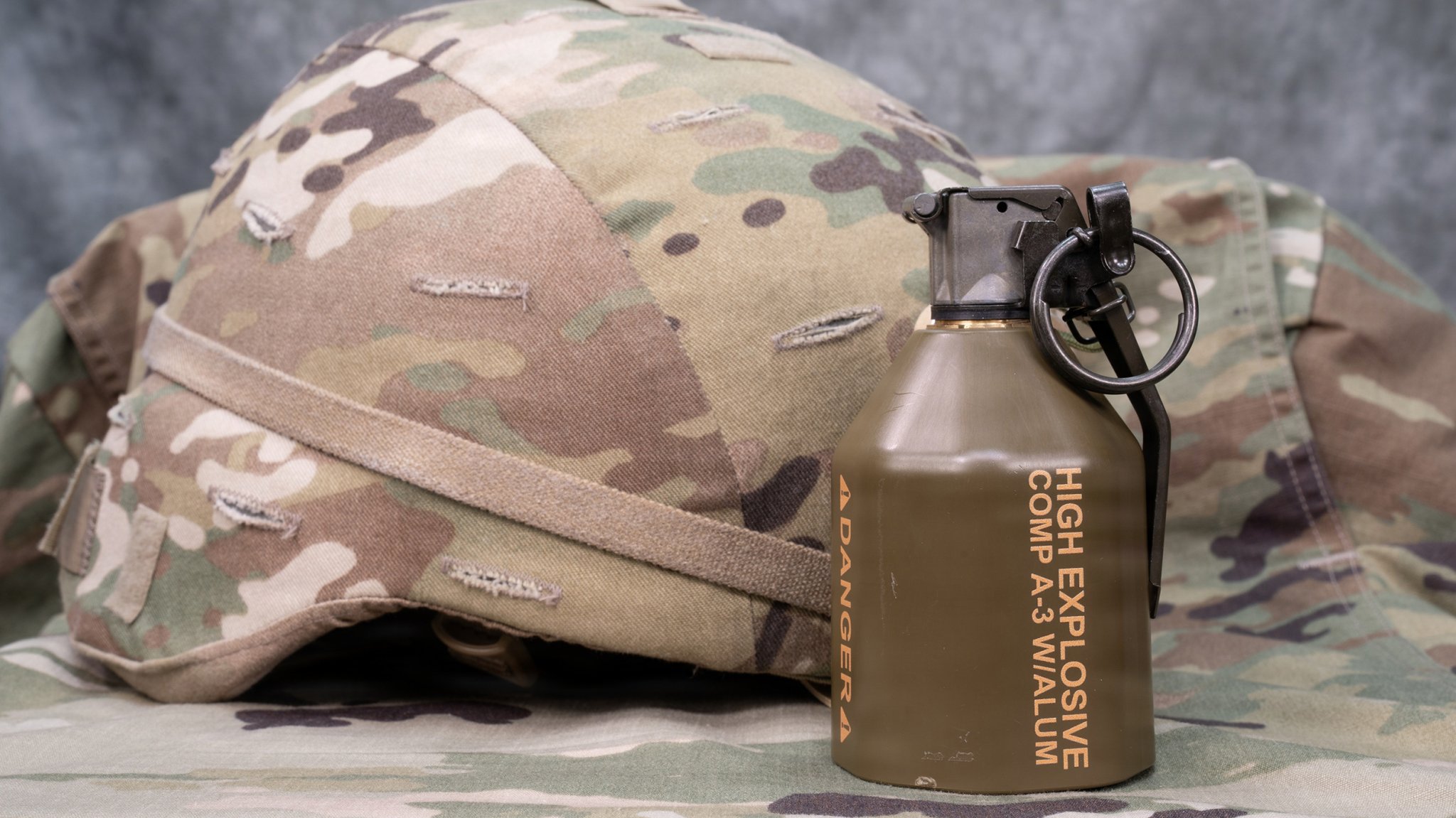
The Army has developed a new hand grenade that kills by using blast overpressure instead of fragments when it explodes, which Army officials say is more effective for fighting in close-quarter urban environments.
Blast overpressure is the rapid high wave of pressure that results from an explosion that violently compresses and decompresses human tissue. It can cause serious injuries to the lungs, gastrointestinal tract, brain, and other organs. It can also be fatal.
The M111 Offensive Hand Grenade, the Army’s first new lethal hand grenade since 1968, has a plastic body that helps direct overpressure, Army officials said. The grenade is meant to be used in confined spaces, such as rooms, bunkers, and caves.
Weighing 12.6 ounces, the M111 will augment the M67 fragmentation hand grenade, which will be used in open spaces, said John Troup with Capability Program Executive Ammunition & Energetics, an Army organization responsible for fielding armaments and ammunition.
Top Stories This Week
Its distinct shape, which resembles a bottle, does not create or direct blast overpressure, Troup told Task & Purpose on Thursday.
“The shape helps soldiers to distinguish the M111 from other grenades,” Troup said in a statement. “As soldiers train and practice with the M111, the shape will help aid muscle memory during extreme time-sensitive and high-dynamic environments.”
Troup said the grenade will first be issued to soldiers in the Army’s Immediate Response Force, which is capable of deploying anywhere in the world within 18 hours. The Army plans to start fielding the grenade to the rest of the services starting in 2028, he said.
Other grenades, such as the M67, spray lethal fragments when they explode, but that shrapnel can be deflected by obstacles within enclosed spaces, an Army news release says. This is less of an issue for grenades that use blast overpressure.
Another issue is that in recent decades, U.S. soldiers have often fought in poorly constructed buildings, making it dangerous to use fragmentation grenades, a retired Army infantry officer told Task & Purpose.
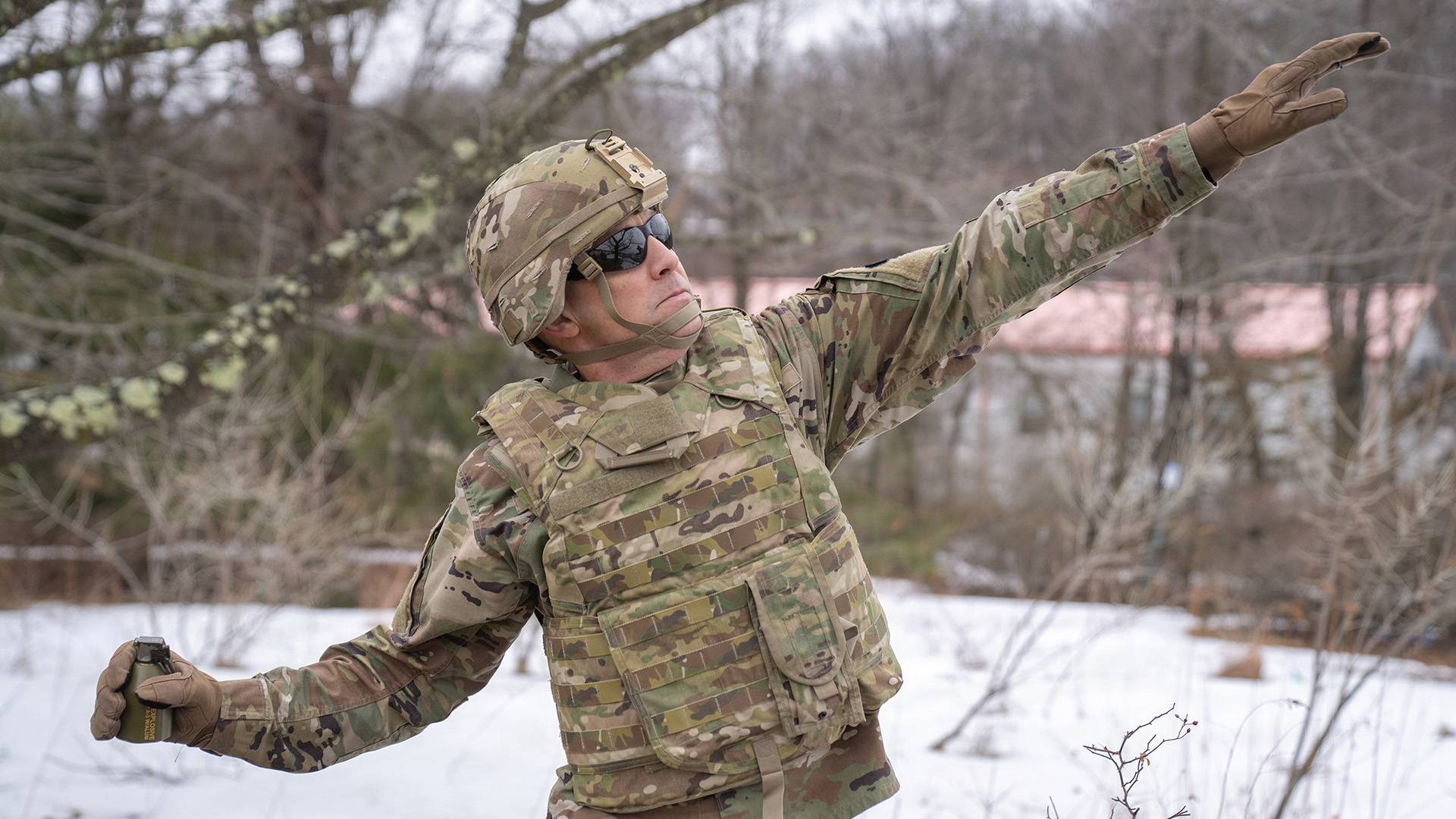
In such buildings, grenade fragments can penetrate walls and potentially hit friendly forces on the other side, the retired officer said. Blast overpressure, on the other hand, is more isolated to the specific room where the weapon explodes.
“One of the key lessons learned from the door-to-door urban fighting in Iraq was the M67 grenade wasn’t always the right tool for the job,” Col. Vince Morris, project manager for Close Combat Systems, said in the Army’s news release. “The risk of fratricide on the other side of the wall was too high. But a grenade utilizing [blast overpressure] can clear a room of enemy combatants quickly leaving nowhere to hide while ensuring the safety of friendly forces.”
The Army has long been aware of the risks to soldiers from weapons that generate blast overpressure, such as the Carl Gustaf recoilless rifle, and last year the service announced it would study how firing such weapons affects soldiers’ health.
Soldiers are already limited to how many rounds they can fire in a 24-hour period while training with the Carl Gustaf.
Todd Strader, a former Army mortarman who advocates for safety measures from blast overpressure risks, said it is somewhat ironic that the Army is adopting a new grenade that uses overpressure.
“Apparently, blast physics is reliable enough to weaponize against an enemy, but still debated when it is our own troops living among these blasts in training,” Strader, who leads OverPressured LLC, told Task & Purpose. “To their credit, the Army is leading the world in recognizing and taking measures to mitigate this unique exposure.”