Russian forces in Ukraine are learning that tactics based on “brutality” and quantity over quality can improve their fortunes, according to a 170-page report put out by the U.S. Army this month. Published last week, “How Russia Fights” lays out a series of hard lessons the U.S. troops are learning from Russia as its full-scale invasion of Ukraine steams towards its fourth year.
“The Russians have already reverted to Soviet form on the battlefield, favoring mass over maneuver, quantity over quality, capacity over capability, brutality over precision, and mobilization over readiness,” the report says.
Produced by the Army’s Foreign Military Studies Office at Fort Leavenworth, Kansas, it’s a rare look at how one part of the U.S. military is studying this war and what lessons can be taken from it. Based on events between Feb. 24, 2022, and June 30, 2024, it shows how Russia, despite sanctions, isolation, and battlefield losses, is rapidly adapting and refining a model of warfare that leverages mass, improvisation, and emerging technologies to sustain operations far longer than many expected.
Drones are foundational
One of the strongest themes in the report is how drones have become central to nearly every part of the Russian way of war.
Quadcopter drones, often rigged with improvised explosives or thermobaric payloads, are used at every level of the Russian military. These systems are produced at scale, often through informal networks, and treated as expendable munitions. Russia is reportedly going through tens of thousands of drones per month, according to analysts and open-source tracking.
Drones are now directly tied into command and fire support. Fixed-wing systems like the Orlan-10 conduct intelligence, surveillance, and reconnaissance, or ISR. Targets are passed to artillery batteries or FPV drone teams that engage the target. Another drone confirms damage. In many cases, drones have replaced manned forward observers entirely.
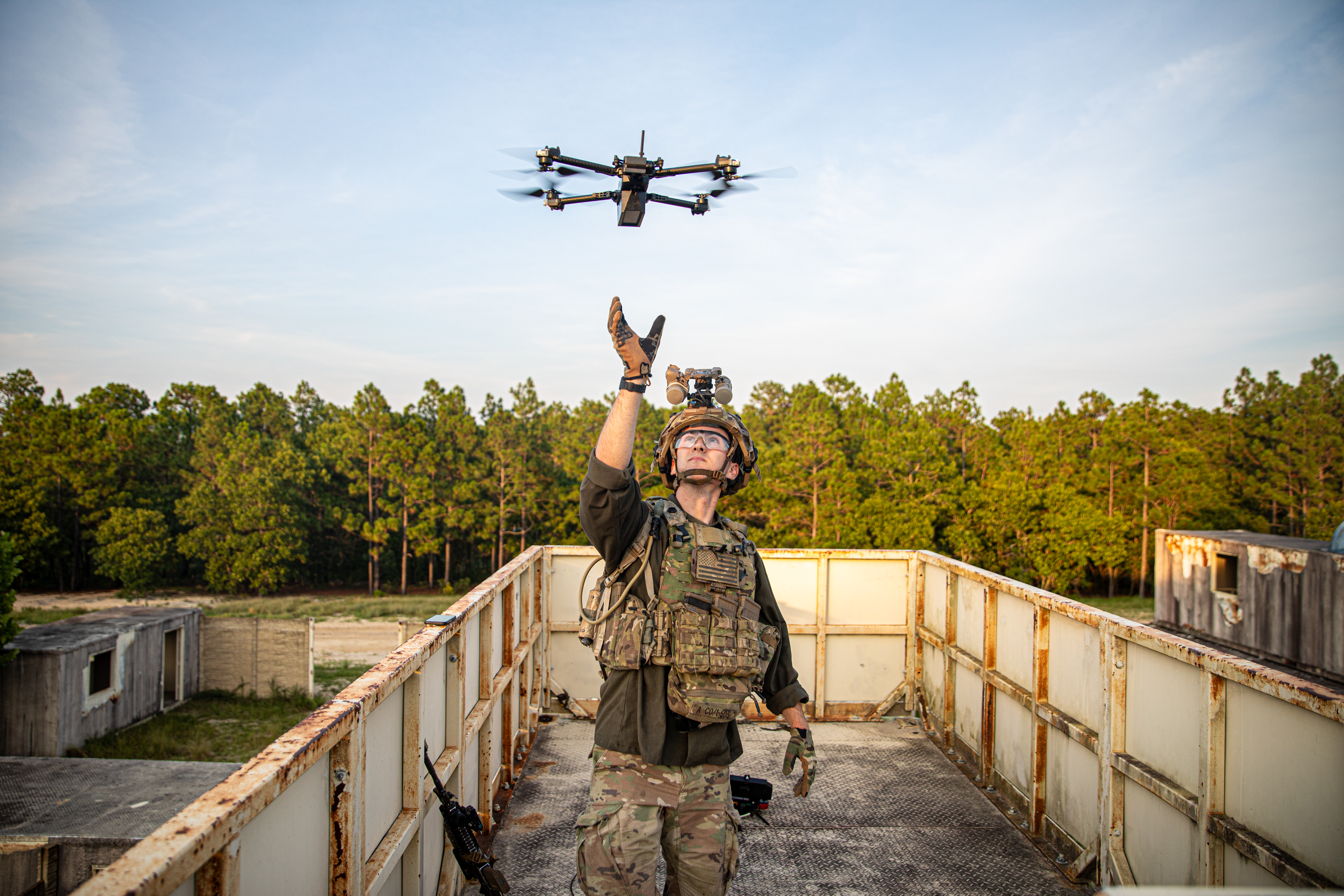
In contrast, Army units below the battalion level often don’t have their own drones, though efforts to fix that are underway.
Electronic warfare shapes the battlefield
Russia’s use of electronic warfare, EW, is another area the report highlights as both mature and deeply integrated.
Russian battalions independently operate systems like the Borisoglebsk-2 and Leer-3, which jam Ukrainian communications and GPS navigation, spoof drone signals, and expose the location of emitters. More than just a support capability, EW is used to shape the battlefield before major attacks.
Western-supplied guided munitions like JDAM-ERs and Excalibur rounds have reportedly been degraded in areas with dense Russian jamming. And not all of these capabilities are coming from high-end gear: commercial jammers purchased online, some as cheap as $20, are also being deployed.
Russian units are adapting
The Army’s assessment of Russian troop quality is nuanced. Some formations, like Spetsnaz or VDV units, retain a professional core. Others, especially mobilized conscripts and penal battalions, struggle with morale and coordination.
But even in lower-tier units, cohesion and tactical learning are improving. Officers are creating makeshift leadership structures. Training pipelines are becoming more efficient. And units that survive long enough are adapting to the demands of trench warfare and drone-saturated environments.
It’s not a well-oiled machine by any interpretation, but the soldiers and leaders are adapting and learning quickly how to survive.
Artillery is doing the heavy lifting
Russia has shifted decisively to an artillery-first doctrine, creating formations known as “army artillery groups.” These units integrate with drone ISR to deliver massed fires against static defenses and troop concentrations.
Within the U.S. military, the Army has traditionally emphasized maneuver warfare — mobility, initiative, speed. But as the report shows, Russia is winning ground slowly and methodically, with drones feeding targets to artillery in a sustained kill chain.
Top Stories This Week
A whole-state effort
A major theme scattered throughout the report is how this is a war that is being fought through all levels of society. Ministries, civilian industries, universities, and city governments have all been pulled into the effort.
A bread factory in Tambov, Russia, for example, has been retooled to manufacture FPV drones. Local officials help fulfill recruitment quotas and raise money to buy gear for troops. Vans originally designed for public service have been converted into field ambulances. Regional governments are given quotes for “kontraktnik,” volunteer enlisted soldiers. This blurring between civilian and military lines isn’t an accident — it’s part of how Russia sustains its war effort.
This crowd-sourced approach isn’t unique to Russia, with Ukraine employing similar practices, particularly fundraising for gear and equipment, but it does illustrate how large the effort has become to sustain this ‘special military operation.’
What is the U.S. doing about it?
The Army is already making changes. In 2024, it began incorporating drone awareness and concealment techniques into enlisted training at Fort Benning, Georgia, Fort Jackson, South Carolina and Fort Leonard Wood, Missouri. Soldiers now train to reduce their visibility to overhead ISR — a direct lesson from the Ukrainian trenches.
Modernization programs like Project Linchpin and TITAN are also underway, aiming to speed up targeting decisions and better integrate sensor data across domains.
The Pentagon’s July 10 memo, “Unleashing U.S. Military Drone Dominance,” opens up the branches to more rapidly acquire, field, and train with small drones by treating them like munitions instead of like an aircraft.
To break down the full report — and what it means for the future of U.S. ground warfare — we’ve got a deep-dive video up now on the Task & Purpose YouTube channel. It covers everything from drone saturation and GPS jamming to Russia’s artillery doctrine and how the Army is rethinking its own training and modernization in response. You can watch it here.