For more than four decades, the U.S. Army has been trying, and failing, to replace the M2 Bradley Fighting Vehicle. From the Armored Systems Modernization program in the 1980s to Future Combat Systems in the 2000s to the Ground Combat Vehicle in the years after, every major effort has collapsed under cost, complexity, or shifting priorities. Yet the Bradley, first fielded in 1981, continues to roll on battlefields across the world, including Ukraine, where it has finally faced down the Soviet-designed armor it was built to fight.
Now, with the XM30 Mechanized Infantry Combat Vehicle program entering full prototype construction, the Army says it is closer than ever to finally retiring the Bradley. Two industry teams, General Dynamics Land Systems and American Rheinmetall Vehicles, are bending metal on the most advanced infantry vehicle the service has attempted to field since the Cold War.
The Bradley that refuses to die
The Bradley was designed in the late Cold War as a fast, mobile infantry carrier that could keep pace with tanks and give soldiers firepower against enemy armor. Its 25mm Bushmaster cannon, TOW missile launcher, and relatively strong protection made it formidable in Desert Storm, where Bradley crews destroyed more Iraqi armored vehicles than M1 Abrams tanks.
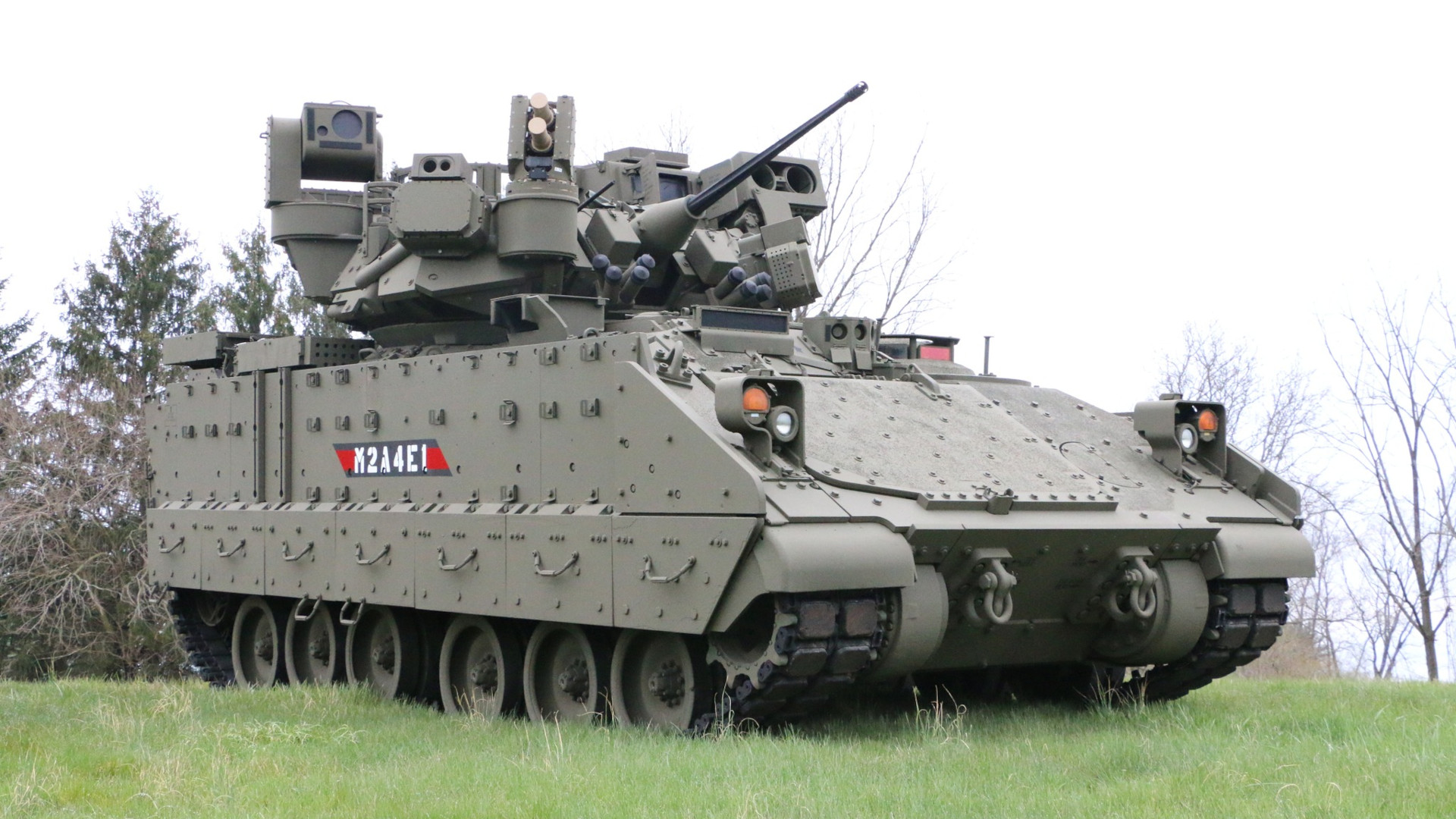
But the Bradley also exposed design limitations: cramped infantry space, vulnerabilities to catching fire after being hit, and survivability challenges against modern threats. Over the years, the Army has upgraded nearly every part of it, culminating in the new M2A4E1 variant with an improved engine, digital systems, and the Iron Fist active protection system.
Even so, the Army has spent decades trying to replace it. None of those attempts succeeded.
A graveyard of replacement programs
The first major effort, Armored Systems Modernization, aimed to build a series of new vehicles across shared chassis designs. The program collapsed in 1992 when the Cold War ended and costs ballooned.
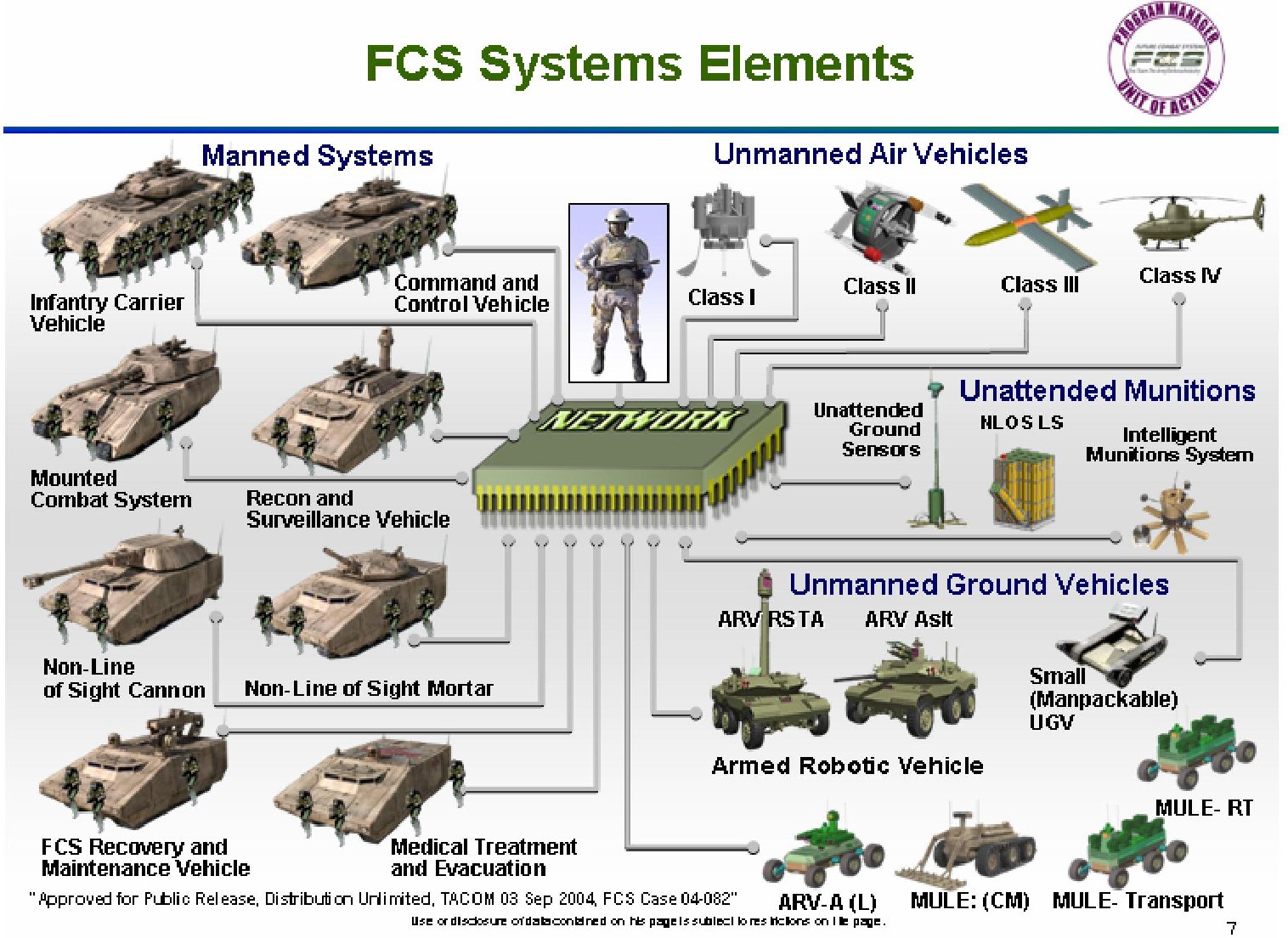
Future Combat Systems (FCS) followed in 2003, promising a fleet of networked, lightweight vehicles. Billions of dollars later, none could withstand the realities of Iraq and Afghanistan, where improvised explosive devices and RPGs shredded light armor. FCS was canceled in 2009.
The Ground Combat Vehicle effort launched soon after, promising a heavily armored troop carrier for a new era of mechanized warfare. But the prototypes were so heavy they barely fit on a C-17 and were more expensive than an Abrams. It lasted until 2014.
The Optionally Manned Fighting Vehicle, born in 2018 under the broader Next Generation Combat Vehicle initiative, suffered its own false start when no contractors could meet the Army’s requirements. It was reset in 2020 with a more flexible acquisition strategy and renamed XM30 in 2023.
Today, the XM30 is the closest any program has come to crossing the finish line.
What the Army Wants From the XM30
The XM30 is intended to carry a crew of two and six infantry soldiers, matching the Bradley’s squad compatibility while reducing the number of in-vehicle crew thanks to an unmanned turret and other automations.
A hybrid-electric powertrain is a core requirement. It provides greater fuel efficiency, reduced thermal and acoustic signatures, and the ability to run sensors on “silent watch.” In an era where even commercial drones carry thermal cameras, idling a diesel engine can be a death sentence.
The Army also wants open-architecture digital systems, allowing rapid upgrades without redesigning the entire vehicle. That includes everything from sensors and radios to active protection and autonomy packages.
The most notable leap, however, is lethality. The XM30 is expected to field the XM913 50mm cannon, or a 30mm gun with an upgrade path, giving it far greater range and the ability to fire programmable airburst munitions designed to counter both light armored threats and aerial drones.
This all comes amidst a changing strategic environment in the Army as modernization priorities are shifting and budgets tighten. The service has canceled the M10 Booker, trimmed Apache helicopter fleets, and slowed investments in Stryker brigades to focus resources on a smaller number of programs, including the M1E3 Abrams and the XM30.
The Finalists: Two Competing Visions
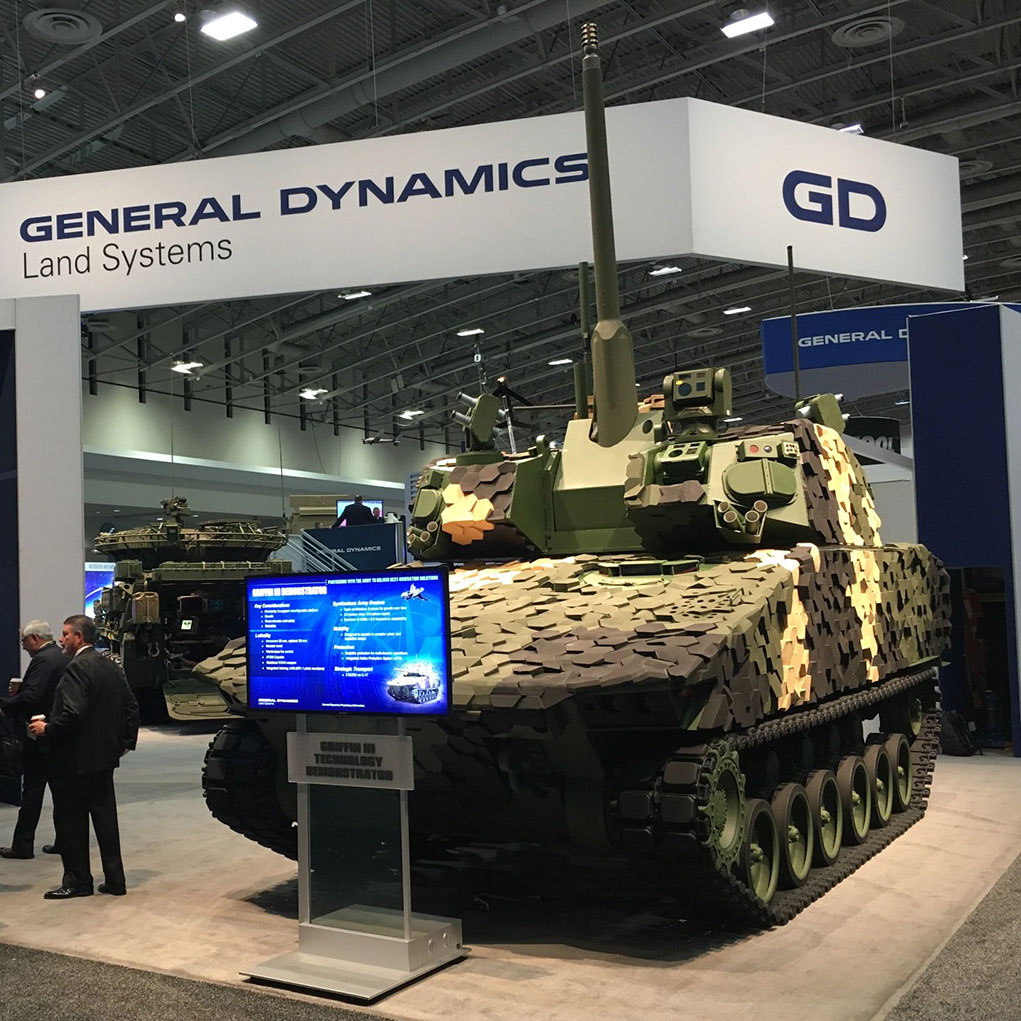
General Dynamics Land Systems: Griffin III
GDLS is basing its XM30 entry on the Griffin III platform. The vehicle mounts an unmanned XM913 50mm turret, placing the crew in a protected capsule within the hull. It includes hybrid-electric drive, modular armor, and compatibility with the digital architecture envisioned for the M1E3 Abrams.
Some may remember that the Griffin III was the platform submitted for the Army’s Mobile Protected Firepower program, which became the M10 Booker.
With a weight of around 40 tons, Griffin III is similar to the latest Bradley variants, heavy but potentially more familiar to Army logisticians. Critics say it looks more evolutionary than revolutionary, though that may be exactly what the Army prefers after years of failed moonshot programs.
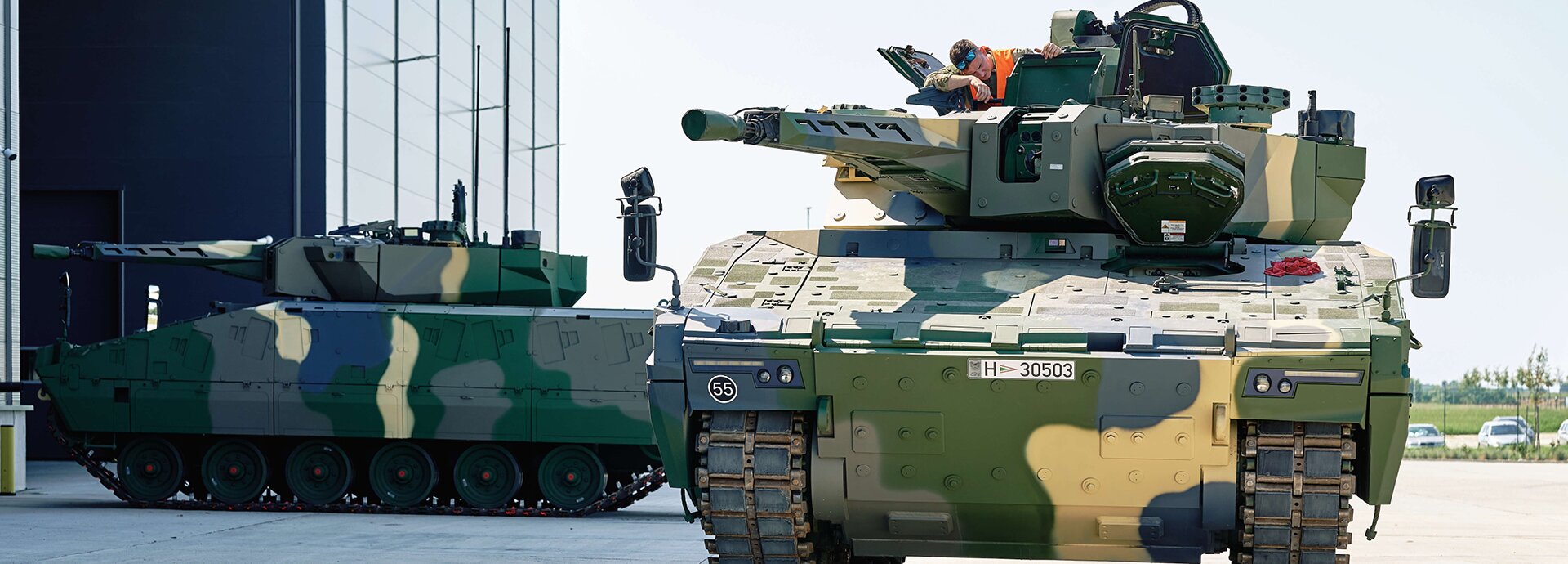
American Rheinmetall Vehicles: KF41 Lynx
Rheinmetall’s KF41 Lynx, already fielded by Hungary, offers a more modular and spacious design. The standard vehicle carries a crew of three and eight infantry, though the U.S. version could be configured to match the Army’s two-crew, six-dismount requirement. Its Lance 2.0 turret carries a 30mm cannon with upgrade potential.
The Lynx is heavier at around 44 tons depending on configuration, but emphasizes automation, sensor fusion, and optional integration of loitering munitions. While transportable by C-17, it may require preparation to fit the weight and dimension limits.
Rheinmetall is partnering with Raytheon, Textron, and L3Harris to build the vehicle in the United States, a major sticking point for Congress.
Why the Bradley Still Isn’t Going Anywhere
Even as the XM30 prototypes progress, the Bradley remains in service and will for years to come. The Army plans to operate both vehicles side by side for at least a decade. The M2A4E1’s improved engine, Iron Fist APS, and new electronics allow existing brigades to stay combat-ready as the XM30 ramps up.
Like the B-52 bomber or the M2 .50 caliber machine gun, the Bradley could very well outlive yet another attempt to replace it.
What Comes Next
Both teams are expected to deliver between seven and eleven prototypes in fiscal year 2026. Testing will run through 2027, when the Army intends to select a single design for low-rate production in 2029.
Fielding could begin in the early 2030s, though timelines have slipped before and may slip again. Budget pressures, force structure changes, and congressional oversight will all shape how, and whether, the XM30 becomes the Bradley’s true successor.
The Army’s struggle to replace the Bradley is one of the longest-running procurement sagas in modern military history. The XM30 represents a more pragmatic approach than past attempts with less ambition, more modularity, and a clearer path to adaptation.
But skepticism is warranted. The M10 Booker was canceled, the AbramsX demonstrator was folded into the M1E3 program, and Army modernization priorities can shift overnight.
On our YouTube channel, we discuss all of this in much greater detail, and maybe with a few jokes, you can watch that video here.