
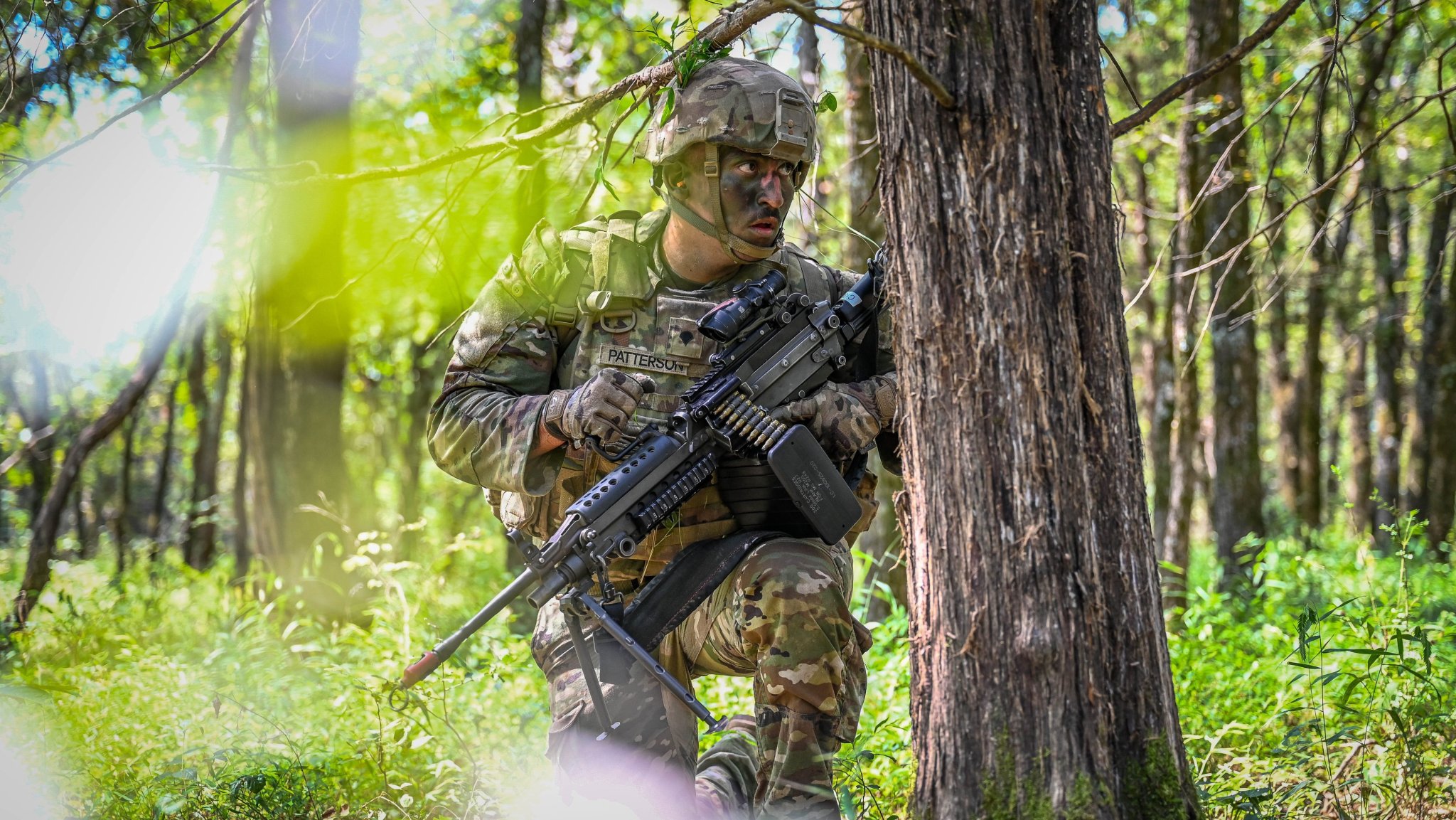
A new handbook gives troops pointers on how to scan the sky for drones, how to estimate the length of a football field, and reminders that innocuous things like the shine of their glasses or left-behind MRE garbage can give their position away.
Published Tuesday by the Pentagon’s Joint Interagency Task Force – 401, the 2026 Counter-Small Unmanned Aircraft Systems Quick Reference Guide includes drone tactics, techniques and procedures and a catalogue of drones and counter-UAS technologies currently in the U.S. inventory, including lasers, jammers, and interceptors. Task Force – 401 was set up in 2025 to coordinate drone defense and tactics across the services.
The guide tells readers up front, “it is not a substitute for doctrine or detailed technical guidance.” Instead, the guidebook is meant to be “a practical tool to help leaders and operators better understand the C-UAS landscape, identify solutions appropriate to their missions, and apply lessons learned.”
Lt. Col. Adam Scher, a JIATF-401 spokesperson, said this is the first unclassified edition of the guidebook. A classified version was released last year. The task force will continue to update the guide as drone threats adapt and new information comes from the services and interagency partners.
Top Stories This Week
The handbook breaks drone defense into four steps: detect the UAS, track and identify it as hostile or friendly, defeat it with kinetic or non-kinetic measures, and finally, report it up the chain of command.
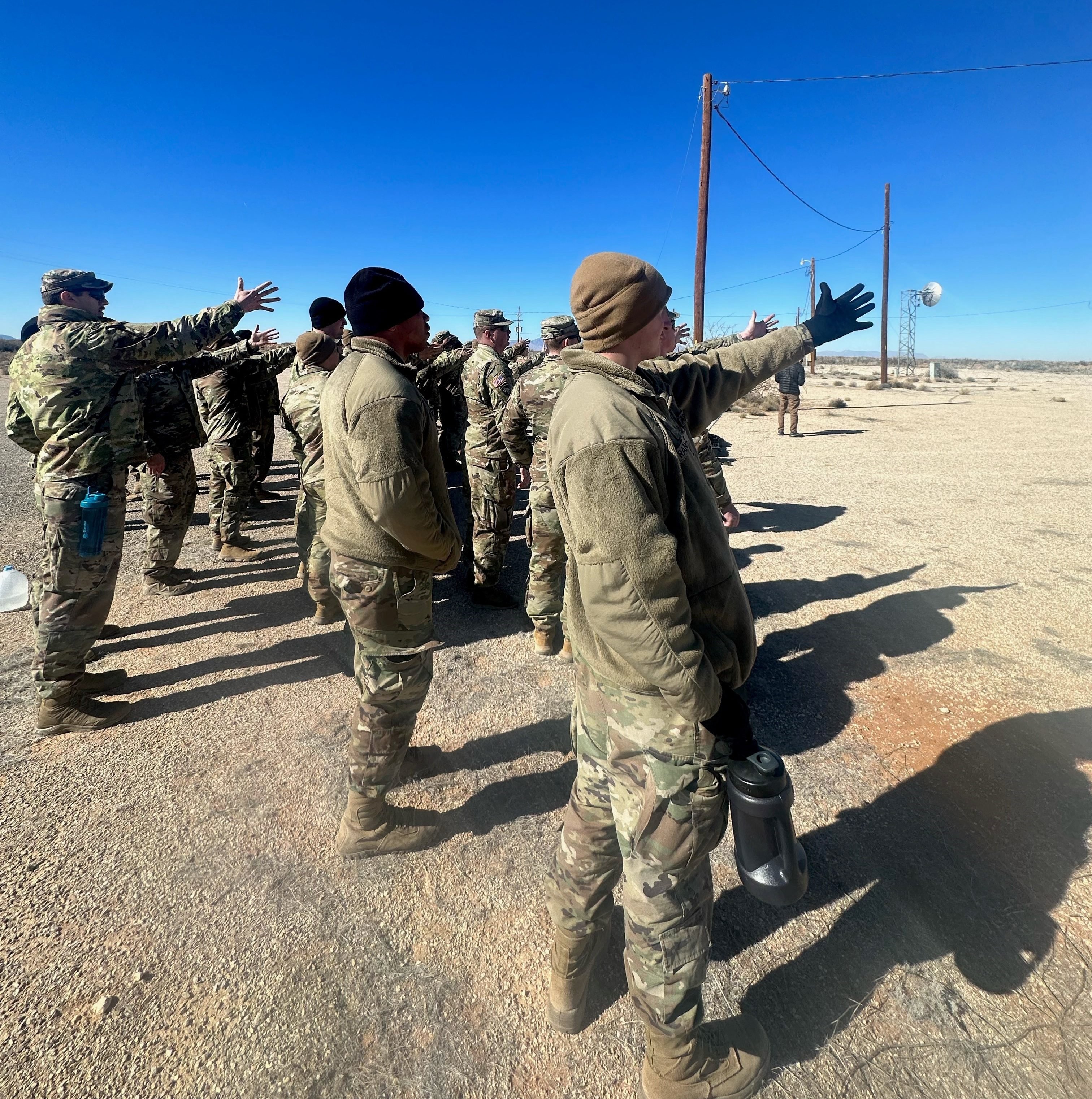
For troops on the ground, the guide also provides instructions and photos to illustrate tactics that don’t require technology or special weapons to better detect and track UAS overhead. The instructions include several visual scanning tips, including a “football field technique.” By putting distances in terms of a football field’s 100 yards, troops can estimate how much to lead a drone by with a weapon to shoot it down. Troops are also taught how to use their hands as a stand-in for estimating a horizon to watch for high and low-flying drones.
In addition to tips on taking down drones, the guide also offers advice on how to better avoid detection. With the greater risks that drones and other high-tech sensors bring, the guide emphasizes various forms of “camouflage discipline.” To reduce audio or visual noise, troops should account for seemingly innocuous risks like cell phones, lit cigarettes, and even trash or debris that “creates visual contrast.” And, of course, the guide also warns troops about radio signals from smart watches and fitness devices, which have already been shown to be a problem for U.S. personnel in the Middle East.
In January, the task force released its “Guide for Physical Protection of Critical Infrastructure,” which spelled out physical protection measures bases should take, expanded authorities for base commanders to respond to drones and instructions on how to harden high-risk areas.
As U.S. drone defense and personnel protection has gotten more scrutiny in the wake of deadly incursions like the 2024 attack on Tower 22 in Jordan and recent Iran operations, the guide recommends “compartmentalization” or breaking up highly populated areas like dining facilities or barracks into smaller sections, divided by “ballistic resistant walls.”
While the guide is unclassified, it includes a section on “lessons learned” with links to Army, Navy, Marine Corps, Coast Guard, NATO websites and programs that require official access.
Scher said the guide “reflects lessons” from battlefields in Europe and the Middle East, experiences from federal, state, and local law enforcement agencies leading c-UAS efforts to protect the FIFA 2026 World Cup and other America 250 events and input from troops conducting operations along the U.S.-Mexico border.
Loading comments…
Comments couldn’t be loaded. Please refresh the page.