
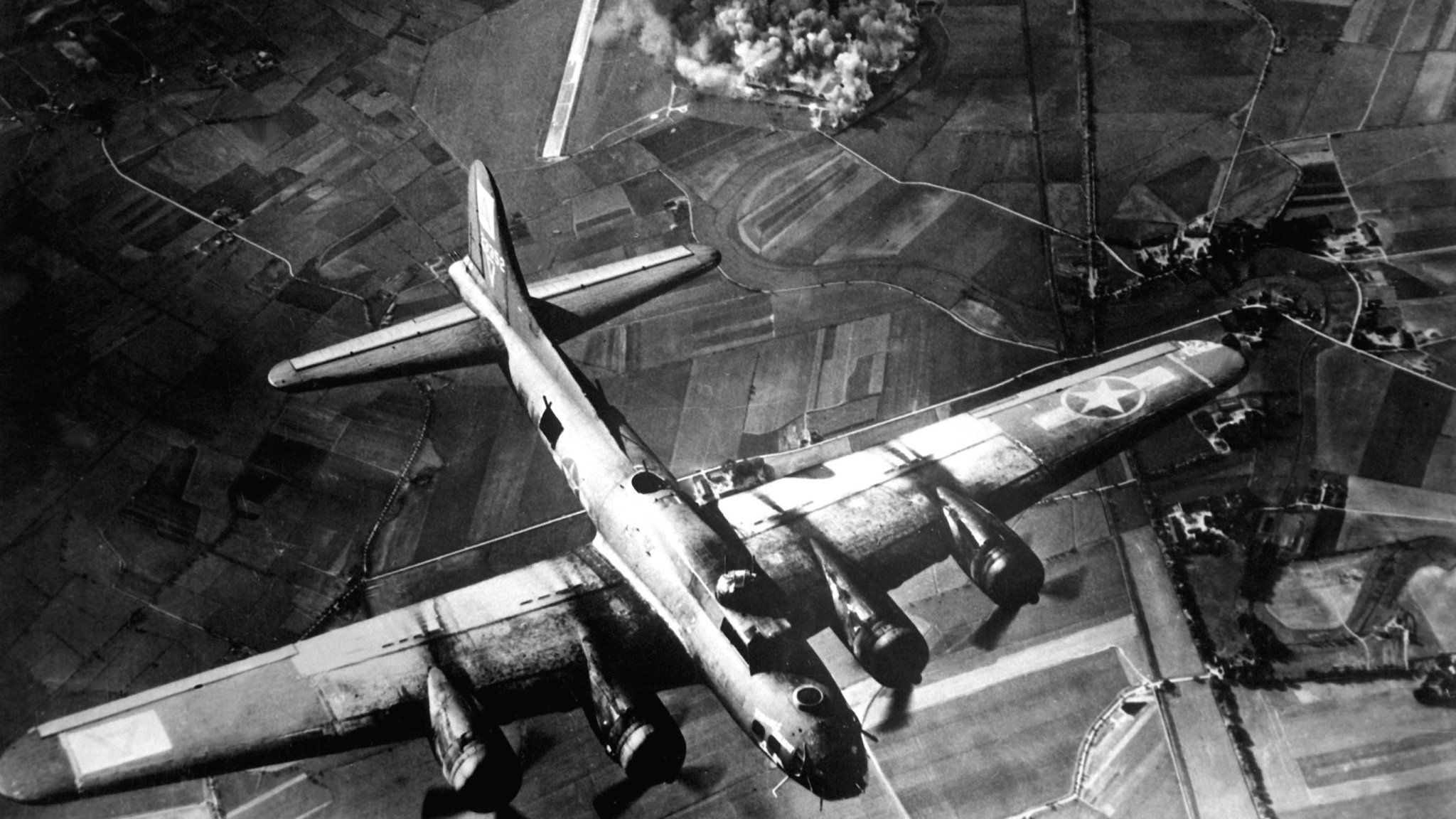
In the 2020s, uncrewed aerial systems, better known as drones, have become a standard part of modern military tactics. But eight decades ago, the U.S. military embarked on a short-lived project to create early, remote-controlled suicide drones.
The year was 1944 and the Allies were pushing into Axis-held territories in Europe. Large bombing missions were starting to gain momentum, devastating much of the Nazi industrial capacity, even as bombers suffered heavy losses to enemy flak and the German Luftwaffe. But some targets remained hard to hit, so the Army Air Forces devised a new plan: turn B-17 Flying Fortress bombers into the bombs themselves, guided by a “mother ship.”
Developments in rocketry and radio systems were already hitting new breakthroughs. The Germans were launching early cruise missiles in the form of the V-1. The American military was looking for its own powerful weapon. So on June 26, 1944, Major General Jimmy Doolittle, head of the 8th Air Force, formally approved Operation Aphrodite, directing the 3rd Bombardment Division to take the lead on developing a weapon.
A since-declassified film made by the 8th Air Force, “Flying Destruction by Remote Control,” laid out the plan. Existing heavy bombers would have much of their interior removed, along with weapons and other features normally needed for combat operations, freeing up several hundred pounds of weight. The converted B-17s would have enough explosives on board that a direct collision with a target could damage fortifications far more than any normal bombing mission. Once launched, each bomber would switch over to a remote control system and be directed by a crewed plane towards the target. Essentially the plan was to create a cross between what would now be considered a one-way attack drone and a bunker buster. These were battle-tested but worn out aircraft that could be put to use for one last job. Or as the video puts it, “…destined to be fitted out with special equipment, loaded to the gills with 20,000 pounds of high explosives, and sent on one last trip with a one-way ticket.”
The U.S. military’s plan benefited in part from its material needs. The Army Air Force had plenty of B-17s. Even though American bombers suffered heavy losses in combat from enemy flak and fighter jets — a little over a third completed the benchmark 25 missions, per the Imperial War Museum — they were readily replaced. But although planes weren’t cheap, this was at a time when American military industrial manufacturing was churning out aircraft and ships at a rate previously unseen. The United States made more than 12,000 B-17s during the war. The Army Air Forces could spare some.
Two programs were set up in the summer of 1944. The Army Air Forces carried out Operation Aphrodite, the U.S. Navy ran Operation Anvil, which also saw the Navy’s Consolidated PB4Y-1 Liberator bombers get similar conversions into drones. Combat missions started in August, with early flights intending to hit Nazi V-1 and V-3 bunkers, including the underground fortress of Mimoyecques.
Aphrodite and Anvil drones quickly saw problems. This was still the 1940s and remote controlling bombers in general, let alone in combat zones, wasn’t exactly a developed science. A small crew would get the bomber into the sky, activate the drone controls and then bail out before the aircraft reached the enemy target. In practice however the technology struggled, sometimes sending B-17s suddenly diving or stalling out. The initial remote control system was rife with issues, forcing the military to switch to a more simplified option, dubbed “Castor,” which began use in September 1944.
Unfortunately the plan encountered the same problem regular bomber flights did: enemy resistance. When the remote control technology didn’t fail, many of the planes were shot down and crashed before they could hit the target. The program had its share of failings even outside of combat, the most notable being on Aug. 12, 1944. While flying over the United Kingdom, an Anvil bomber, shortly after switching to drone control, suddenly exploded. Lt. Wilford Willy and Lt. Joe Kennedy, Jr., brother of future president John F. Kennedy, were on the bomber and died instantly in the blast.
Although Aphrodite missions continued into January 1945, their poor track record led to a halt of further flights. In the end, the Army Air Forces found success with more conventional and destructive carpet bombing missions. By the time the Allies were pushing into Germany in the spring, the project was effectively ended. A formal end came on April 27. But, the project set the foundation for some of the U.S. military’s current experiments in drone warfare and remote-controlled aerial wingmen.
The latest on Task & Purpose
- Sergeant Major of the Marine Corps learns an old lesson: Don’t mess with Audie Murphy
- A breakdown of safety procedures ‘directly contributed’ to an 82nd Airborne paratrooper’s death
- WWII Marine Raider who fought at Iwo Jima, Guadalcanal wants cards for 100th birthday
- Navy identifies special warfare sailor killed while parachuting
- Pentagon appears to pause renaming of Navy ships
