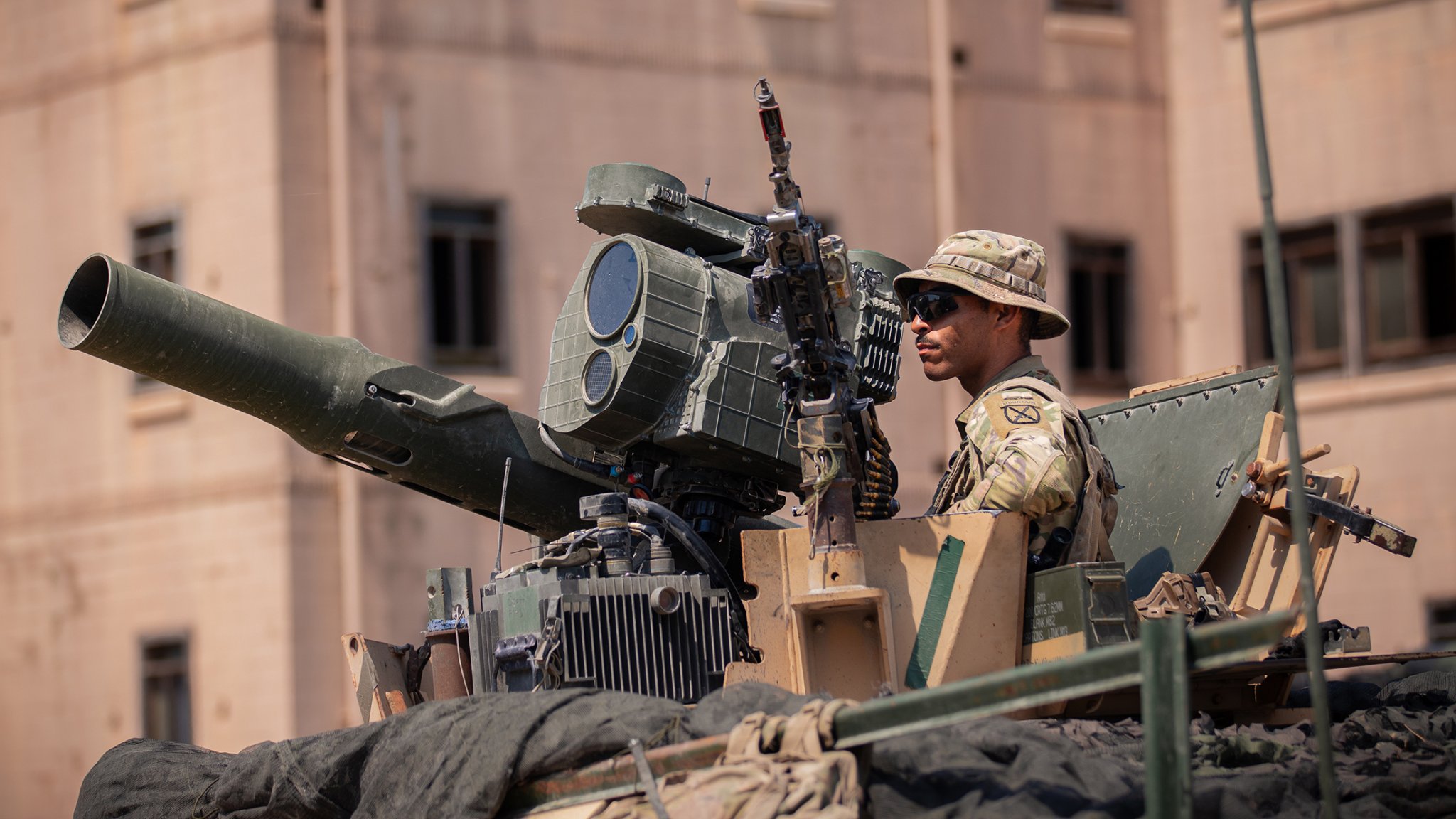
An Army unit that deployed to the Middle East at the height of 2023 drone attacks on U.S. forces is headed back to the region, Army officials said this week.
Approximately 1,900 soldiers with the 2nd Mobile Brigade Combat Team, 10th Mountain Division, have been authorized to deploy this spring, though the final deployment numbers may be lower, said Maj. Jason Elmore, a spokesperson for the 10th Mountain Division.
The unit is replacing the Iowa National Guard’s 2nd Infantry Brigade Combat Team, 34th Infantry Division, which was deployed to U.S. Central Command bases as part of a regular rotation of forces supporting Operation Inherent Resolve, the military’s counter-ISIS mission.
The unit rotation, while routine, comes as President Donald Trump has reportedly weighed the possibility of renewed strikes on Iran in the wake of weeks of deadly protests across the country. Estimates on the number of Iranians killed vary from a few thousand acknowledged by the government to humanitarian groups and advocate calculations of a little more than 30,000.
On Tuesday, Reuters reported that a U.S. fighter jet shot down an Iranian drone that had approached the Navy’s Abraham Lincoln aircraft carrier operating in the Arabian Sea.
Top Stories This Week
When the 10th Mountain returns to the region, it may end up being under similar circumstances to their last tour there. In the fall of 2023, the unit fended off nearly 100 Iranian drone attacks on American bases in Iraq and Syria, with three of their soldiers earning the unique title of drone ‘ace’.
The deployment was marked by constant stress and uncertainty. Attacks took place at all hours and sometimes multiple times a day, forcing soldiers into shelters and leading commanders to sleep in the operations center. For many, it was a trial by fire — a sobering introduction to modern combat, where the threat of drone strikes is a constant.
Now, the unit is heading to Iraq and Syria under a new commander for the ongoing mission to combat the Islamic State. Mobile brigade combat teams are relatively new developments for the Army; a product of the service’s Transform in Contact initiative, which places a great deal of emphasis on introducing new technologies to small unit tactics. The unit is a planned replacement for the Army’s 14 active duty and 20 Army National Guard infantry brigade combat teams, which the service envisions as a lighter unit that can move across the battlefield faster while remaining undetected.