The message being sent to Army aviators is “we can replace you with robots,” a UH-60 Black Hawk pilot said, adding, “whether it’s intentional or not, that’s a lot of what my junior pilots are getting.”
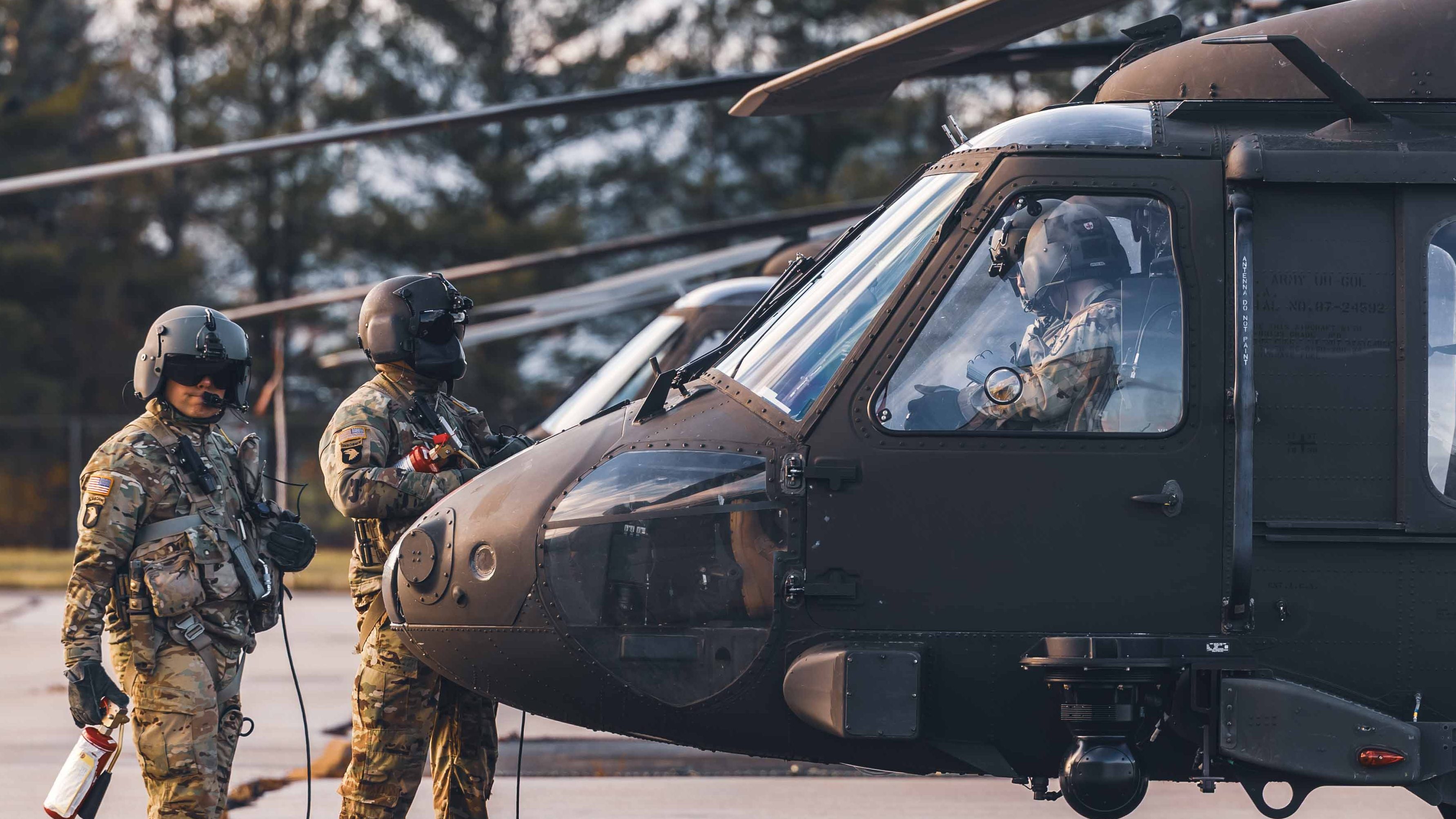
Pilots at major Army aviation bases in Texas, Colorado, New York and Hawaii said morale has been noticeably waning in the wake of a bombshell Army announcement in September that the service plans to cut nearly 6,500 active duty aviation positions, which includes pilots, other aircrew and some ground crew, in an early step towards an Army-wide shift to uncrewed aircraft, like drones.
The plan, pilots say, to slash thousands of aviators is rash and chaotic, and has left soldiers with more questions than answers.
One Black Hawk pilot said that since the announcement was made, “people don’t care anymore,” and that pilots like himself who still have a job feel “survivor’s remorse.”
Task & Purpose spoke to seven active duty Army pilots with various levels of experience and time in service for this story. The pilots spoke on the condition of anonymity in order to speak freely about their experiences.
The pilots said fears and confusion have been sown by a lack of official information from Army aviation leadership. One pilot at Fort Hood, Texas, said when they heard “rumblings” over the summer that major cuts were coming, leaders denied it.
“We’ve learned more from Reddit than we have from our actual organizations, unfortunately,” a junior pilot said.
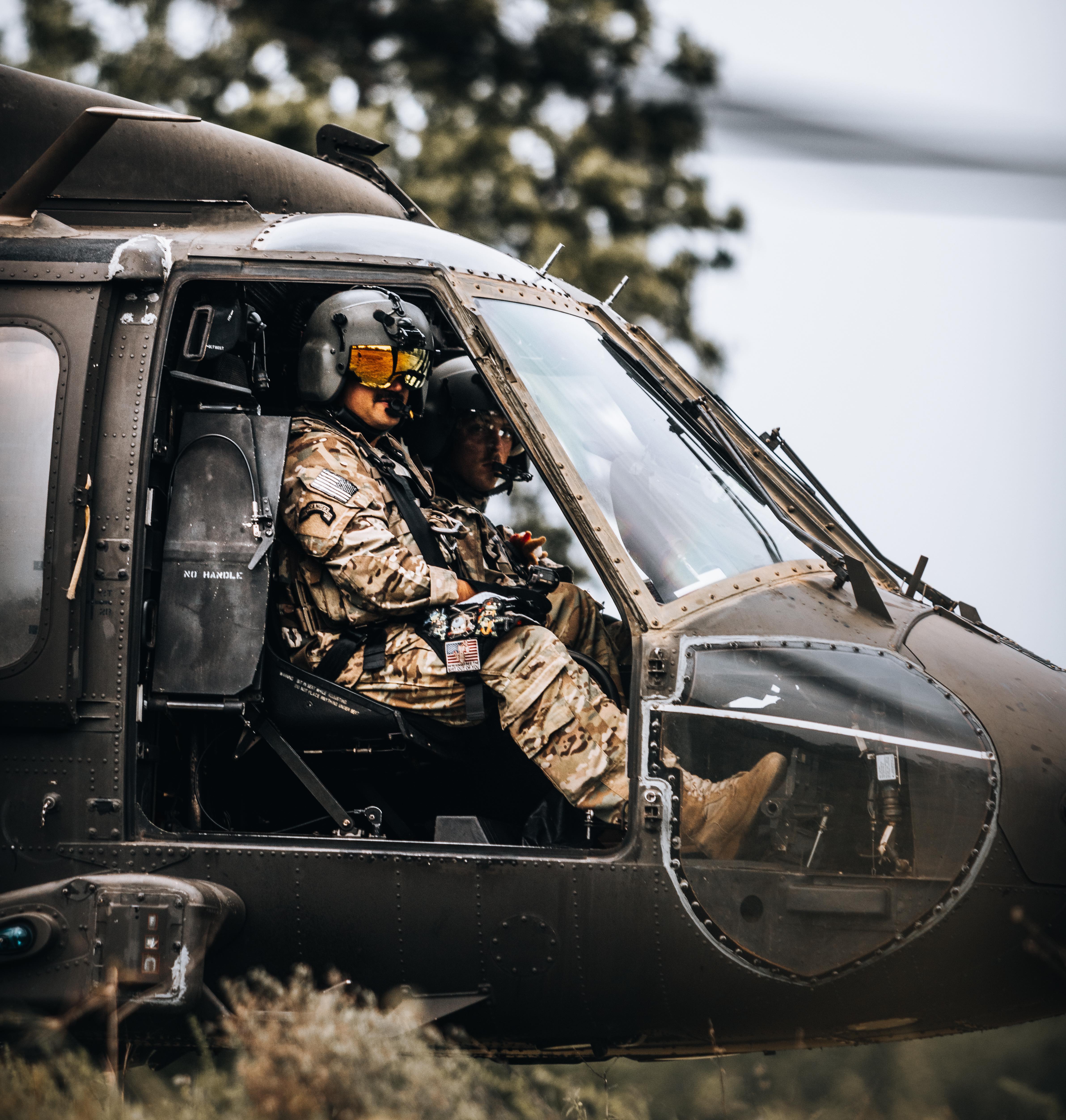
But beyond low morale, pilots say the Army is sacrificing their careers for a vision of war that makes no sense.
“It feels like we are designing a force that looks like Ukraine with just a ton of drones and robots and stuff and forgetting the fact that our primary thing is maneuver. We do that very well,” said a pilot with three combat deployments, one as an Army aviator. “We’re not a scrappy underdog trying to fight off somebody on our border.”
Another senior pilot, a chief warrant officer five, said that in real-world missions, “70% of what the pilots” do is coordination, not just flying.
“I can’t tell you how many times I’ve been tasked to go to a specific location and pick up these people, and I get there and they’re not there because they moved and they tried to get a hold of someone and they had radio connection issues or they told someone who didn’t pass that information along, right?” the pilot said. “If [an] unmanned aircraft arrives there, how does it find out that the people aren’t there? Like, how does the guy with the tablet find out from the unit there that these people moved and where they went to, and then update the location?”
Cutting 6,500 positions, but fewer real people
According to Army officials, there are currently 7,300 active duty pilots, including warrant officers and officers, among the roughly 30,000 soldiers in Army aviation.
“We lost 6,500 authorizations, or spaces, but not nearly that many people will be affected,” Maj. Montrell Russell, an Army spokesperson, told Task & Purpose.
One of the planners of the reduction push at the Army Aviation Center of Excellence at Fort Rucker, Alabama, Col. Doug Holt said an Army analysis found most cuts will come from “historical rates of attrition” like retirements and job-switchers.
In this case, as those pilots leave, the Army won’t fill the vacant positions.
“The Army isn’t making immediate changes as far as pushing folks right out the door,” Holt said. “We had some time to do analysis and kind of look at, hey, over a two-year period, how do normal systems work as far as historical rates of attrition — people competing for other opportunities, in and out calls for [military occupational specialties] that allow us to send people to other military jobs.”
But, Holt said, hundreds of current pilots could end up with no good options.
“We think that, using normal systems at the end of the day, there were really about 300 people — 100 junior officers, and about 200 warrant officers — that the normal way of doing business wouldn’t get us to the new reality,” Holt said.
In October, aviation units around the Army held talent panels that ranked personnel on Order of Merit lists. Those who fell in “at-risk” rankings toward the bottom of the lists were counseled about options, including voluntary transfers to a new branch or job.
The cuts in pilot jobs come from a major overhaul of how Army units are structured. The Army plans to inactivate 11 air cavalry squadrons, slash three aircraft companies, and revamp “modular” combat aviation brigades into four light and eight heavy-infantry focused units. The service will also bulk up the helicopter-heavy 101st Airborne Division at Fort Campbell, Kentucky.
Holt said “there’s definitely a future for manned aviation,” and referenced the resources that the Army has put towards speeding up delivery of the tiltrotor MV-75 aircraft, the designated replacement for the Army’s Black Hawk fleet.
“The Army’s clearly shown through resourcing that there is a spot for manned aviation for sure, and it’s investing in making sure that we continue to have ready and lethal formations with manned aircraft,” Holt said. “But obviously, the unmanned space is a growth sector, and the Army intends it to remain so.”
‘Dead ends everywhere’
The cuts have hit with a whiplash in Army aviation, a branch that was struggling to recruit new pilots less than a decade ago. Between 2010 and 2017, the Army was short by about 730 warrant officer pilots. To find more flyers, the Army offered retention bonuses and 10-year active duty contracts. Russell said that the Army is now considering altering those 10-year commitments so soldiers “can pursue alternate career paths.”
“We will give soldiers plenty of time to work through individual decisions,” Russell said, adding that soldiers will have until October 2027 to transfer to a new field, “if that’s what they want to pursue.
Task & Purpose spoke to a first lieutenant on the chopping block who said they arrived in their unit less than a year ago. Now they are considering an array of options, but many are proving to be complicated because “there’s no structure, no defined dates.” The soldier said they’ve put out applications and feelers to civilian employers and National Guard units, but those applications are difficult without knowing when they can expect to leave active duty.
Top Stories This Week
Transfers to new branches or occupational specialties only happen during certain times of the year and come with their own requirements, they said.
“It’s just been dead ends everywhere,” they said. “It’s been kind of discouraging.”
Another relatively junior pilot enlisted under the Army’s “street-to-seat” program, which sent new enlistees directly to Warrant Officer Candidate School and Army flight school after basic training. Now an AH-64 Apache pilot, the soldier said their options to stay in the Army are “extremely limited” because they don’t have “any real Army experience to fall back on.”
Though the Army has put forth reversion to a previous MOS or enlisted job as one path for pilots, street-to-seat soldiers wouldn’t be eligible for either path.
“Pretty much all the street-to-seaters that I’ve talked to have no interest in going to Fort Moore [now Fort Benning, Georgia] for 12 weeks to potentially end up as an ordnance officer in Fort Riley [Kansas],” the Apache pilot said. “That is very much a bait and switch that I think not a lot of people are going to tolerate after all of this.”
In 2026, the Army will give soldiers the chance to request early separation. But the number of requests “will be limited to ensure critical shortages across the Army are adequately prioritized,” according to the counseling paperwork.
Planning for the future
Many pilots say the sudden cuts have torn apart long-term plans and major life decisions that soldiers made under past promises from the Army that now feel broken. A good chunk of the Army’s pilots began as enlisted soldiers who commissioned and went to flight school. Even early in their flight careers, many of those soldiers are at or close to the halfway point of 20 years of service, complicating decisions to leave the Army or complete a career with retirement benefits.
Among junior soldiers, many are at their first duty station after flight school, where they were previously assured they would be stationed for five years as new pilots. With that promise of stability, many young pilots buy homes at those bases, said a junior pilot who is worried that more aviation cuts could come in the future.
“We gotta take care of our families,” the junior pilot said. “If we have to leave, sell houses, relocate ourselves, it’s not a good situation, so morale is pretty low across the board.”
All pilots will know their fate by May 2027, when two final, involuntary rounds of cuts could move soldiers to unwanted jobs or out of the Army, according to the PowerPoint slide.
Joshua Lee, a command chief warrant officer for an Army Reserve brigade being deactivated (the Reserves are cutting about 4,600 aviation jobs) serves as the president of RTAG, a nonprofit that helps aviation veterans transition post-service. Lee said there could be tens of thousands of civilian jobs opening in the next few years amid a wave of pilot retirements. But civilian airlines require around 750 flight hours and a majority of Army pilots being cut are just a couple of years out of flight school, with only a few hundred hours of flying. Those pilots would have to pay to build up hours in training programs, either out of pocket or perhaps with GI Bill benefits.
“It’s going to be a hard go, I think, for a lot of people if they don’t have readily available funds or something like that if they want to transition to the civilian side,” Lee said.
But, on the bright side, Lee said the “National Guard is actually probably the best option right now for people, especially if they’re rated.” He’s found that the National Guard in some states, like Michigan, Wisconsin, and Colorado, are looking for pilots.
CORRECTION: 12/3/2025; An earlier version of this article inaccurately stated that the Army was cutting 6,500 authorized positions for pilots. The Army is cutting 6,500 authorized positions among aviation jobs, which includes pilots, aircrew and ground crew.