
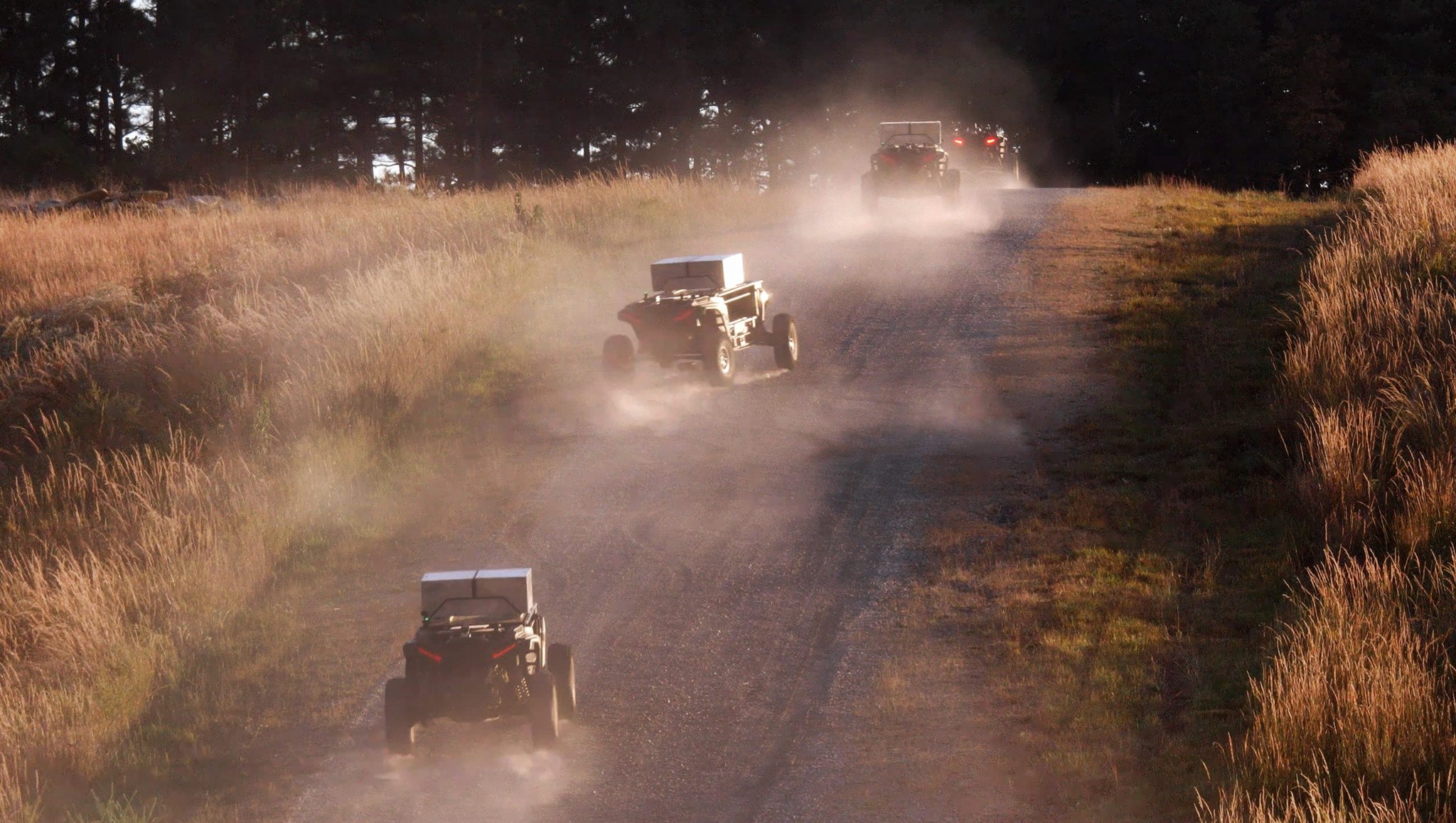
Four robotic vehicles were sent hunting for enemy targets during a military demonstration at Fort Knox, Kentucky, recently, but only one initially moved.
Guided by satellite imagery, the unmanned vehicle climbed a hill, scanning the surrounding terrain while the other three waited behind. Halfway up, it spotted a potential target and abruptly stopped.
Two other robotic vehicles advanced to provide support before a simulated rocket strike hit a target roughly 300 yards away.
Autonomous off-road vehicles capable of hunting enemy targets might sound like something out of the “Terminator” franchise, but the Oct. 15 demonstration offered a glimpse of how the technology could work on a modern battlefield.
The four experimental vehicles were developed under the Defense Advanced Research Projects Agency’s RACER program, which aims to give unmanned ground vehicles the ability to navigate difficult terrain without human drivers.
The system used satellite images to help locate potential targets, while a human operator could review what the vehicles found and decide whether to launch an explosive drone at them.
The demonstration was conducted in response to a request from U.S. European Command, which wanted to explore whether autonomous vehicles could operate ahead of American troops to locate potential enemy forces without putting soldiers directly in harm’s way.
Fort Knox was selected in part because its terrain could simulate conditions American forces might encounter in Europe.
“We looked at how a unit could deploy these types of autonomous capabilities in a theater like EUCOM to discover potential operational value and relevant technical challenges.” Dr. Jason Gregory, DARPA’s deputy program manager, told Task & Purpose.
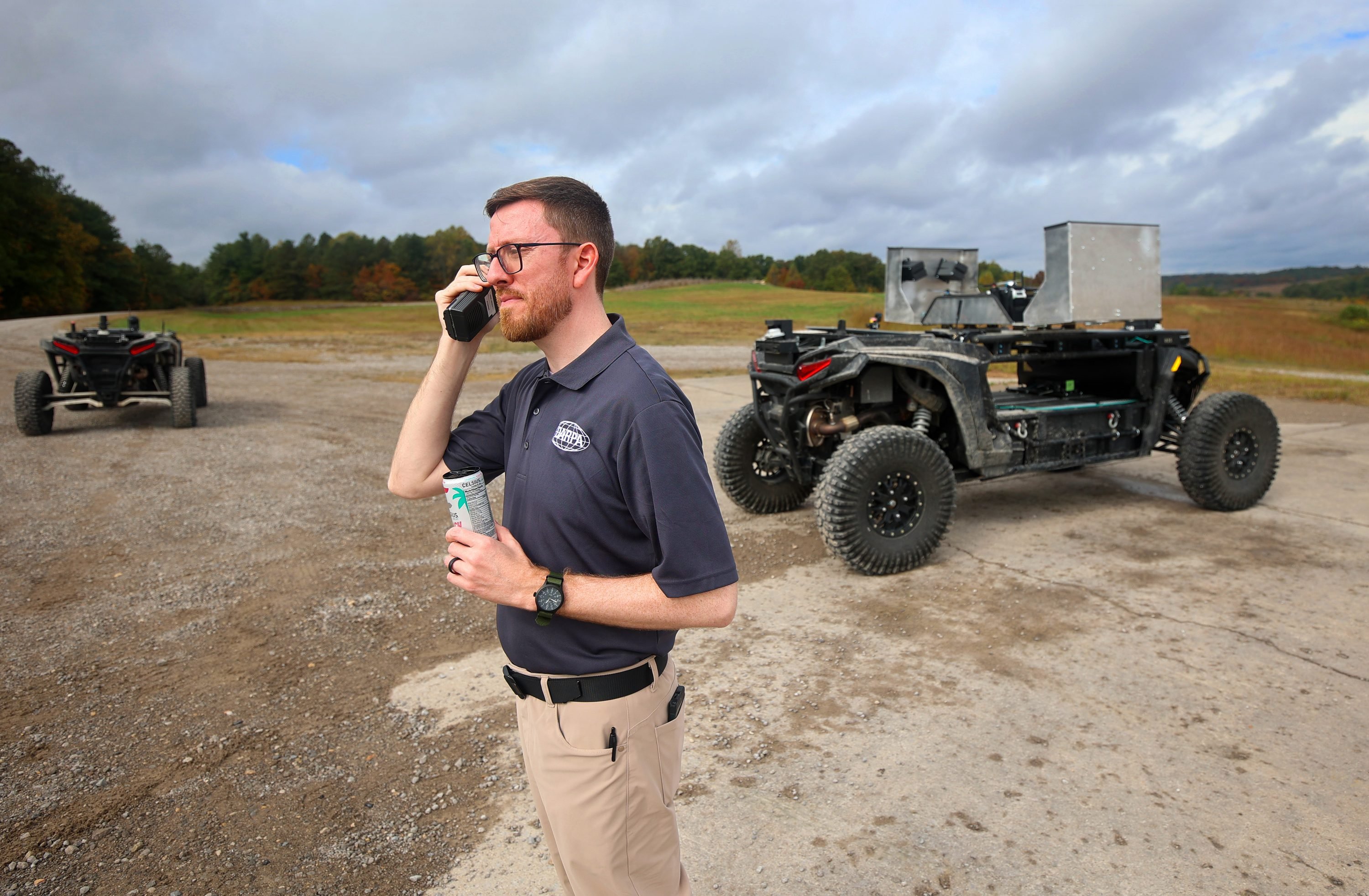
The technology remains experimental, but DARPA hopes other Pentagon programs will build on the demonstration to develop systems that could eventually be used in combat.
“We showed what’s possible,” Gregory said.
According to DARPA, the system was designed to comply with Defense Department policy requiring human oversight of decisions to use lethal force.
The Fort Knox demonstration comes as the Army is testing an expanded range of unmanned vehicles designed to take on dangerous battlefield missions, from delivering supplies and evacuating wounded troops to locating enemy forces and supporting attacks.
Earlier this year, an Army solicitation highlighted the dangers of the “last tactical mile,” the final stretch of a journey to troops on the front lines, describing it as “often the most dangerous and logistically complex.”
While the technologies serve different purposes, they reflect a growing effort to expand what unmanned systems can accomplish on the battlefield while reducing the number of American service members exposed to danger.
Loading comments…
Comments couldn’t be loaded. Please refresh the page.