Small drones have become one of the most dangerous threats on today’s battlefields, in much the same way that improvised explosive devices were the dominant danger during the wars in Iraq and Afghanistan. They’re cheap, deadly, and hard to counter. Quadcopters loaded with explosives or used for surveillance have destroyed tanks, stopped convoys in their tracks, and killed countless. The U.S. military has watched this play out and has been racing to catch up, on both offense and defense.
On the defensive side, things like laser weapons, large microwave systems that fry the drone’s electronics, and even advanced interceptor drones have been developed. But for a soldier on patrol in a small squad or out in a listening post, those large systems don’t do much for them. That’s where the Army’s Project Flytrap comes in.
Beginning in June of 2025, the Army and NATO allies held Defender Europe 25. It was here that Flytrap 4.0, a joint project between the U.S. and U.K., was put to the test. Its purpose is to develop a layered defensive system for individual soldiers at the squad level, a glaring gap in the military’s capabilities.
What is Project Flytrap?
Project Flytrap started inside the Army’s Rapid Capabilities and Critical Technologies Office (RCCTO) as a soldier-driven innovation effort. Instead of waiting on high-end tech, Flytrap combines commercially available gear, modified off-the-shelf systems, and military-grade sensors into a layered defensive package that soldiers can operate independently and without an excessive amount of training.
Unlike more expensive systems like the DE M-SHORAD or microwave weapons still being developed, Flytrap is intended to deploy fast, across multiple units, and actually be usable by soldiers under fire.
The latest test involved U.S. Army Europe and Africa units, primarily the 3rd Infantry Division, the British Army’s 7th Light Mechanized Brigade Combat Team, and teams from the RCCTO, Army Futures Command, and the Joint Counter-small Unmanned Aircraft Systems Office (JCO).
During the evolution, soldiers ran drils simulating FPV drones swarms from multiple directions, kamikaze quadcopters using terrain for surprise strikes, GPS-denied environments, and mixed payload threats.
The emphasis wasn’t just on how the gear performed, but how quickly junior leaders and operators could integrate it into their battle rhythm.
Top Stories This Week
Layered defenses
Flytrap isn’t one piece of gear. Rather, it is a layered system built from components that fill different roles to detect, disrupt, and destroy enemy drones.
The first layer, detection, is accomplished by several systems. Imagery from the exercise shows radar panels, electro-optical and infrared optics, and passive listening systems.
- Echoshield radar system: This was spotted on a Stryker and is a compact and relatively lightweight device that is tuned to detect small drones with minimal radar cross sections.
- RADA RPS-42: was also present. This 360-degree radar can detect drones out to 30 meters away, and is already found on the Marine Corps’ MADIS and L-MADIS vehicles.
- Skyview listening system: This passive device can hear incoming threats and is highly mobile. Similar to the network of early-warning systems in Ukraine, Skyview alerts troops to incoming threats up to 500 meters away using SquareHead panels. With multiple panels, you can even triangulate the drone’s location.
Giving soldiers greater visibility of sky can enable them to relocate to a safer location, conceal their positions, or begin setting up countermeasures.
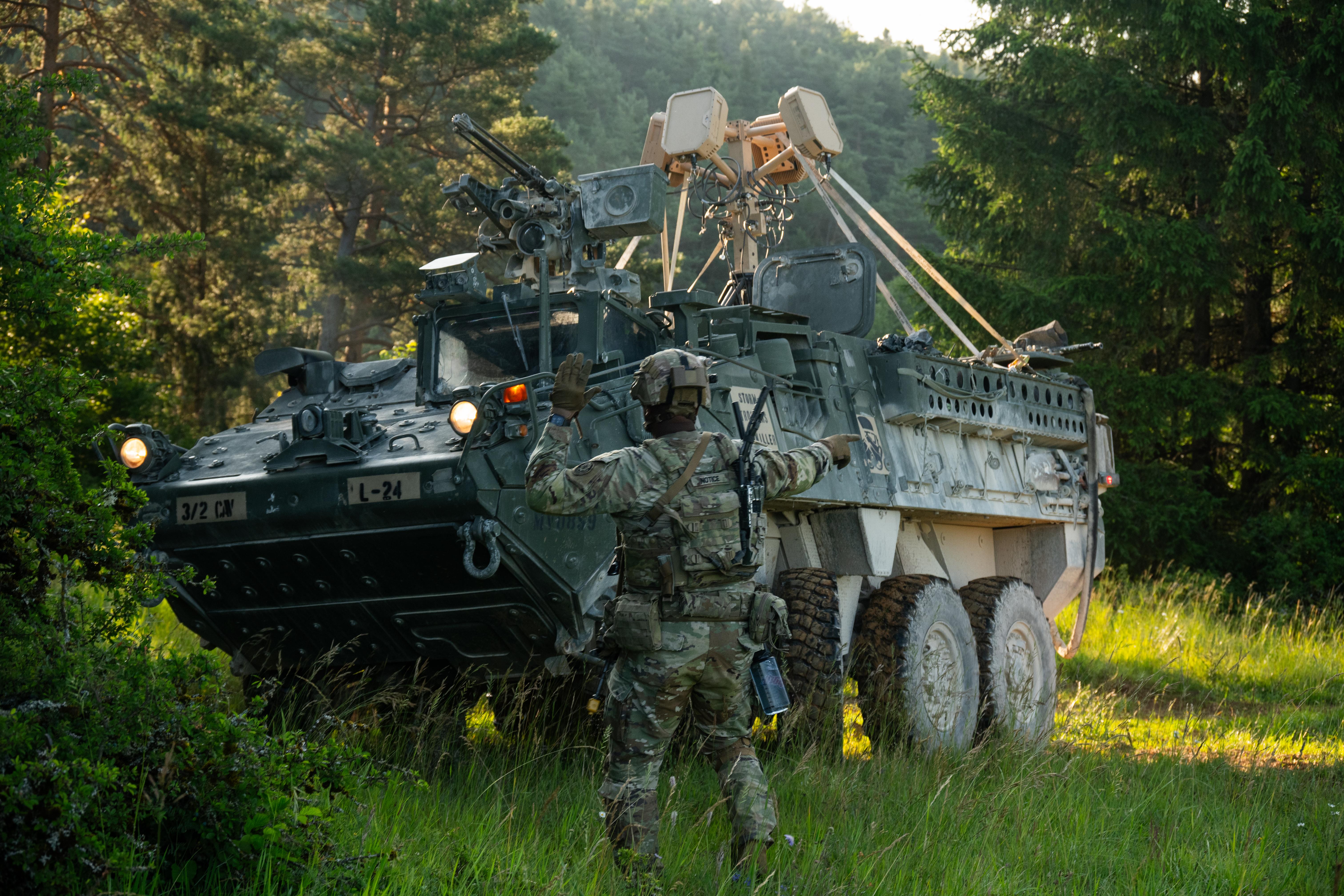
Once the drones are detected, soldiers can move to the disruption layer. Some of the components here include:
- NightFighter-S: This disrupts the 2.4 and 5.8 GHz frequency bands that drones are typically controlled through, and can also disable navigation.
- DroneBuster, DroneGun, Drone Defender: Similar to the KnightFighter, these rifle-like devices jam the control signals.
- Wingman and Pitbull: These are wearable and look like radios. The Wingman detects the drone and alerts the soldier wearing the device, who can then activate the Pitbull to attempt to jam the signal.
These tools give soldiers a way to disable or disrupt drones before they strike, either by crashing them or forcing them to return to their operator and betray their position.
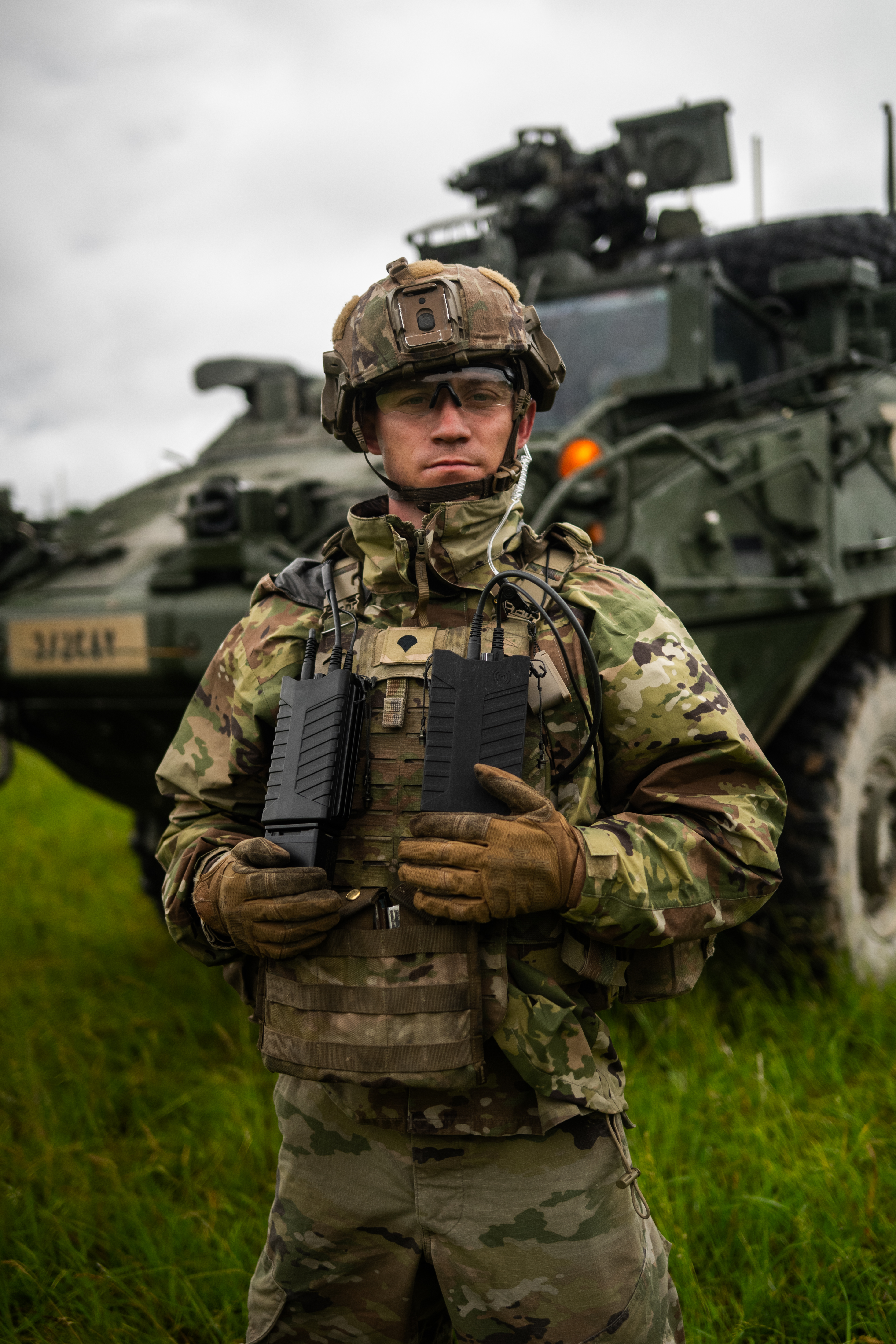
Some drones can’t be jammed, or might be guided by artificial intelligence and therefore receive no commands from a remote operator. In that case, you have no choice but to destroy the threat.
The kinetic kill options are relatively simple and consist of:
- Smash 2000 optic: This advanced optic sits atop the rifle like any other, but has a computer that essentially locks-on to a target and sends the round downrange when a hit is most likely.
- Shotguns: Everybody’s favorite solution, but with a twist. The Army is testing the 12-gauge SkyNet shells. These contain a net that can bind a drone’s propellers at up to 420 feet away.
- Drone-on-drone: Though not called out specifically for FlyTrap, the Army has recently been testing drones to take out other drones. In a recent video, a quadcopter armed with a Claymore mine took out a fixed-wing drone in tests.
These three layers take lessons learned in Ukraine, Gaza, and elsewhere to give troops some more ways to defend themselves at the often overlooked squad level, where soldiers are most vulnerable.
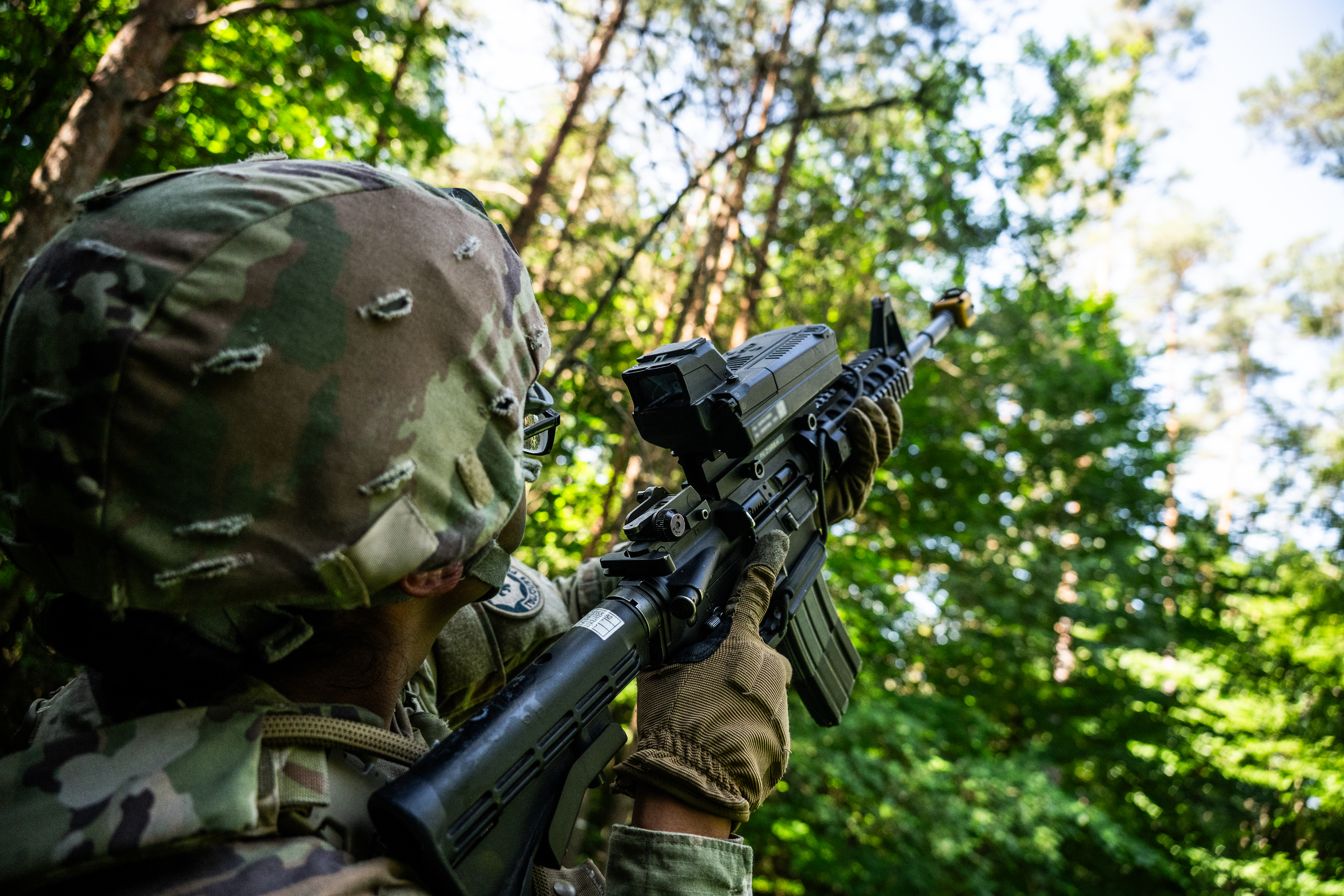
The Army knows that small drones are here to stay. Leaders also know that most units won’t have access to laser weapons or million-dollar missile interceptors. That’s why Project Flytrap matters. It is designed to be cheap, modular, and flexible, with tools ready today, not five years from now.
It isn’t perfect and is still evolving, but we discuss all this and more a little deeper in our video on YouTube. You can watch that here, and while you’re there, don’t forget to subscribe.