
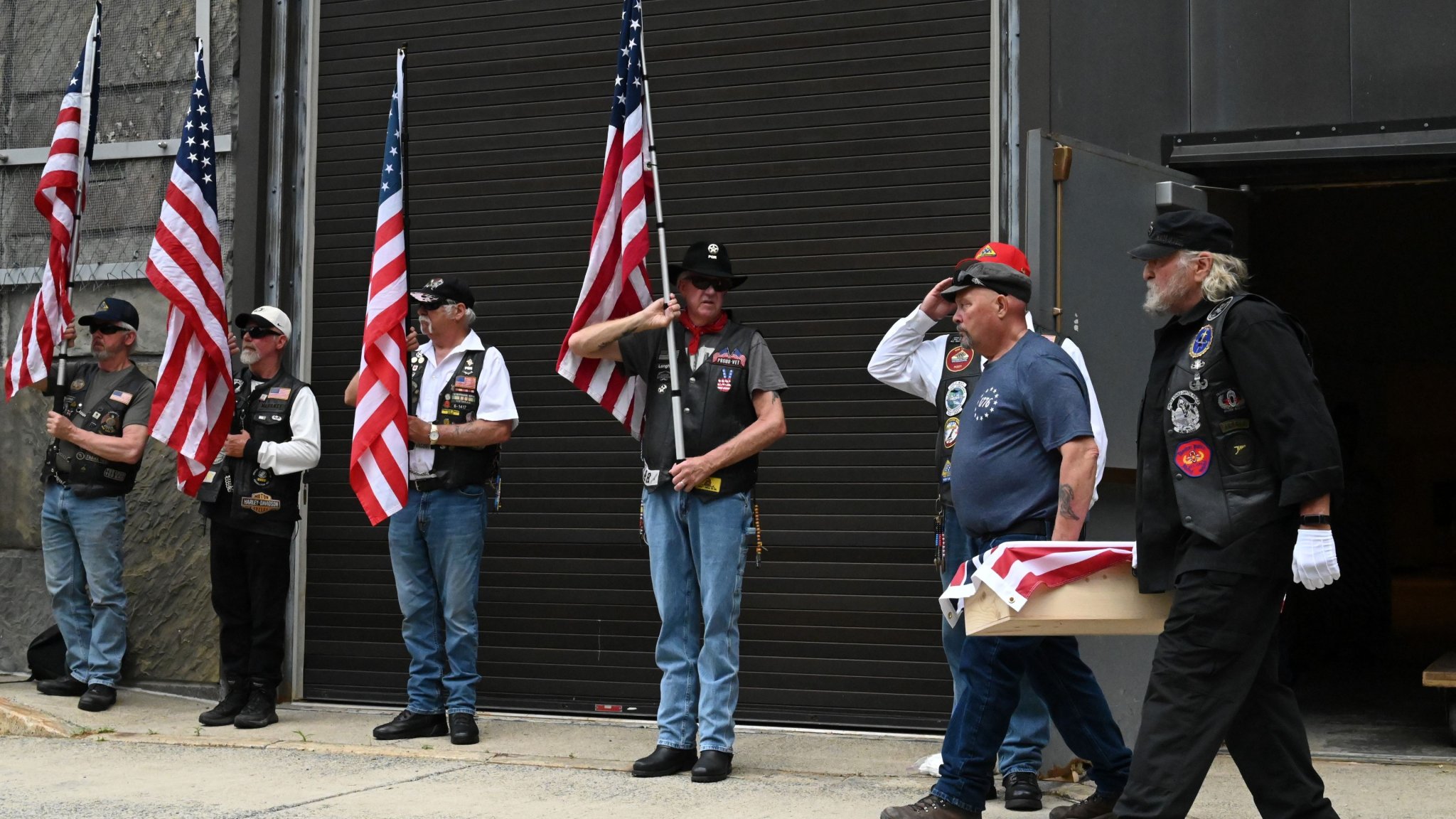
Two and a half centuries after they died in battle, nearly four dozen Continental Army soldiers were formally laid to rest.
On Friday, May 22, the remains of 44 American soldiers and dependents from the Revolutionary War were buried next to a new monument honoring their and others’ deaths. The soldiers’ remains were transported in a ceremony May 20, moved from the New York State Museum to Lake George Battlefield Park. Two days later they were formally buried with full military honors.
It’s the end of a long journey for the soldiers, who are believed to have died in 1776 after taking part in the Continental Army’s invasion of Quebec. Their burial place was lost for decades, and they were only discovered in 2019, when they were found during a construction project.
Top Stories This Week
According to the New York State Museum in Albany, New York, which spent years studying the remains, most of those soldiers were young men, some in their teens. Lisa Anderson, the museum’s curator of bioarchaeology, said that two of the deceased are a woman and a child. The museum has not been able to specifically identify any of the revolutionaries yet, but some uniform buttons found in the graves show that at least one soldier was with the 1st Pennsylvania Battalion, which took part in fighting and campaigns near Lake George.
At the time of their death, the Continental Army had set up a hospital on the shores of Lake George. Alongside combat wounds, disease was rampant, with many of the troops who took part in the invasion of Canada contracting smallpox.
The 1775 invasion of Quebec was a failed early part of the revolution. In late 1775, the newly formed Continental Army launched two expeditions, heading into Quebec. The goal, beyond just territorial gains, was to win the support of the French-speaking colonists in Quebec, who the revolutionaries saw as potential allies against the British. The initial campaign in 1775 failed. Already undersupplied and weakened by the march into Quebec, the Continental Army forces were defeated in battle. One of the two commanders was killed and the other, a pre-treason Benedict Arnold, to hold back a counter-offensive.
The journey last week, carried out by veterans, used military vehicles from the Korean and Vietnam wars, while people lined the streets as they went, some dressed in Revolutionary War attire. They were buried at a new memorial to the dead, the Repose of the Fallen, at the Lake George Battlefield Park.
“While they did not live to see the end of the American Revolution, it is fitting they will finally receive a dignified burial 250 years after the signing of the Declaration of Independence,” New York State Museum Director Jennifer Saunders said in a statement.
Loading comments…
Comments couldn’t be loaded. Please refresh the page.