
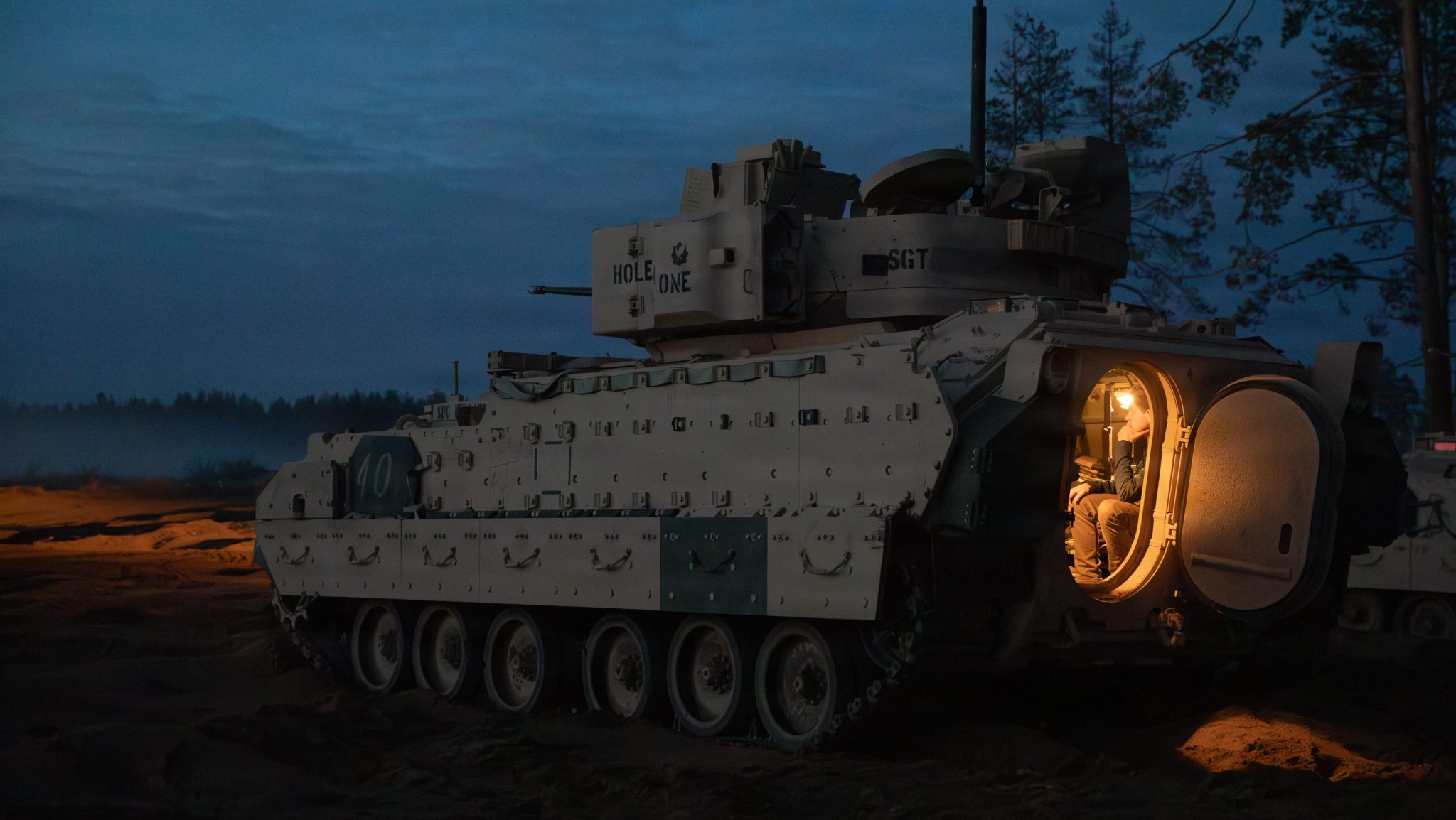
The Army has been trying since 1999 to replace the M2 Bradley with a newer, heavy-metal, tracked vehicle for its mechanized infantry units. But in 2026, soldiers who make up those mobile forces often ask first where on a vehicle they can charge their phones.
“Everything you need lives on your phone,” a company commander in a mechanized unit told Task & Purpose. Modern infantry soldiers stay connected to each other and to their chain of command through specialized apps on smartphones. The officer said that soldiers in his unit use a suite of encrypted apps on Amazon’s AWS-Wickr cloud network, and tracking apps known as the Android Team Awareness Kit. Within any element are also radios, satellite links, sensors and, in modern units, both battery-hungry drones and energy-sapping electronic warfare suites to combat them.
“How we get power to the forward line of battle is the big question,” said the officer, who spoke anonymously to Task & Purpose in order to discuss challenges units like his face.
But many of the armored vehicles the Army uses, like Bradleys and Armored Multi-Purpose Vehicles that sprint across battlefields, deliver power only with their engines running.
“That creates a signature which drones can see,” he said.
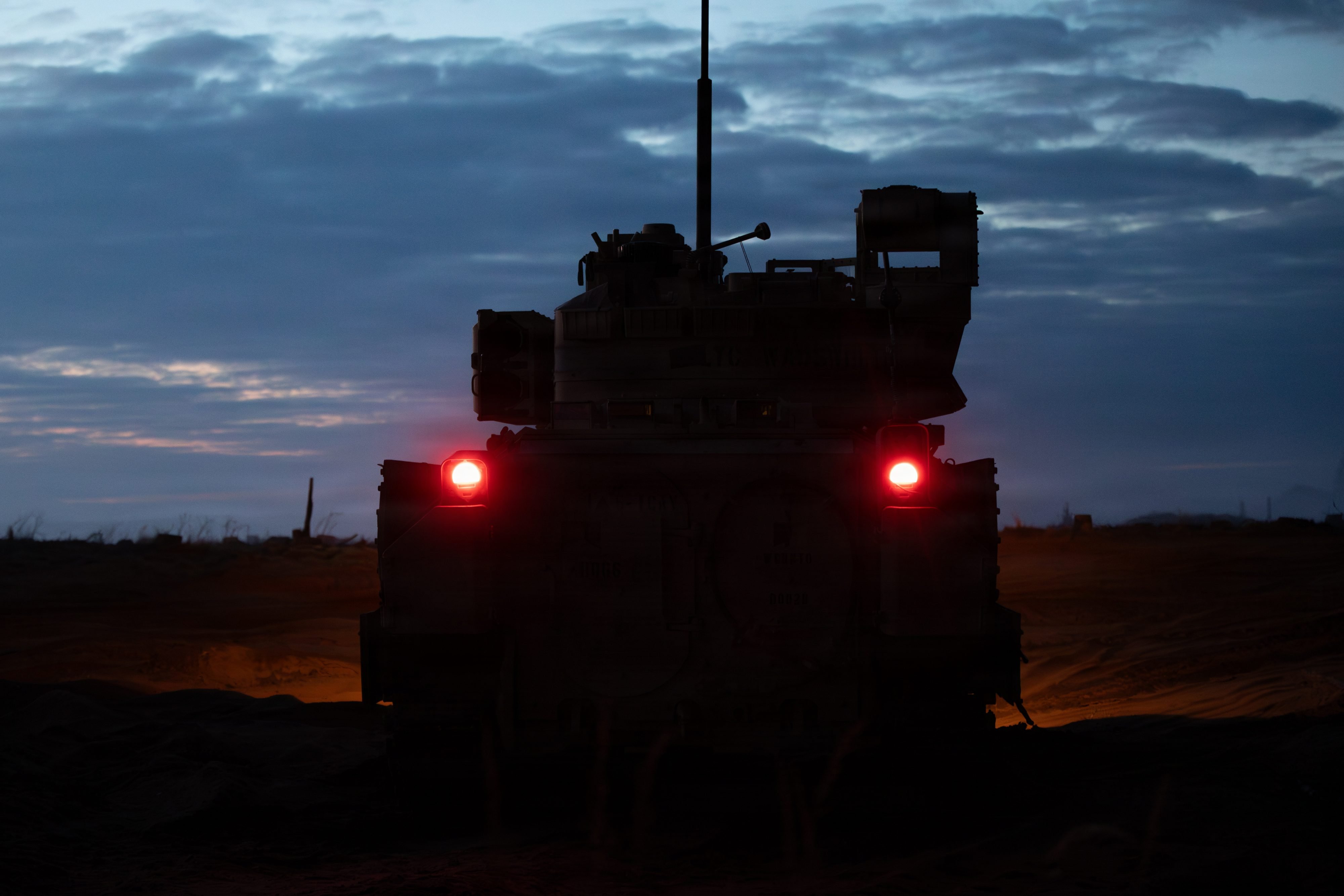
But a dead phone means a team out of contact with commanders, maps and tracking information.
“The Brads don’t have any kind of charging port,” the officer said, but the computers the units carry might have a USB port intended for a mouse. “You’re not allowed to plug your phone into it, because malware can get transferred from your phone.”
Instead, on a recent exercise, to keep their phones alive, soldiers brought civilian battery packs purchased at Walmart and kept them charged using the mouse port. That fix, too, he said, might rub up against Army rules on device security, but that is the world that mechanized soldiers now live in.

Treating kilowatts like bullets
To get power to soldiers in the future, the Army is developing doctrines and equipment similar to the supply systems that distribute ammunition, water and medical supplies.
The soldiers who call themselves “the most hated unit” in the Army — the 509th Infantry Regiment, or Geronimo Battalion, at the Joint Readiness Training Center at Fort Polk, Louisiana — have developed a “Round Robin” system of rotating batteries during fast-moving exercises. Large, diesel-run generators far back from forward lines charge dozens of batteries at once to 75%, since higher levels of charge can make them unstable to transport and store. Batteries are then moved, with the contact ports taped up, in small batches to smaller forward elements, who charge them further with small 700-watt power packs, before using them in radios and drones.
Once dead, the batteries are sent back to the main hub.
“A drone launch team without recharge capability becomes irrelevant after its first sortie,” wrote Maj. Sean McLachlan, who authored a report after serving as the deputy supply officer for the 25th Infantry Division in 2024 during an exercise at the Joint Pacific Multinational Readiness Center. “A sensor network that loses power becomes a dead node. A command post that goes dark loses tempo.”
During that rotation, the division’s 2nd Mobile Brigade Combat Team brought a wide range of large battery packs (dubbed “energy storage modules”), generators, inverters, and even soldier-carried solar panels to keep the electricity-hungry systems working. Soldiers took the equipment with almost no training, but color-coded cables and other plug-and-play features made them easy for Gen Z soldiers to figure out, McLachlan wrote.
More Army coverage
But beyond the squad and platoon level, logistics bogged down. Soldiers found that traditional heavy generators, towed or carried in vehicles, made almost no sense for small units maneuvering with speed and stealth to avoid detection and which needed only to charge small electronics, radio batteries, and drones.
“The 15- and 30-kilowatt generators often operate at less than 10% capacity,” McLachlan wrote in a report about the exercise. Along with needing fuel, the generators created both heat and noise, making easy targets for opposing drones to see and sensors to hear.
To bridge the gap, the brigade treated energy like ammunition or chow
Soldiers put those generators farther back in their formations, charging many batteries at once at full capacity (and running fewer hours). Those batteries were then sent forward on fast squad vehicles or even slung under drones in rugged cases, treating energy like ammunition or chow. With regular resupply, the dispersed squads and platoons found they could use radios, electronics, and even launch drones for days at a time without breaking cover.
“Battlefield energy planning functions much like the Army’s water sustainment model,” McLachlan wrote. “If a drone can kill a tank, then the battery that powers it must be treated with the same logistical priority as a Javelin missile.”
The long road to new armored vehicles
At the heart of mechanized units are the heavy metal vehicles that move soldiers into and out of the line of fire. For Cavalry units, that has long meant the M2 Bradley and the M113 armored personnel carrier.
But those Cold War vehicles are each in the middle of a drawn-out replacement.
The M113 is phasing out with the arrival of the Armored Multi-Purpose Vehicle, or AMPV. First fielded in 2020, the AMPV reached full production in 2023. The vehicle is built by BAE, which also produces the Bradley on the same platform, and the two share significant mechanical parts.
As for the Bradley, the Army has been looking for a replacement for almost three decades. In 1999, the Army launched the first of two now-cancelled replacements for the Bradley, which the Army has used since 1981.
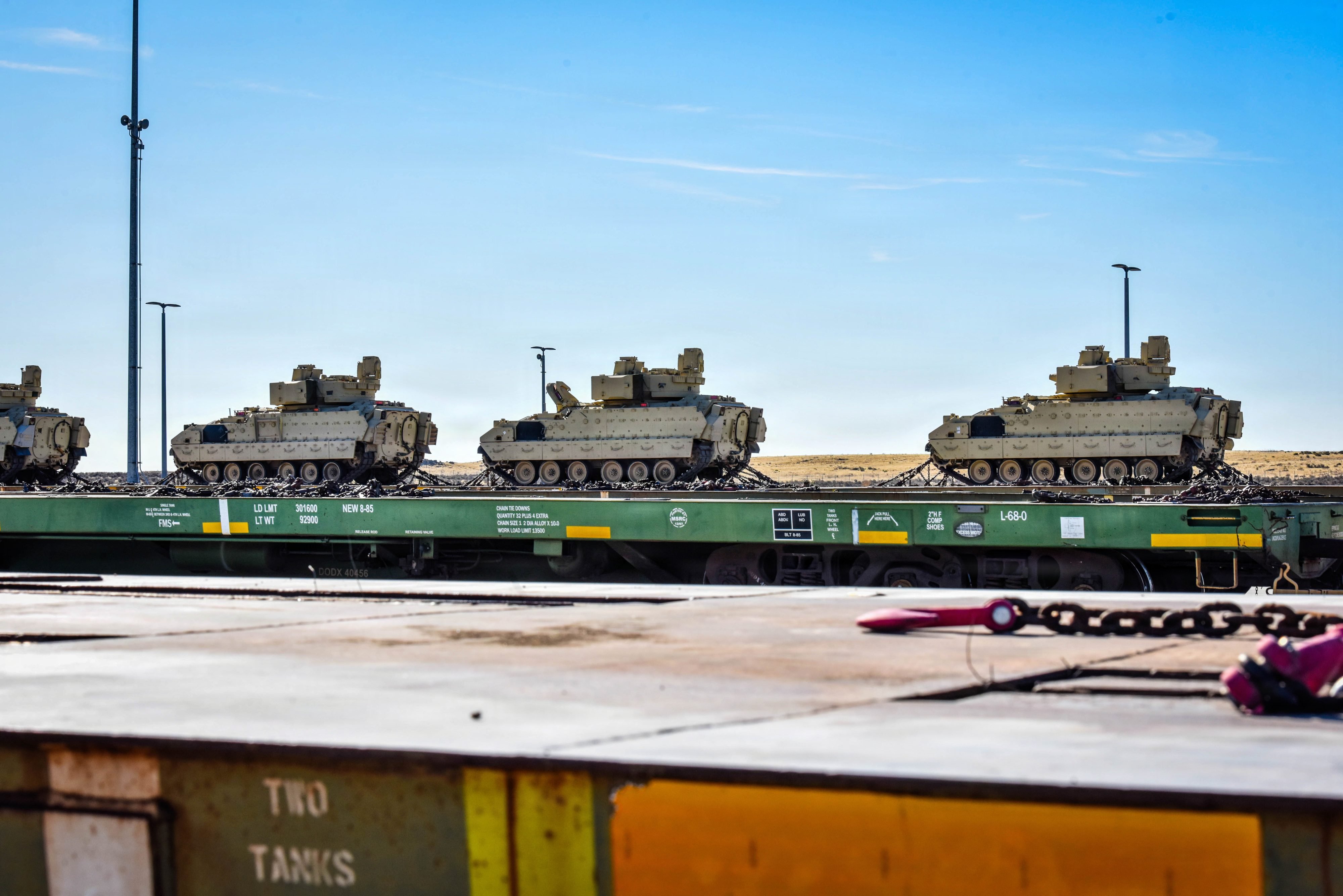
A third iteration of the Army’s search for a Bradley replacement, the XM30, is now in the prototype stage, but full commitment still faces hurdles. Teams led by American Rheinmetall and General Dynamics Land Systems delivered prototypes this fall of the Lynx and Wolf. Both are designed to be operated by as few as two soldiers and to carry 6 more.
The Army has slowed development of those projects this year, holding off on a key administrative approval known as Milestone B for both of the soldier movers.
But officials have launched other programs aimed directly at creating vehicles built specifically to deliver electricity to units.
In June, the service asked for proposals for a so-called “heavy” version of the ISV, but not to deliver heavy firepower or soldiers. Instead, the Army wants the ISV-Heavy to be a roving power station. Jesse Tolleson, the deputy assistant secretary of the Army for acquisition, logistics and technology, told a Senate subcommittee that the ISV-Heavy is “really going to be focused on the power generation part. One of the things that we do have a critical capability gap on right now is power generation at that mobile brigade combat team level.”
Loading comments…
Comments couldn’t be loaded. Please refresh the page.