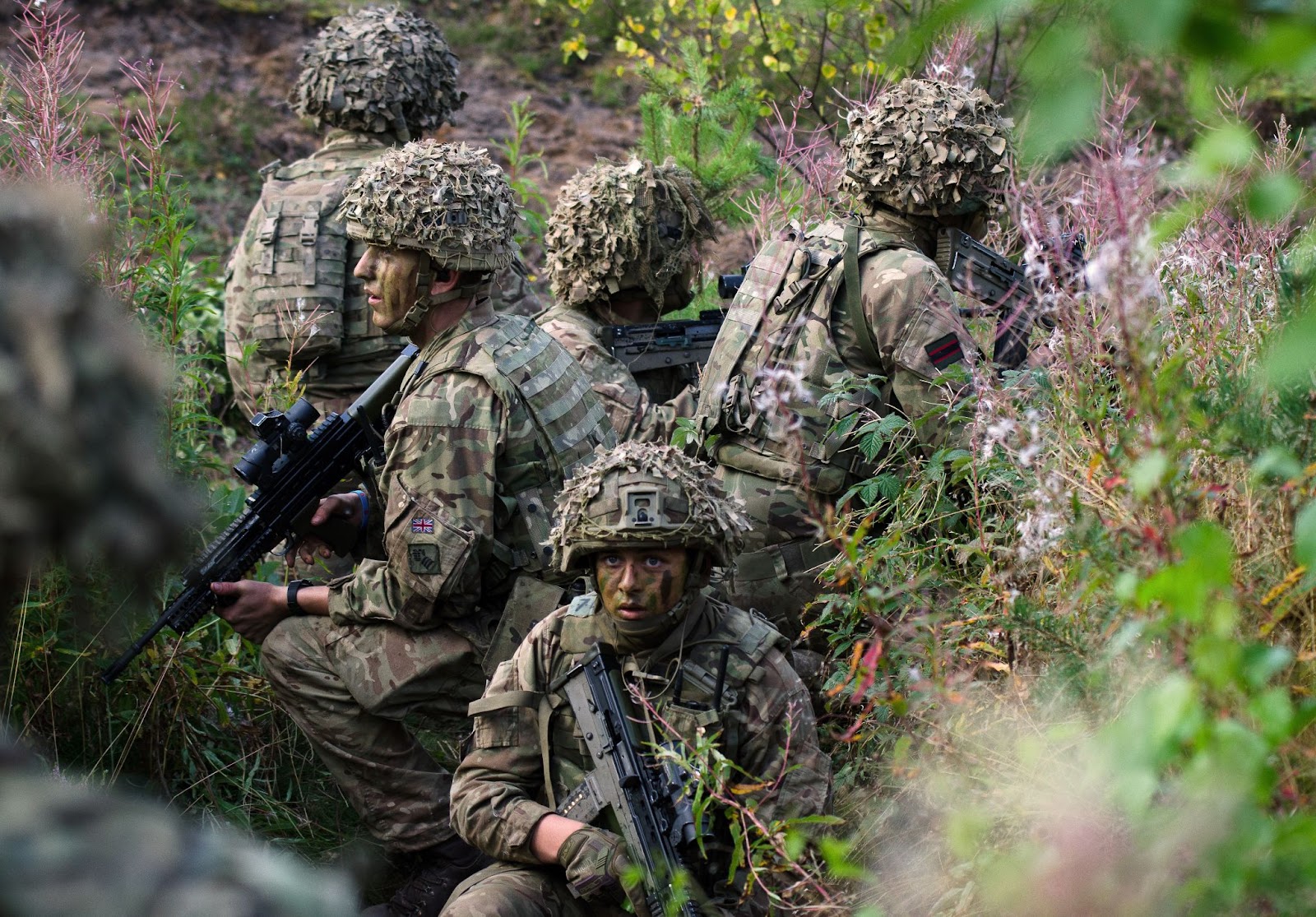
For nearly 40 years, the British Army’s standard rifle has been the SA80. Officially designated the L85, the weapon has been praised, cursed, upgraded and carried everywhere from the Gulf War to Afghanistan. Now, the Ministry of Defence has confirmed that the SA80 will finally be retired by 2030.
The search for its replacement is already underway under a program called Project Grayburn, a competition that will see the Army test and evaluate contenders from some of the biggest names in small arms. The Grayburn decision will shape how the British Army fights in the 2030s, and it could shift Britain’s relationship with NATO on calibers, doctrine and industry.
Why retire the SA80 now?
The SA80 entered service as the L85A1 in 1985 as part of the Small Arms for the 1980s program (hence SA80). Its bullpup design, where the action and magazine are behind the trigger, allowed a full-length barrel in a compact package, making it handy for mechanized and urban warfare. But its early years were plagued with reliability problems, from stoppages caused by desert dust to fragile components.
Successive upgrades improved the rifle, most notably the L85A2 overhaul by Heckler & Koch in the early 2000s and the current L85A3 version, which has been serving in NATO deployments. But the platform is aging, the ergonomics are out of step with allied weapons, and the MoD has set its out-of-service date at 2030.
What is Project Grayburn?
Project Grayburn is the MoD’s effort to procure between 150,000 and 180,000 new rifles for the British Army. It’s currently in the concept phase, with the assessment phase set to begin in 2026. A contract award is expected by late 2026 or early 2027, giving the military time to start fielding the new rifles before the SA80 retires.
The MoD is weighing four major factors:
- Caliber: Stick with 5.56 NATO for maximum interoperability, or move to something heavier like 6.5 Creedmoor or 6.8×51mm SIG Fury round like the Army’s Next Generation Squad Weapon (NGSW) for more range and armor penetration? Officials have said they want a more lethal option than the SA80 and its 5.56 NATO, suggesting a caliber change is on the table.
- Layout: Stay with a bullpup design like the SA80, or switch to a conventional rifle layout used by most NATO partners? With no bullpup entrants, though, it looks like this decision is already made, but they could always request this design to lessen the training requirements.
- Integration: Ensure the new rifle works seamlessly with modern optics, suppressors, and future soldier systems.
- Domestic production: The capability to produce both the firearm and ammunition in the U.K., as they seek out a more resilient defense industrial base.
Top Stories This Week
The contenders
Several companies have already thrown their hat in the ring.
Beretta Defence Technologies is offering two options: the New Assault Rifle Platform (NARP), a modular AR-pattern rifle with ambidextrous controls and multiple caliber options, and the Sako M23, already in service with Finland and Sweden. Beretta has also pledged to build rifles in the U.K., a move designed to appeal to the MoD’s desire for domestic manufacturing and secure supply chains.
Heckler & Koch, already familiar to the British Army from its SA80 upgrade work, is positioning its HK416 and HK433 rifles. The HK416, chambered in 5.56 NATO, is battle-proven in Afghanistan, Iraq, and Syria, and is used by the U.S. Marine Corps, France, and Norway. The HK433 is a lighter, modular alternative, though it has yet to see large-scale adoption.
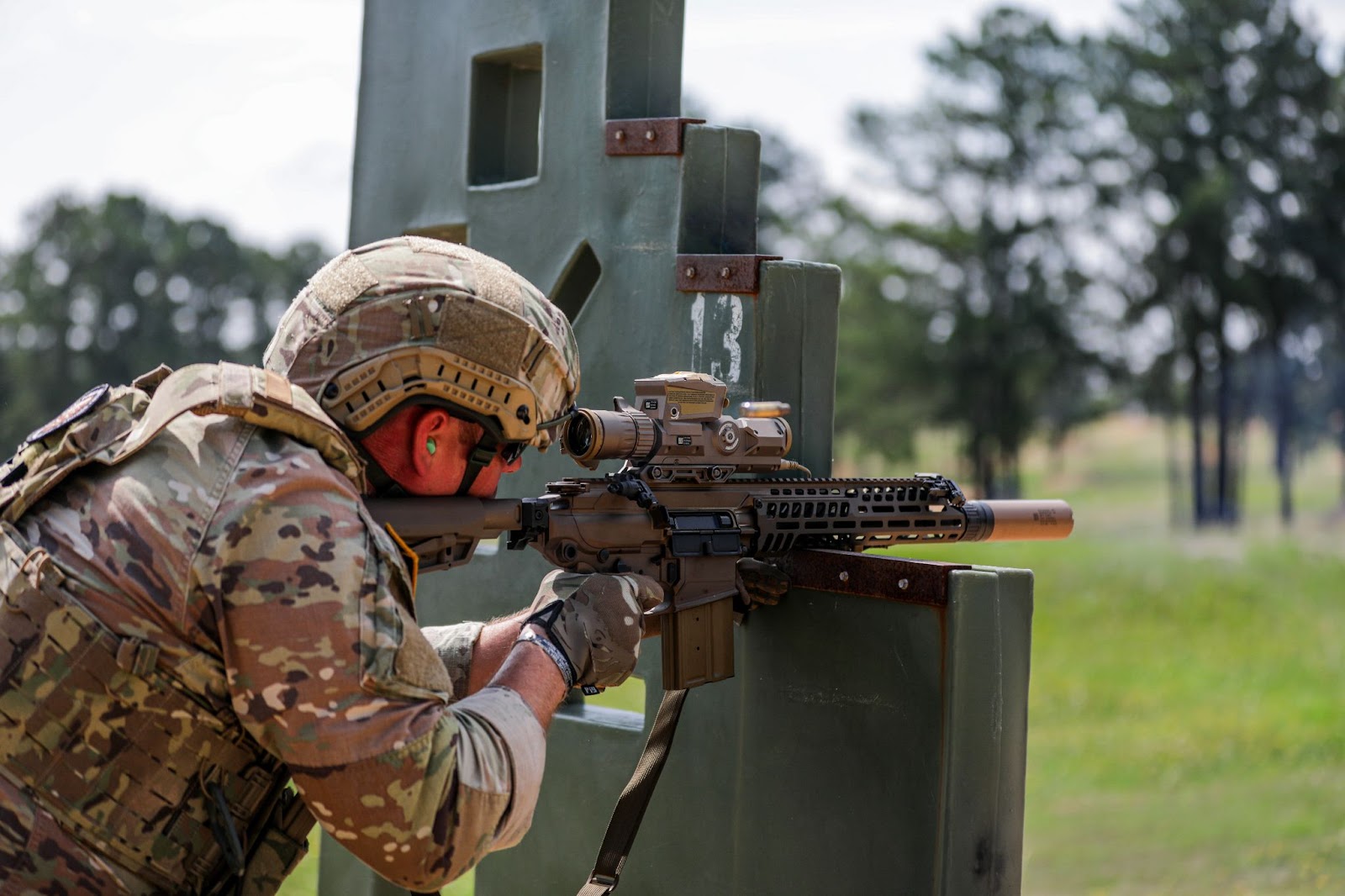
SIG Sauer is offering variants of its MCX family, which the Army adopted as the M7. This can be configured for multiple calibers, including the 6.8×51mm. The MCX Spear variant, AKA the M7, weighs in at about nine pounds empty, heavier than most 5.56 rifles, but offers modularity and suppressor optimization.
Knight’s Armament Company is also a potential competitor with its SR-16 in 5.56 NATO and the SR-25 in 7.62 NATO, the latter known in U.S. service as the M110. Both rifles have strong reputations for accuracy and reliability, but are expensive and may be better suited for special operations and designated marksman roles than for general issue.
How does this compare to the U.S.?
Britain’s approach is slower and more deliberate than the American path. The U.S. Army’s NGSW program fast-tracked adoption of the XM7 rifle and XM250 automatic rifle in 6.8×51mm to counter modern body armor. The U.K., by contrast, is running a longer competition and putting emphasis on NATO interoperability and industrial strategy.
That difference reflects two philosophies: America prioritized speed and overmatch, while Britain emphasizes careful evaluation, supply security and alignment with allies — at least for now.
The bigger picture
Replacing the SA80 will impact doctrine, alliances and how Britain fights going into the 2030s. Will they stick with NATO-standard 5.56 and go to a more common AR-style setup? Will it follow America into 6.8mm, gaining range at the cost of heavier logistics? Or will it try to strike a uniquely British balance between industrial policy, alliance politics, and what troops actually want in the field? In our YouTube video, we discuss the contenders and considerations more in depth. You can watch that here.