For decades, the U.S. military has flirted with bullpup rifles — compact, futuristic-looking designs that put the action and magazine behind the trigger instead of in front of it. From the Austrian Steyr AUG to the Israeli Tavor, the sci-fi-looking FN F2000, and most recently the RM277 from the Army’s Next Generation Squad Weapon program, the Pentagon has tested them all.
And every time, the verdict has been the same: No thanks.
So why does the military keep rejecting a rifle style that’s seen service from Australia to Israel?
What is a bullpup rifle?
In a bullpup, the working parts, the chamber, bolt, and magazine, are located in the buttstock, behind the trigger group. This means you can run a full-length barrel in a much shorter overall package.
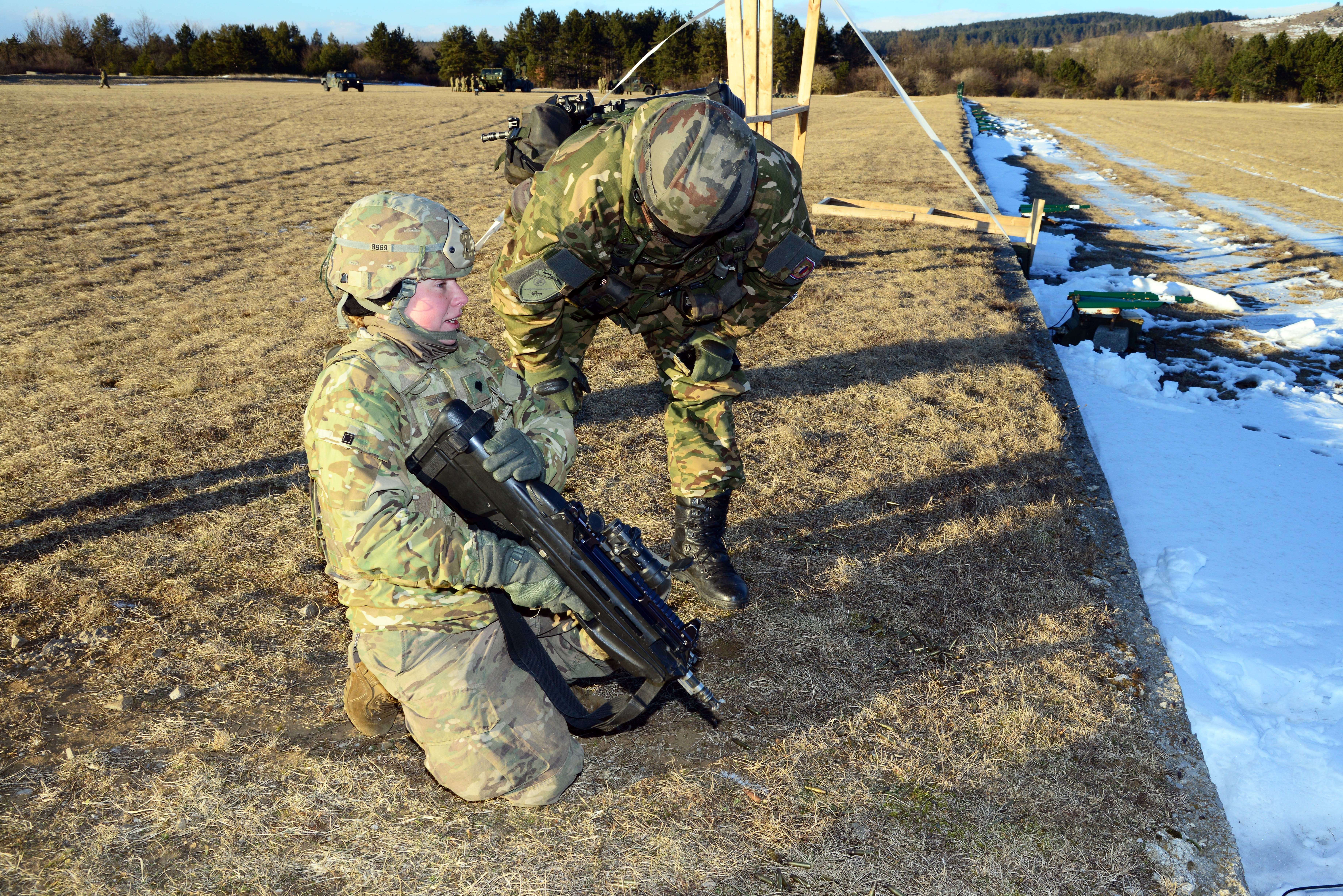
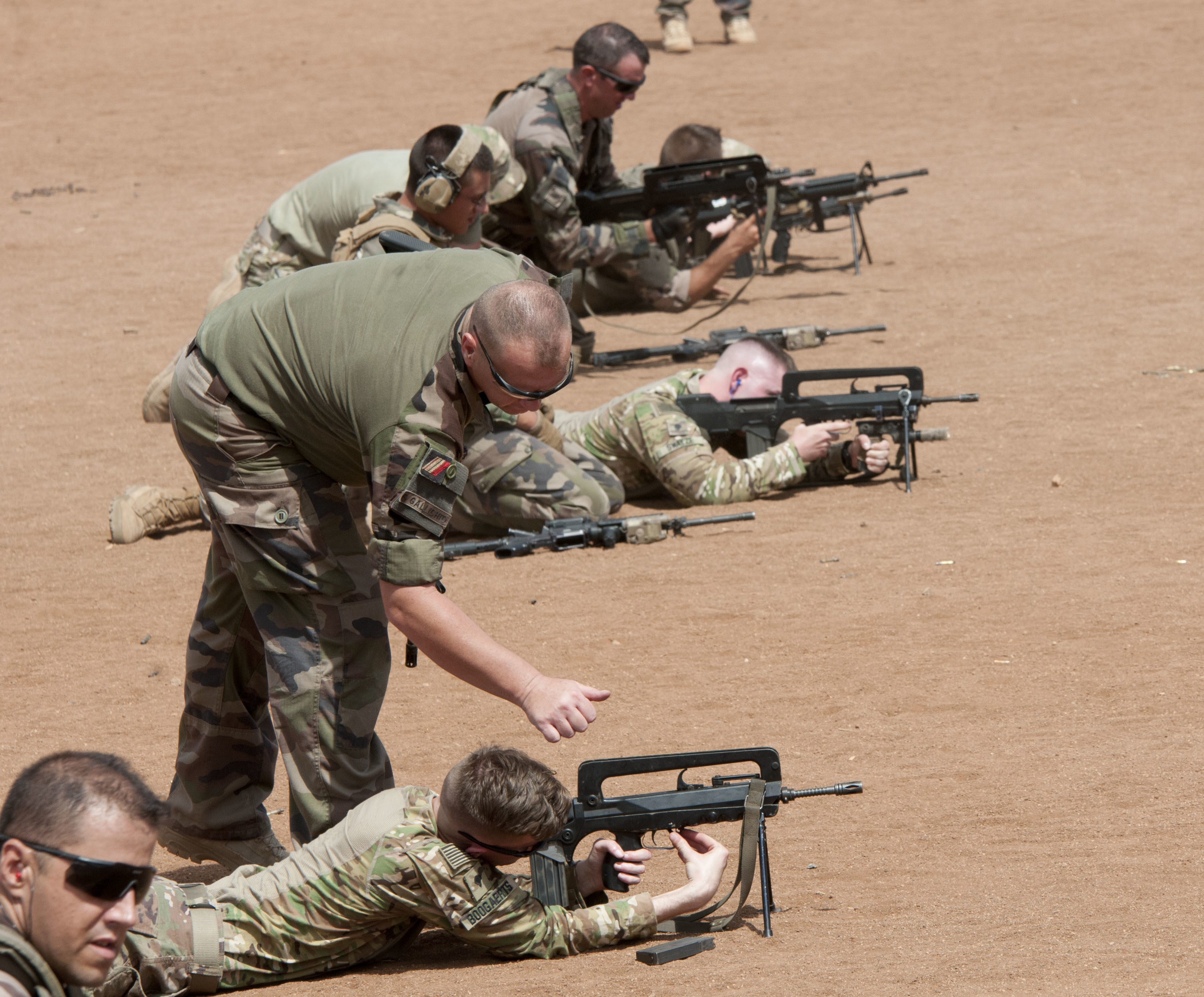
For example, the M4 carbine is just under 30 inches long with a 14.5-inch barrel. The Israeli Tavor X95 is 26 inches with a 16.5-inch barrel. The French FAMAS is roughly the same size as the M4, but has a 19.2-inch barrel.
That extra barrel length matters. Longer barrels usually mean higher muzzle velocity, better energy retention, and more reliable terminal effects from rounds like 5.56mm or 6.8mm. And in tight spaces like vehicles, helicopters, and urban combat, shaving a few inches off the gun’s overall length makes a real difference.
The advantages of a bullpup
On paper, bullpups tick a lot of boxes for modern combat.
- Compactness without losing barrel length: Ideal for close quarters and vehicle crews.
- Better weight distribution: With the bulk of the rifle close to the shoulder, they can feel lighter and easier to hold at the ready.
- Suppressed use: Starting with a shorter rifle means a suppressor won’t make it unwieldy.
So if they look good on a spec sheet, why won’t the U.S. use them?
The dealbreakers
The first problem is ergonomics. Bullpups require a different manual of arms. The magazine sits behind the pistol grip, often under the shooter’s armpit or mixed up in body armor. Speed reloads and malfunction drills are harder, especially for troops who’ve spent years training on the M4/M16 family.
Next is trigger feel. With the trigger up front and the firing mechanism in the rear, bullpups rely on a long mechanical linkage to connect the two. That linkage adds friction and flex, resulting in heavier, spongier pulls that aren’t ideal for precision shooting.
Left-handed shooting is another hurdle. Many bullpups eject to the right by default, which means lefties risk brass in the face unless the rifle is reconfigured, something you can’t do mid-fight.
Then there’s modularity. The M4 has plenty of rail space for optics, lasers, lights, and grips. Bullpups have a shorter fore-end, which means less real estate for accessories without crowding the muzzle or ejection port.
Top Stories This Week
Finally, logistics and doctrine. Adopting bullpups would mean rewriting training manuals, changing qualification standards, redesigning load carriage systems, and retraining hundreds of thousands of troops across every service branch. Unless a bullpup offers overwhelming advantages, that level of disruption just isn’t likely to be seen as being worth it.
The U.S. has tried
In 1985, the Pentagon put the Steyr AUG through its paces. What they found were all of the above shortcomings and decided not to purchase them, but that didn’t stop U.S. Customs and Border Protection from adopting the rifle from 1988 to 2007 before replacing them with AR-style rifles.
The Belgian FN F2000, tested by U.S. special operations, offered fully ambidextrous, forward-ejecting operation in a compact package. But its spongy trigger, bulky profile, and incompatibility with existing accessories killed its chances.
Most recently, the General Dynamics RM277 was proposed as part of the Army’s Next Generation Squad Weapon program. It is a suppressed, polymer-cased 6.8mm bullpup that, despite impressive ballistics, lost to SIG Sauer’s then-XM7, an AR-style rifle that felt more familiar to soldiers and fit better into existing logistics.
Other countries made it work… sort of
Israel fields the Tavor for infantry and urban ops, but many troops still carry M4s depending on the mission. The country is currently looking to replace the Tavor with a home-built AR-style weapon. France ditched the FAMAS for the HK416. The UK stuck with the SA80 but spent decades and millions fixing its flaws. They’re also currently looking for a replacement, and none of the candidates are bullpups. Austria and Australia have stuck with the Steyr AUG, but they operate on a smaller scale and with different mission profiles than the U.S.
The bottom line
Bullpups aren’t bad rifles. In some environments, they’re excellent. But they don’t offer enough benefit to make the U.S. military scrap its entire small arms ecosystem.
They’re harder to reload, have less modularity, and often deliver a worse trigger feel. And in a force this large, familiarity and interoperability matter as much as performance.
For now, the Army’s next standard rifle, the M7, sticks with the AR-style layout. Bullpups will keep showing up in gun shop display cases and in the hands of foreign forces, but for the U.S. military writ large, they remain too weird to issue. We dive into this in more depth in this week’s YouTube video, which you can check out here.