Eighty years ago, American troops were home for Christmas for the first time in years. For the previous four years, troops had faced holidays away from family, and in whatever conditions the war presented, from snowless tropics to brutal winters of northern Europe. But even in the most expansive footprint of the war, cooks, supply troops, and even frontline leaders did their best to make sure Christmas dinner wasn’t forgotten.
One hardship faced by World War II troops mirrored life back home: as America recovered from the Great Depression and charged into a wartime economy, rationing was widespread. Fresh vegetables were hard to get, and sugar was a pipe dream.
But beyond the basic ingredients, Christmas downrange presented specific problems: how to cook for tens and even hundreds of thousands in large armies and packed ships. The Christmases of 1942-1944 (U.S. forces had largely not yet deployed in 1941) saw active combat in two theaters, with stretched supply lines. But in the Pacific and European theaters, some staples were still ready for the holiday.
Top Stories This Week
One constant was turkey. Turkey was easy to get in large quantities and could be shipped out around the world. Photos from the Battle of Guadalcanal show cooks preparing turkeys to roast and cutting mince pies to go with them, all while sweating and shirtless amid the tropical island’s heat. During the brutal island campaign, which saw more than 7,000 Americans killed, the frontline dinner was a brief reprieve from the fighting. A year later, during Christmas 1943, a few small beers were a part of the mess hall’s options on the island.
Exact menus varied by service and theater, although they generally followed a pattern. There was the turkey, of course, plus a few sides. Fruit often was its own course — sometimes in a salad with mayonnaise, sometimes in a jello. The 100th Bomb Group of the 8th Air Force, often called the “Bloody Hundredth,” had a brutal 1944, but Christmas dinner at their base at Thorpe Abbotts was a large affair. Dessert was particularly generous, even with the rationing of sugar, with Napoleons (featuring a rare amount of chocolate), pies, fruit cake and Christmas cookies.
Troops in Australia in 1942 got a full spread, with roast Long Island turkey and gravy, candied sweet potatoes and creamed asparagus. Dessert included mince pie and Neopolitan ice cream. The Department of Defense noted similar meals for sailors on the carriers the USS Kasaan Bay and USS Intrepid — which were active in the European and Pacific theaters, respectively — the following year. The Department of Defense’s own history on wartime menus noted that the Army Air Force was able to get roast turkey, baked Virginia ham, and raisin sauce for dinner, while in North Africa.
In some parts of the war, Christmas dinner got better as the American industrial machine churned out ships and planes and the Allies created stronger supply lines. This was the same wartime military that eventually fielded a ship dedicated to making ice cream, after all.
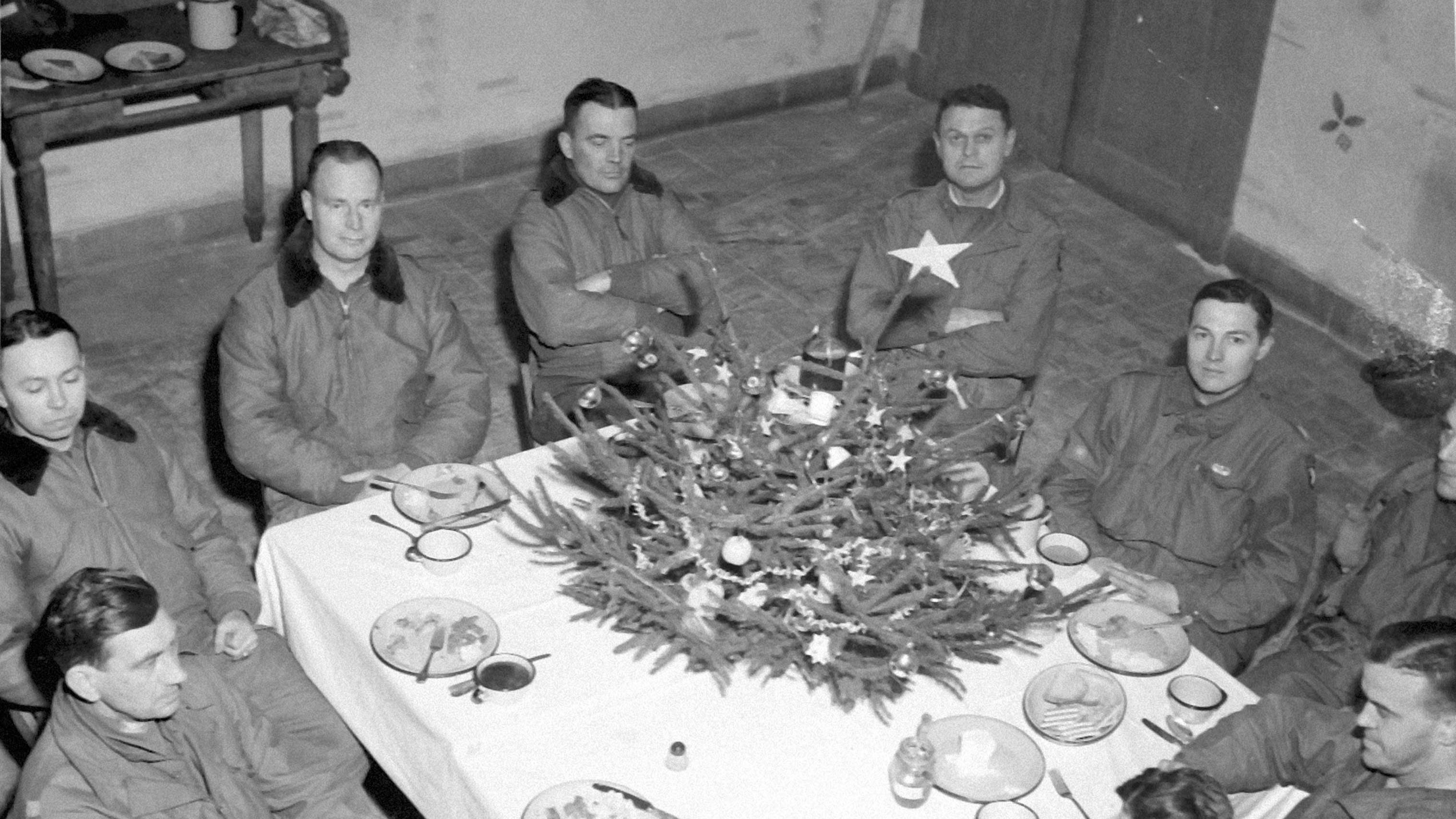
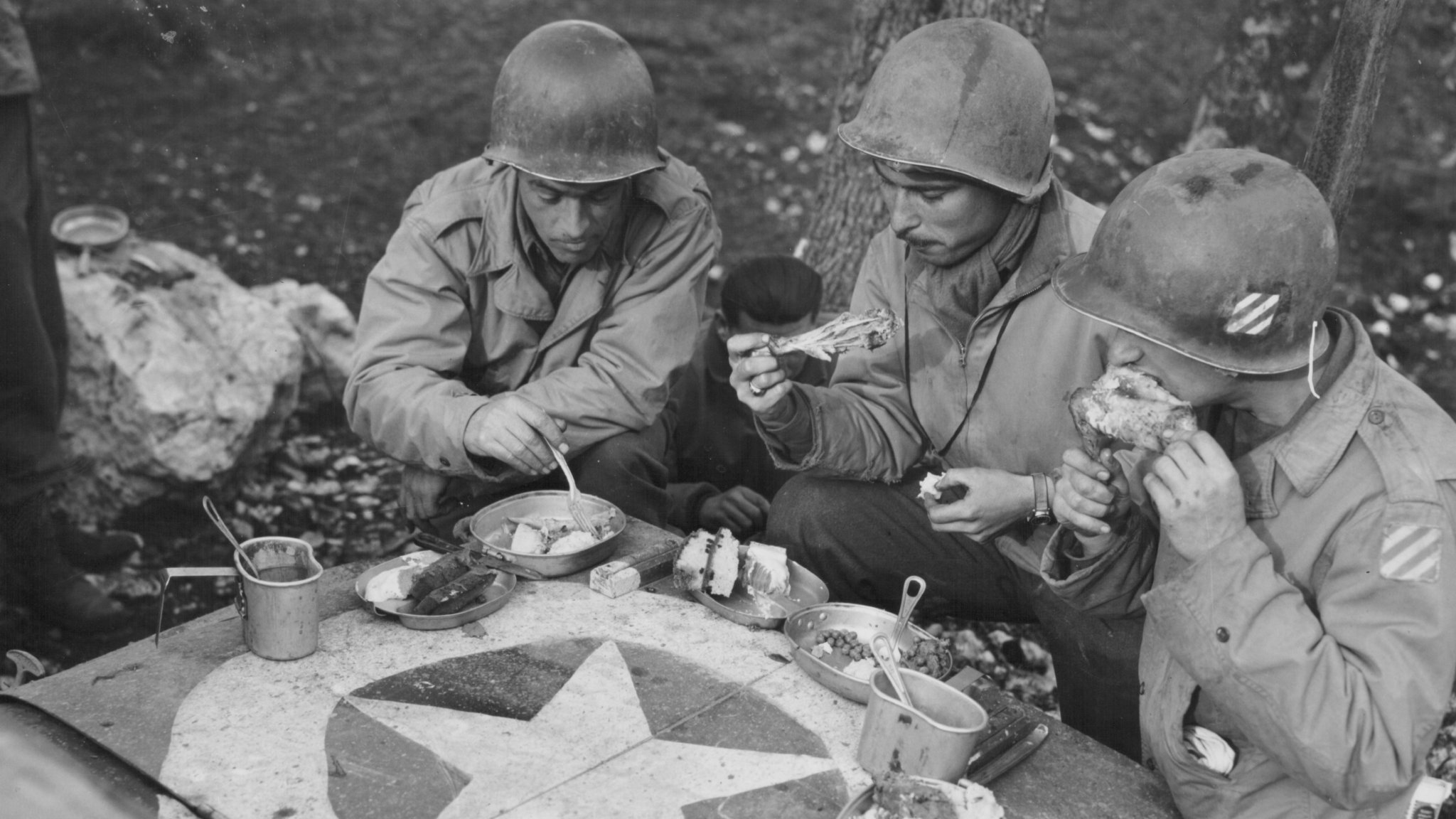
But Christmas 1944, was particularly dark in Europe as German forces launched what became the Battle of the Bulge. One Christmastime photo captured members of the 101st Airborne Division’s leadership, among them Brig. Gen. Anthony McAuliffe, indoors with a makeshift tree and a seated meal. Meanwhile, thousands of troops caught in the German attack ate Christmas dinner in a foxhole or on the hood of a jeep.
Christmas dinner even reached beyond U.S. supply lines. For Christmas 1944 in German prisoner of war camps, U.S. and allied troops found a way to celebrate the holiday as the Red Cross sent thousands of care packages. They held a mix of everything from games to tobacco to canned turkey. It would be one of the few moments of reprieve. The next month, the Nazis began the forced marches of Allied prisoners away from the Eastern Front and towards Germany.
But despite the hardships of the war, the annual Christmas dinner — in North Africa, on a Pacific island or in the snowy parts of northern Europe — was a brief reprieve. Troops ate, thought of home, and hoped for the best to come. As one Christmas menu from 1944, preserved by the National World War II Museum, puts it, “It is hoped that the coming year will be a Happy and Victorious one, restoring Peace on Earth and Good Will to All.”