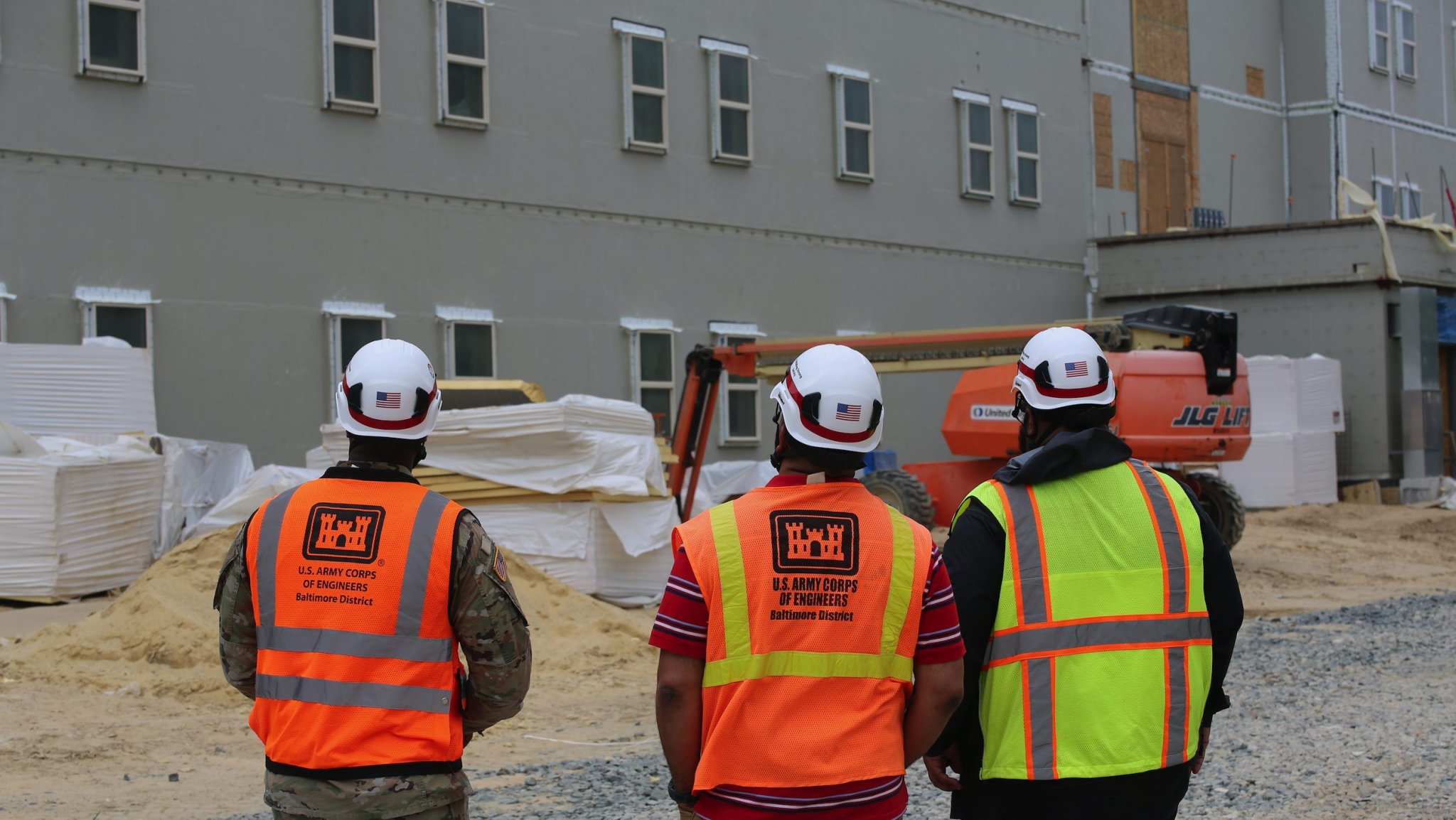
Results of an Army barracks survey reiterated more of the same old problems that soldiers living in barracks have brought up time and time again — mold and pest infestations, maintenance delays, privacy concerns and security issues.
The Army worked with CEL & Associates, Inc., a company that does tenant satisfaction surveys to assess living conditions and service quality among over 93,700 soldiers living in 785 unaccompanied housing buildings at 46 bases — mostly made up of barracks, along with five private-run apartments. The survey, the first of its kind, was conducted from March to May 2025, and the findings were compiled in a June report viewed by Task & Purpose.
Overall, soldier ratings equated to a 68 out of 100 score or a “below average” score, which CEL & Associates defines as “a definite area of concern” where performance is “not adequate,” and indicates a need for “necessary improvement.”
Army barracks were rated highest on tenants’ relative satisfaction with the courtesy of maintenance staff and the check-in process for building assignments. Categories with the lowest scores focused on the actual conditions of the buildings soldiers lived in.
Soldiers gave unaccompanied housing at Joint Base Myer-Henderson Hall, Virginia, Fort Bragg, North Carolina, Fort Meade, Maryland, and Torii Station in Okinawa Japan, the lowest overall scores. The ratings included factors like responsiveness to resolving issues, property condition, management for soldiers in the barracks, as well as leasing services, property rating and renewal intention for a handful of private apartments that house unaccompanied soldiers.
Top Stories This Week
“It’s a good step that the Army finally conducted a direct tenant satisfaction survey for barracks — but the findings aren’t new,” said Rob Evans, the creator of Hots&Cots, and self-avowed advocate for junior enlisted troops living in the barracks. “What this survey does is quantify what soldiers have been saying and living all along.”
Evans pointed to a damning Government Accountability Office report that highlighted mold, pest and security issues and incensed members of Congress during a 2023 hearing, as well as a Department of Defense Inspector General report, which found that issues with unaccompanied housing were “a result of both a lack of standards and funding.”
Maj. Gen. James Smith, acting commanding general for the Army’s Installation Command, IMCOM, said in a statement to Task & Purpose that every tenant satisfaction survey is used to identify improvements, provide oversight and prompt changes with privatized housing.
“This year’s inclusion of Army-owned unaccompanied housing (barracks) in the survey further demonstrates our commitment to improving the quality of housing for our junior enlisted and unaccompanied soldiers,” Smith said. “IMCOM will work directly in support of senior commanders to identify opportunities for barracks improvements. IMCOM is committed to providing safe, quality housing to our soldiers and their families.”
In the survey, soldiers highlighted ongoing mold and pest issues. The larger issue of mold has become a frequent joke among enlisted troops online who routinely discuss the burden placed on them to deal with it themselves. That joke was finally embodied in a Fort Polk, Louisiana, memo when base maintenance officials pointed the finger at soldiers leaving showers “wet” as a reason for mold growth.
In the survey, respondents noted security concerns with “unauthorized personnel accessing living quarters, leading to instances of theft and privacy invasions.” Just last month, a soldier at Fort Gordon, Georgia, set up a hidden camera and caught a private contractor allegedly stealing from his room.
Soldiers also noted their frustrations with maintenance requests taking weeks or even months to address. In February, a soldier based in Hawaii took to social media to complain about their barracks’ air conditioning being broken for more than a month.
While barracks aren’t considered luxurious by any stretch of the imagination, respondents said they surrender privacy and comfort in barracks rooms that are “too cramped” to house two soldiers. They also said that building facilities, like laundry and kitchen areas, were “outdated and poorly maintained.”
The June survey was distributed to more than 93,700 tenants, but only completed by 10,300 soldiers, or 11% of the entire population. It’s possible that the remaining 89% were busy doing mold remediation themselves.
Evans said he doesn’t see the low response rate as indicative of the fact that soldiers don’t care about where they live and sleep, but rather, “It’s a sign that they’re tired of telling leaders what the issues are only to see nothing change.”
“Collecting the data is one thing,” Evans said. “Acting on it is where trust is built or lost and right now trust on quality of life is in the negative.”
The GAO report and other troop advocates have pointed to the impact that poor living conditions can have on recruiting, retention and morale. More recently, the issues plaguing junior enlisted barracks were pointed out by two former staffers for Defense Secretary Pete Hegseth, who penned a July 28 New York Times Op-Ed titled “Our Troops Deserve Better Than Moldy Barracks.”
“Even on the modern high-tech battlefield, war is still a people business,” they wrote. “When service members and their families cannot rely on the programs that are intended to ensure their quality of life, it distracts them from their duties, which inevitably limits their effectiveness in combat.”