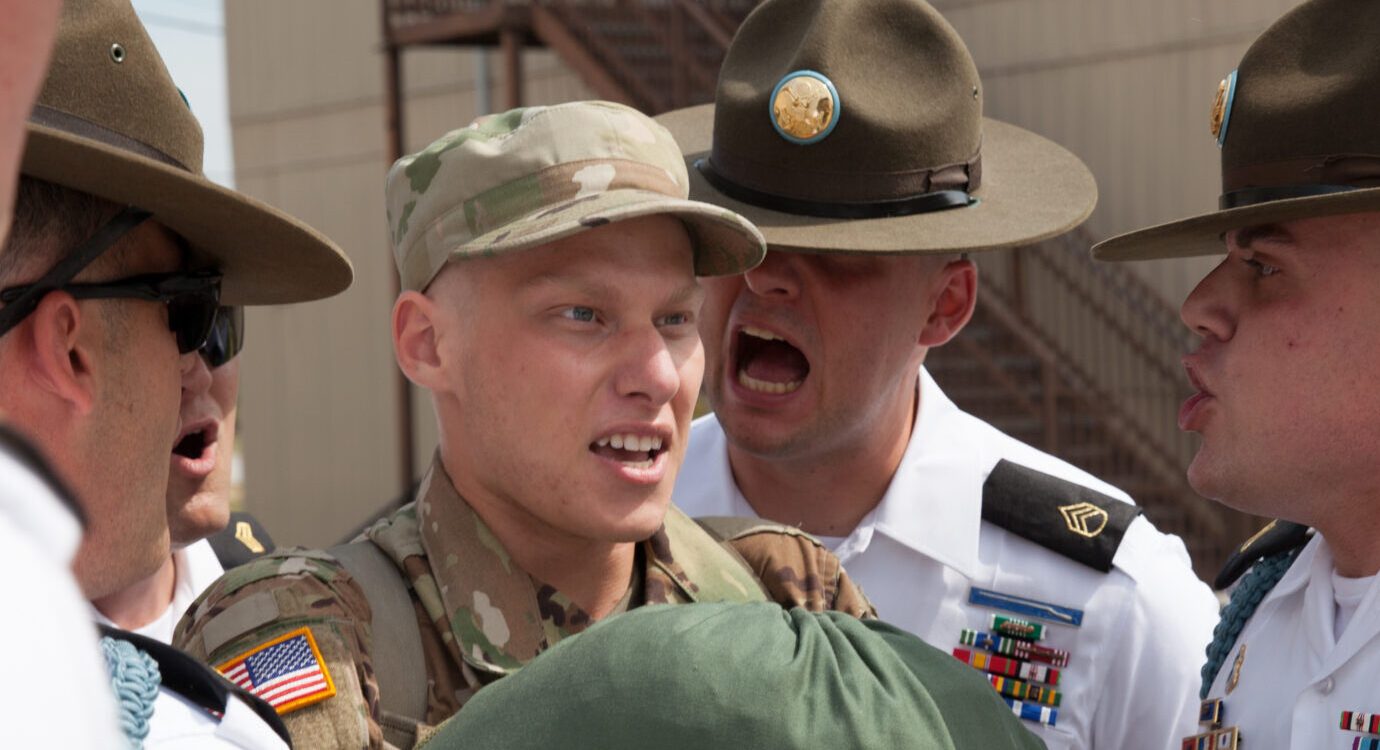
Nearly five years ago, the Army moved away from the practice of several drill sergeants surrounding trainees and yelling at them to establish dominance at the start of basic training — a practice known as a “shark attack.”
Now, Defense Secretary Pete Hegseth is looking into having the Army bring “shark attacks” back, a defense official confirmed to Task & Purpose. As of Wednesday, Hegseth had not issued any formal direction to the service on the matter.
Just the News first reported on Tuesday that Hegseth was considering allowing Army drill sergeants to swarm on trainees and shout in their faces again. Hegseth then shared the story on X along with a message that read “100.”
Pentagon Press Secretary Kinglsey Wilson also shared the story on X and wrote, “Make BASIC Great Again!”
An Army spokesperson referred Task & Purpose to the Defense Department on the matter on Wednesday.
Opinions on the value of ‘shark attack’-style training vary among many who have served as drill sergeants, the relentlessly demanding, campaign-hatted senior soldiers who put new recruits through the intensive training of boot camp.
Retired Master Sgt. Joseph Harrison, who served as a drill sergeant from 2012 to 2014 at Fort Jackson, South Carolina, said shark attacks can be an effective technique to acclimate trainees to basic training.
“It presents the ‘shock and awe’ effect of soldiers coming into a new environment, which may include a lot of chaos,” Harrison told Task & Purpose.
He added that the method also helps drill sergeants weed out trainees who cannot follow instructions and “lack the ability to soldier correctly.”
However, a former drill sergeant who is currently serving in the Army told Task & Purpose that a newer, teamwork-based technique, known as the “First 100 Yards,” is likely much more valuable than shark attacks.
Top Stories This Week
“Army volunteers, trainees, in my experience, are really easy to motivate,” said the soldier, who spoke to Task & Purpose on condition of anonymity because he is on active duty. “If you are a professional leader of character, fair, firm and grounded the vast majority will follow commands without question, know where they are weak, and are eager to overcome those challenges with proper training and mentorship.”
Not so long ago, it appeared that the shark attacks were becoming a thing of the past.
In September 2020, an Army news story explained that the United States Army Infantry School at Fort Benning, Georgia, had decided to eschew the practice for training infantry soldiers because it was developed when most soldiers were draftees, whereas today’s force is made up of all volunteers.
The school’s senior enlisted leader at the time said the chaos and aggression of the instructor swarms failed to “instill the spirit of the Infantry.” In a news story published during the switch, then-Command Sgt. Maj. Robert K. Fortenberry said that a shark attack “betrays the innate trust between teammates and worse, betrays the crucial bond of trust with our leaders.”
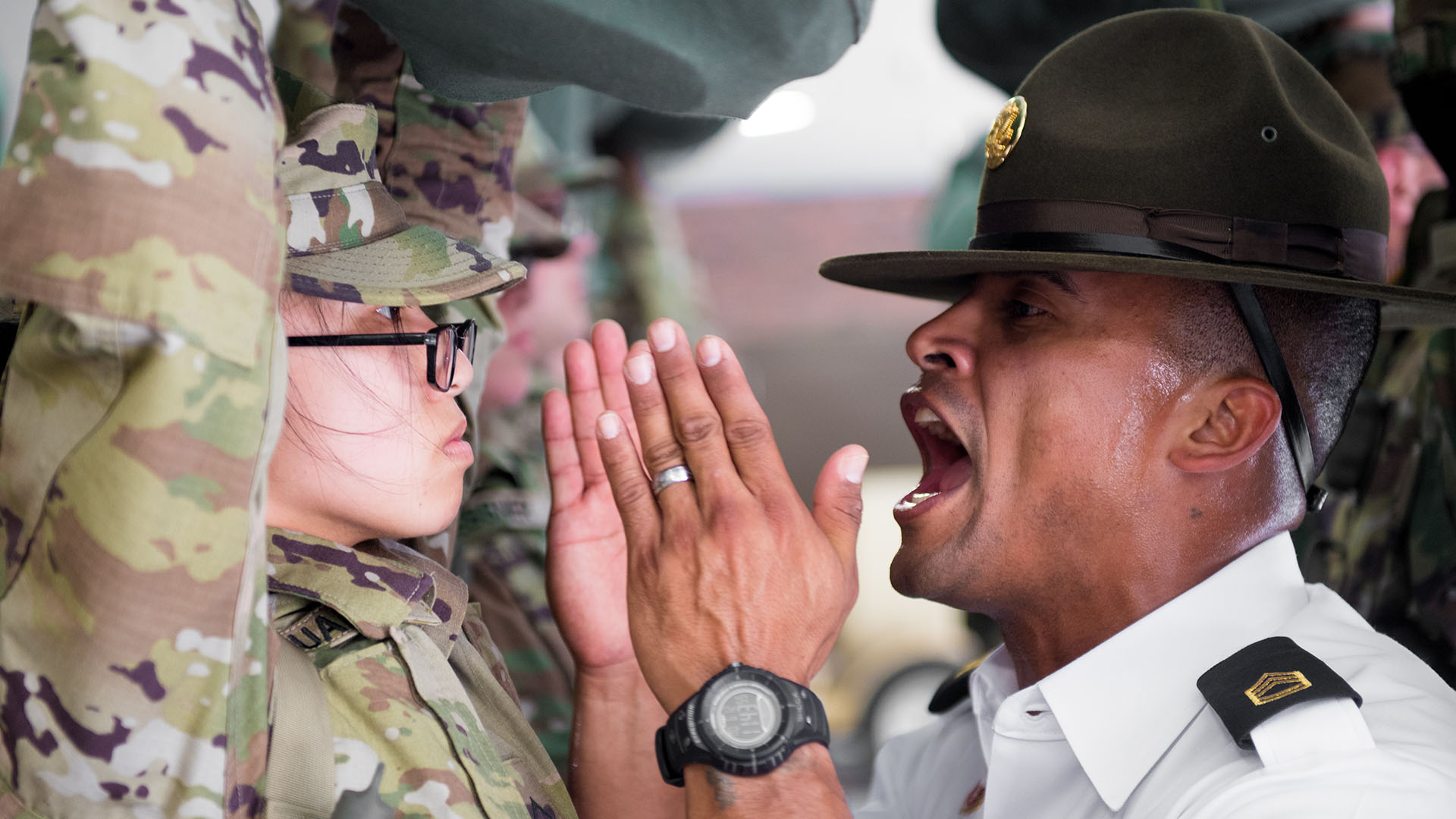
At the time, the infantry school introduced The First 100 Yards, in which drill sergeants lead trainees through a series of physical training events — with plenty of yelling along the way.
But others maintain that shark attacks serve a useful purpose.
Iraq war veteran Alex Plitsas, a former Army staff sergeant, said that shark attacks help trainees transition from civilian to military life and prepare them for battlefield realities.
Basic training is meant to break trainees down, teach them new skills, and then build them back up as soldiers, said Plitsas, a former psychological operations specialist who served in the Army from 2004 to 2012 and later worked for the Defense Department as a civilian.
When drill sergeants use shark attacks and foul language, it helps to lay the foundation of good order and discipline so that trainees are used to taking orders, he said.
“It’s always begun with that process, and in some cases, people are starting at different levels of understanding and acceptance of what change looks like in your life going into a military organization,” said Plitsas, who is currently a board member on Special Operations Association of America “So, it’s meant to put on a level playing field.”
This type of stress is part of how basic training is meant to simulate what trainees may face in combat, he said.
“It’s chaos, it’s hectic, people are yelling, you’ve got to follow orders, you may not have technology with you, you’re miserable, hungry, tired, everything else,” Plitsas said. “It’s all meant to stress you and make sure that you can sort of cut it and make it through. And those are tests early on as well for individuals to see how they fare under those conditions.”