The Army is pulling the reins and now plans to keep its military horse programs at two bases that were set to end in 2026.
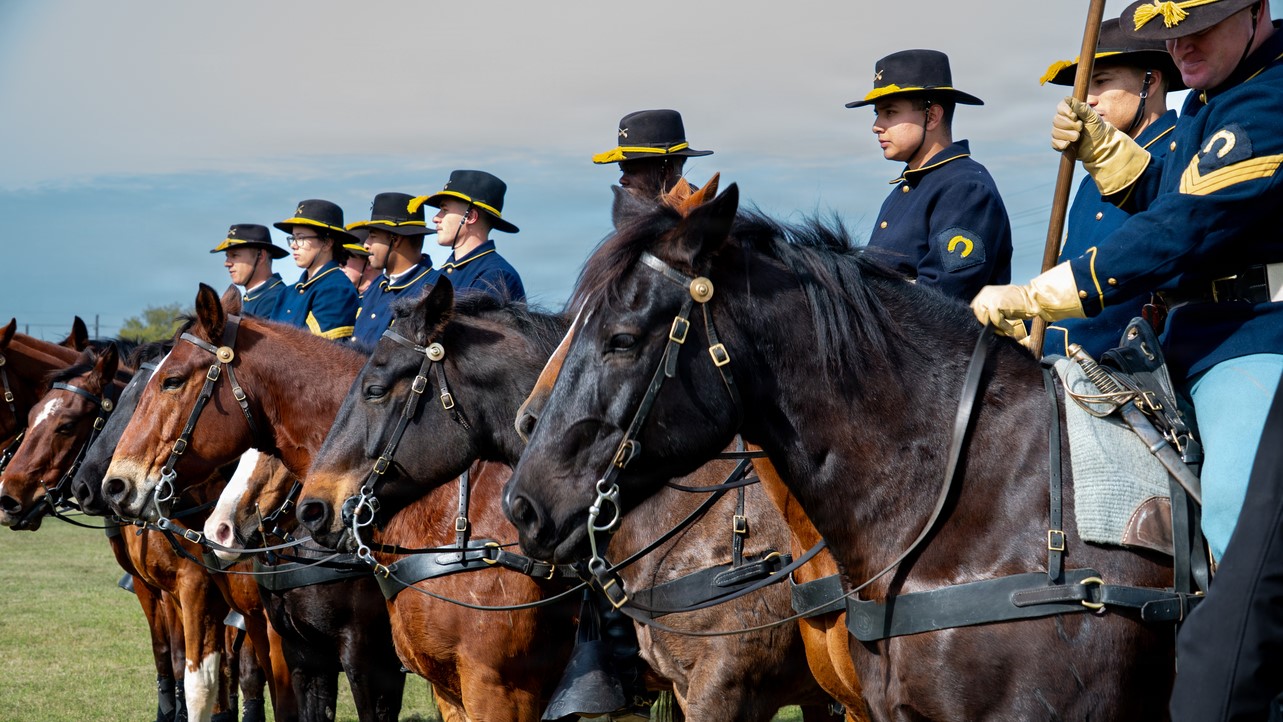
The Military Working Equid programs will remain active at Fort Riley, Kansas and Fort Hood, Texas, the Army announced today. In July, the Army decided it was time to say goodbye to horses, donkeys and mules at five bases, in order to “align more resources with warfighting capability and readiness.”
The Army said at the time that the end of the animal programs at five bases in 2026 would save the force $2 million annually, which could be redirected to unspecified “warfighting priorities.”
Since then the Army has changed its mind, in part.
“These programs provide unique capabilities and benefits that are difficult to replicate, and their continuation aligns with our broader commitment to readiness and community engagement,” Col. James Fuhriman, the assistant deputy for Army health affairs, said in a release.
Top Stories This Week
At the time of its July announcement the Department of Defense had 236 horses, mules and donkeys that were housed on Army bases. Almost all are used largely for ceremonial roles, tied to specific units’ history and heritage. The planned elimination of the MWE program did not include the horses used by the 3rd Infantry Regiment, or “the Old Guard,” operating at Arlington National Cemetery and Joint Base San Antonio.
However the MWE programs are still set to end at Fort Irwin, Fort Huachuca and Fort Sill, as previously announced. Those bases’ commanders are still expected to oversee the donation or transfer of the animals to “vetted owners.”
The Army did not say why leadership decided to keep the programs active at Fort Hood and Fort Riley specifically. However the two bases’ programs are being “formally established as Army programs and serve as a link between the Army and the American people through public demonstrations, educational outreach, and participation in local events.”
The U.S. Army’s history with horses and other equines is long, even stretching into the 21st century. Soldiers used horses well into World War II and Special Forces teams rode horses while fighting alongside the Northern Alliance in the initial invasion of Afghanistan.