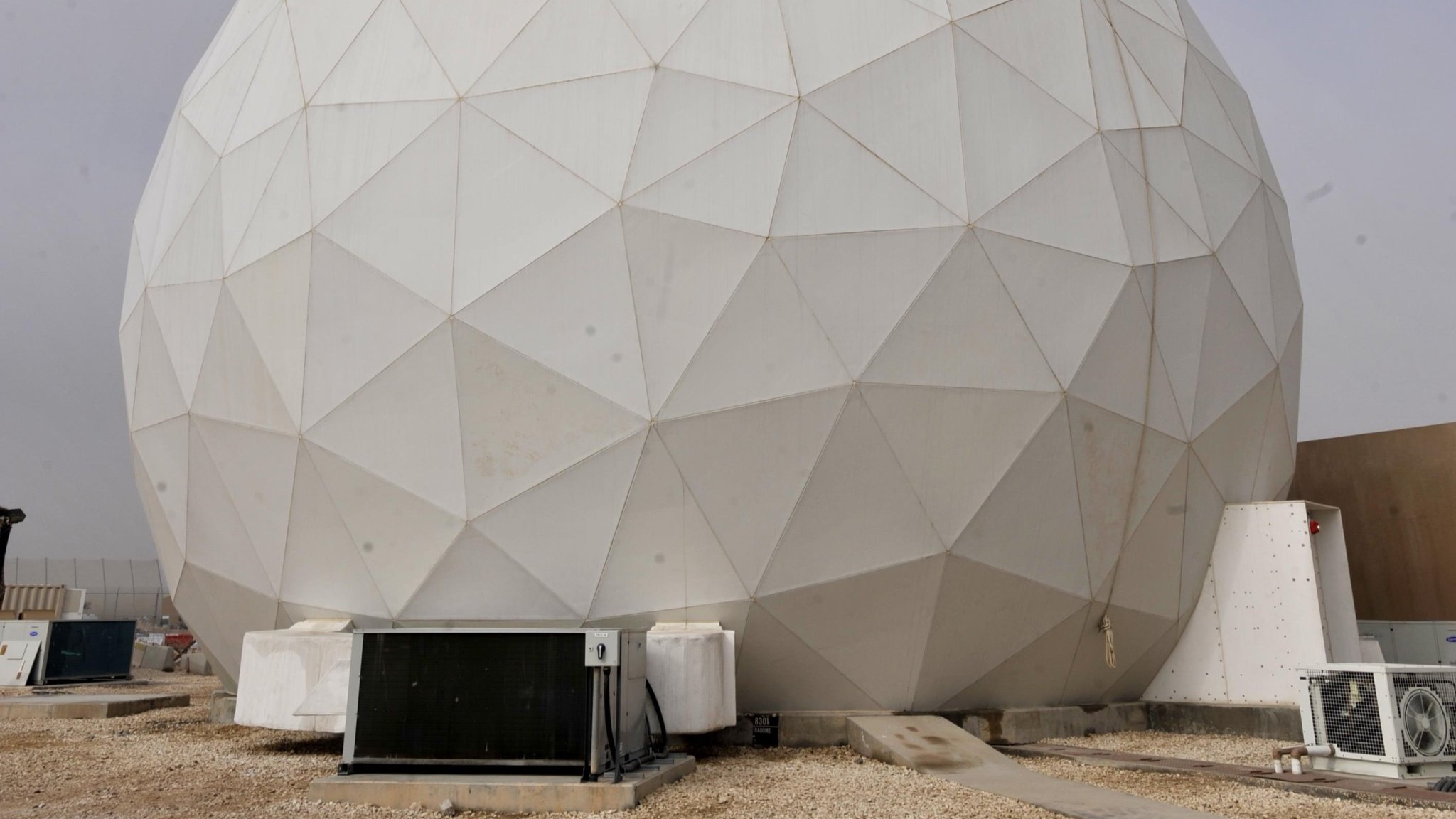
An Iranian ballistic missile hit and badly damaged a communications site on Al Udeid Air Base in Qatar last month during Iran’s retaliatory strike, the Pentagon confirmed today.
It’s the first time the Department of Defense acknowledged any damage to the base during the June 23 attack. Iran launched several ballistic missiles at the U.S. base in Qatar in response to a strike by U.S. B-2s on three Iranian nuclear sites two days prior.
In a statement to Task & Purpose, Pentagon spokesperson Sean Parnell said that the missile “did minimal damage to equipment and structures on the base” and that there were no injuries from the attack. The rest of the missiles were taken out mid-air by American and Qatari air defenses.
“Al Udeid Air Base remains fully operational and capable of conducting its mission, alongside our Qatari partners, to provide security and stability in the region,” Parnell said.
In the days after the attack, a defense official said that the U.S. military “successfully defended against the attack,” and confirmed that no injuries had occurred. Dramatic video from Qatar during the attack showed anti-air interceptors taking out multiple missiles.
The damage was captured in images from a commercial satellite. The Iranian outlet Iran International first reported on the images and the damage. Images showing the base before and after Iran’s attack show that an antenna-enclosing dome in the middle of the installation was destroyed, with dark burn marks where the structure once stood. The dome was a modernization enterprise terminal or MET, a communications hub with anti-jamming systems meant to help boost video and audio transmissions. It was set up at the base at the start of 2016 and cost $15 million, per the Air Force.
On June 21, multiple U.S. Air Force B-2 bombers attacked three facilities at Fordow, Isfahan, and Natanz in Iran, supported by missiles fired by U.S. Navy ships. Operation Midnight Hammer targeted Iranian enrichment installations. The B-2s dropped 14 GBU-57 bunker buster bombs on two of the sites, including the underground complex at Fordow. Two days later Iran launched the retaliatory attack, targeting Al Udeid. American and Qatari Patriot missile defense batteries took out most of the missiles. President Donald Trump said at the time that Iran provided “early warning” of the attack.
The military has walked back initial claims that the strikes on the three nuclear sites left them “obliterated” but still called the operation a success. Earlier this month Parnell said that intelligence reports suggest that Operation Midnight Hammer “degraded [Iran’s] program by one to two years.” The Defense Threat Reduction Agency this week said that it is still waiting on a full battle damage assessment on the impact of the bombings.
The latest on Task & Purpose
- Sergeant Major of the Marine Corps learns an old lesson: Don’t mess with Audie Murphy
- A breakdown of safety procedures ‘directly contributed’ to an 82nd Airborne paratrooper’s death
- WWII Marine Raider who fought at Iwo Jima, Guadalcanal wants cards for 100th birthday
- Navy identifies special warfare sailor killed while parachuting
- Pentagon appears to pause renaming of Navy ships