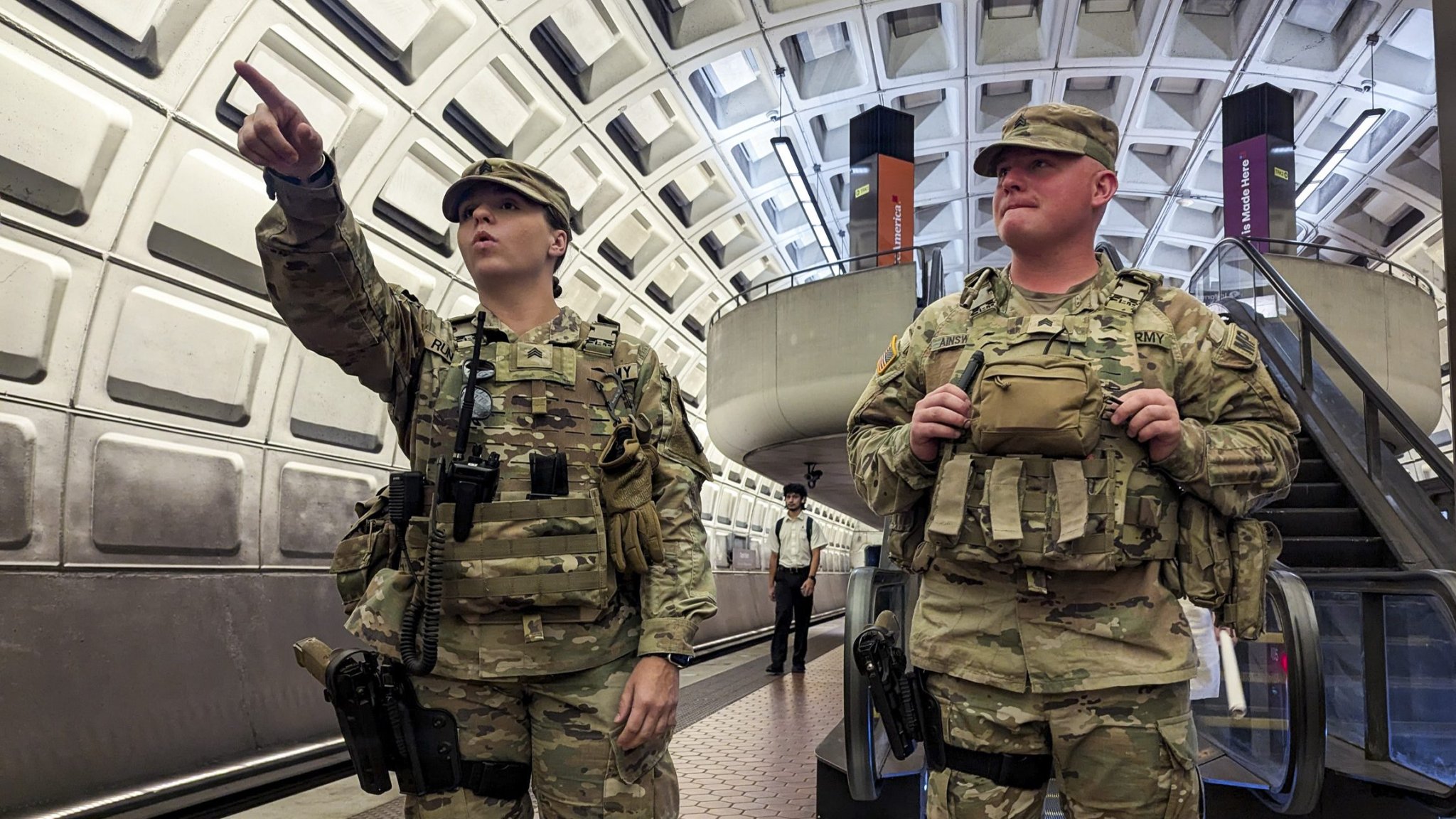
Medics on duty with the National Guard in Washington D.C. are carrying naloxone, a nasal spray used to reverse drug overdoses that is widely referred to as Narcan.
Officials with the task force overseeing the D.C. mission won’t say if those medics have used the drug during patrols, but guard troops have been present for at least one medical emergency that required it, according to a Defense Department release.
“Carrying Narcan ensures they are prepared to provide life-saving aid in the event of emergencies,” Maj. Bjarne J. Aanning, a spokesperson for Joint Task Force-D.C. said in a statement.
According to the task force, 25 medics are carrying naloxone in Washington, which is widely known by the brand name Narcan. Medics are trained in the use of Narcan, which can be delivered to an unconscious patient as a nasal spray, as part of Army medical training and in annual refresher courses.
Surgeons assigned to units at the battalion level or higher, which includes task forces, determine the type of equipment and supplies that medics carry based on the mission, according to a task force official.
The use of naloxone has become a standard of care for many emergency medical systems, EMS, for patients experiencing cardiac arrest and or are found unconscious, according to the U.S. Centers for Disease Control.
Beyond EMS, Narcan was made more widely available without the need for a prescription when it was approved for over-the-counter use by the U.S. Food and Drug Administration in March 2023. Now the nasal spray is available for purchase online and in drug stores, convenience stores, grocery stores and gas stations.
Task force officials would not say whether troops used Narcan because of personal and medical privacy protections but troops have come across at least one incident where Narcan was warranted in Washington D.C.
According to a Defense Department release, two D.C. National Guard military police officers found an unconscious man during a joint patrol with the Amtrak Police Department, Aug. 15 at Union Station in downtown D.C. Sgt. Jay Whited, a team leader from the 372nd Military Police Battalion, said in the release that they resuscitated the man and contacted emergency services. Whited said guardsmen were asked “to help secure the scene” while local police administered naloxone.
What troops are doing in DC
In August, President Donald Trump announced that he was mobilizing 800 troops from the Washington D.C. National Guard to assist law enforcement to “reestablish law, order, and public safety” — despite statistics from the Justice Department showing a 30-year low in violent crime. Since the initial announcement, the mission has grown to more than 2,000 troops deployed to the capital from seven additional states.
In addition to assisting law enforcement, the guard has also been ordered to patrol parts of the city’s metro system and help with “beautification” efforts like cleaning up trash and debris.
An Aug. 27 report from The Guardian cited a White House official who said National Guard troops took part in breaking up dozens of homeless encampments throughout the district.
Overdose deaths on decline
Over the last year, over 80% of overdose deaths in D.C. occurred outside of a medical facility with more than one-third occurring in people who were recorded as “undomiciled” or had an unknown residence, according to D.C. data from the Office of the Chief Medical Examiner.
In December 2018, Washington D.C. Mayor Muriel Bowser released a plan to reduce Opioid Use, Misuse, and Related Deaths called LIVE.LONG.DC. with more educational outreach and increased availability of naloxone.
Between July 2024 and June 2025, over 108,000 naloxone kits were distributed, according to city data.
Between 2021 and 2024, an average of 4,511 people experienced non-fatal overdoses and around 435 died from overdoses, according to D.C. data. As of Aug. 21, the district saw fewer fatal overdoses, 99, when compared to the same time last year, 168.
“Almost all states” saw drug overdoses decrease by nearly 27% between 2023 and 2024, according to the CDC. D.C., Louisiana, Michigan, New Hampshire saw overdose deaths decline by 35% or more.