The U.S. military could be poised to launch the largest combat operations in Latin America since the invasion of Panama nearly 36 years ago.
Since September, the U.S. has launched 21 strikes against suspected drug boats in the Caribbean and Pacific, killing a total of 82 people, a Pentagon official told Task & Purpose.
Now, President Donald Trump’s administration is reportedly considering expanding U.S. military operations in Latin America to possibly include strikes against targets inside Venezuela, claiming that the country’s leader, Nicolás Maduro, is in charge of a criminal organization that smuggles drugs into the United States.
Task & Purpose spoke with three former four-star generals who each led U.S. Southern Command, which has purview over Latin America and the Caribbean, along with a retired senior military commander with deep knowledge of the region for this story. Their concerns included whether U.S. troops would have a clear military objective for any operation against Venezuela and the chances of ground combat devolving into an insurgency. The former commanders also believed the U.S. military holds clear advantages in air power over Venezuelan defenses and conventional forces.
U.S. forces massing in the region
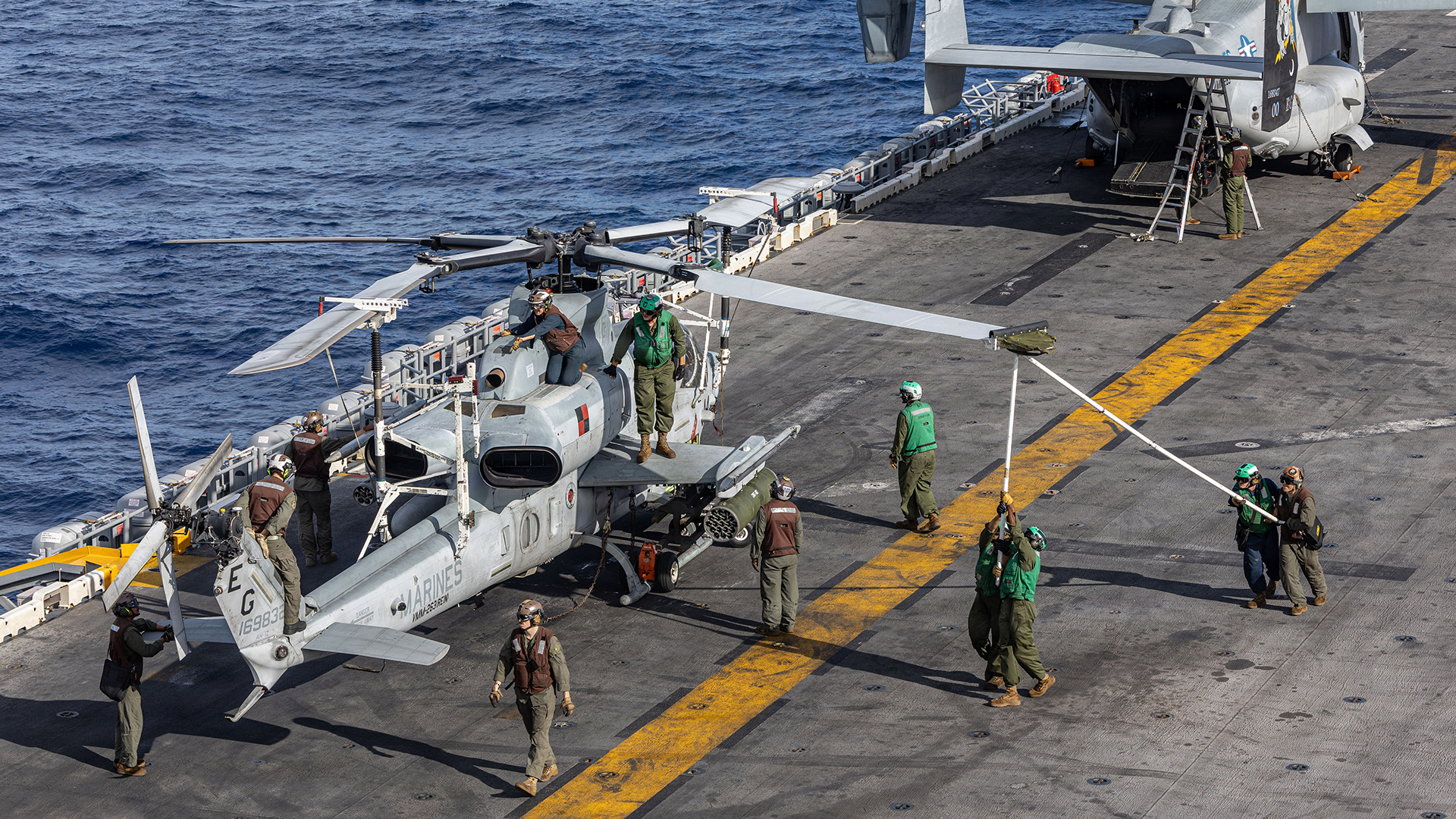
About a dozen Navy ships are currently deployed to the Caribbean, including the USS Gerald R. Ford, the Navy’s newest and most advanced aircraft carrier; the amphibious assault ship USS Iwo Jima; and two other ships in its amphibious ready group. About 2,200 Marines with the 22nd Marine Expeditionary Group are embarked on all three ships.
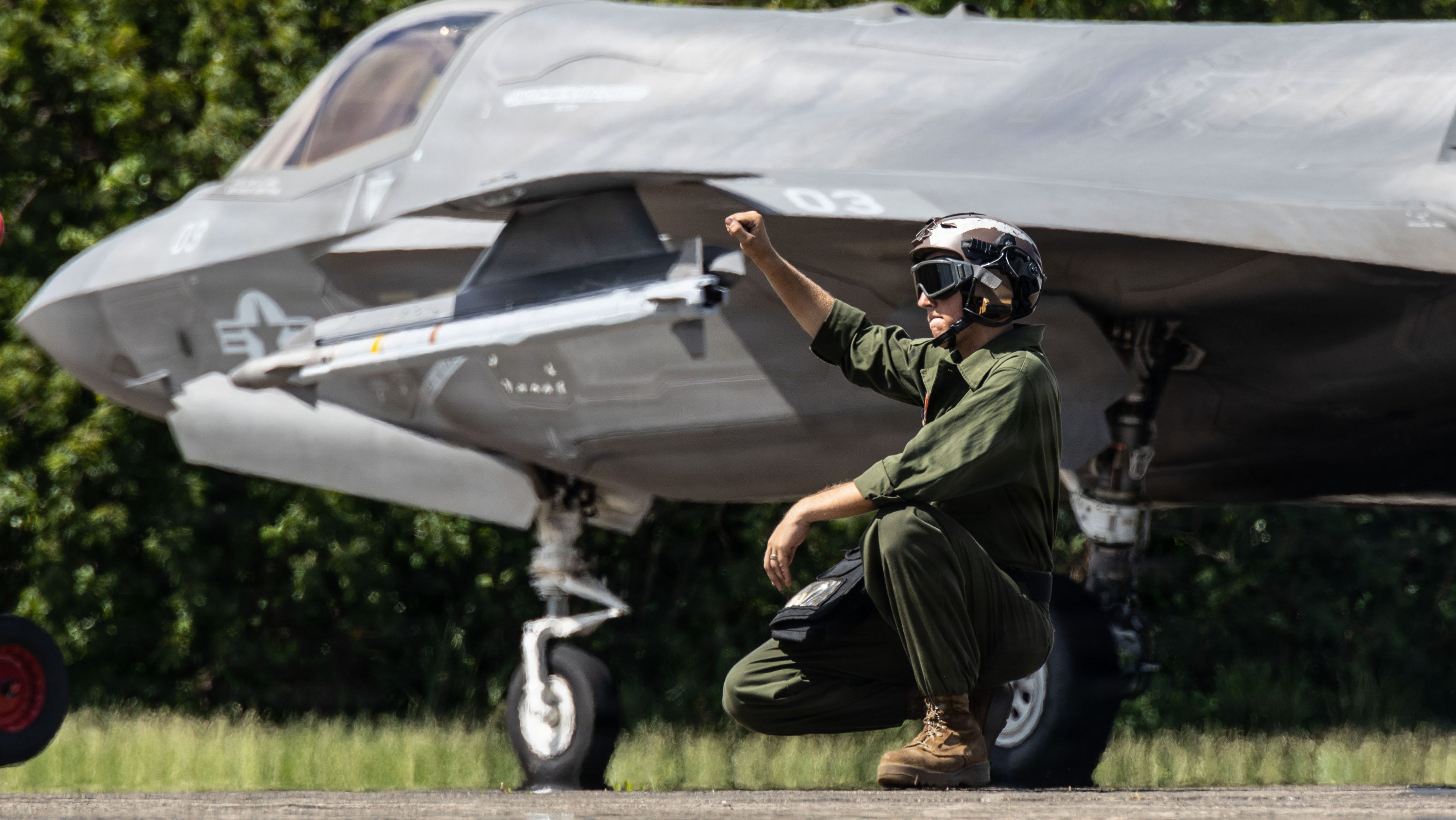
Additionally, a squadron of Marine Corps F-35 Lightning II fighter aircraft has been sent to Puerto Rico, where the former Naval Station Roosevelt Roads has become a staging area for U.S. forces in the region. Other American aircraft, including an AC-130J Ghostrider, have been spotted operating in El Salvador. Discussions are also ongoing between the United States and Ecuador about basing American troops in the country again for the first time in more than a decade.

“Militarily, the table is set quite effectively for air strikes,” said retired Navy Adm. James Stavridis, who led U.S. Southern Command, or SOUTHCOM, from 2006 to 2009. “Now it’s up to [President Trump] to decide.”
If the U.S. military uses carrier-based aircraft, drones, and Tomahawk cruise missiles to attack Venezuela, the risks posed to American service members would be relatively low, Stavridis told Task & Purpose.
“Venezuela has older, untested, and poorly maintained air defense systems,” Stavridis said. “Their manned aircraft cannot match U.S. fourth- and fifth-generation fighters. Look for successful strikes directed against counter-narcotic and military targets, probably in the next few days if the President decides to move forward.”
It is unclear whether any U.S. military action against the Maduro regime or targets elsewhere in Latin America would be limited to air and missile strikes or include any American troops on the ground.
The ships and aircraft now in the Caribbean are capable of launching an air campaign that could “obliterate 100 different targets a day” for about three weeks, said retired Army Gen. Barry McCaffrey, who led SOUTHCOM from 1994 to 1996.
But Venezuela has a small air force and Navy, so there would be few military targets for such a massive air campaign, McCaffrey told Task & Purpose.
“You’re not going to fire Tomahawk missiles at a palmetto-covered cabin in the mountains of Venezuela that’s a transit point for coca,” McCaffrey said.
If conventional ground forces were committed, however, they’d be in a region unlike any that U.S. troops have operated in for a generation. The capital city of Caracas is modern and densely populated by 3 million residents. The capital is accessible from nearby coastline and port facilities, but the city’s central district is about 10 miles inland. Outside of the capital district and a few urbanized coastal regions, the country is primarily rainforest and rugged mountains.
Up to 80% of Venezuela’s population is estimated to live in urban areas, according to Henry Ziemer, of the Center for Strategic and International Studies think tank in Washington, D.C. Drug cartels often use cities in Latin America to export narcotics and extort the local population, Ziemer told Task & Purpose.
“The chances that will be an urban characteristic to a campaign are incredibly high — close to 100%,” Ziemer said.
When Trump was asked at a Monday White House news conference if he would rule out deploying U.S. ground combat forces to Venezuela, he replied: “I don’t rule out that. I don’t rule out anything. We just have to take care of Venezuela.”
Insurgencies and ‘Banana Wars’ of the past
McCaffrey said that it is “unlikely” that any strikes in Venezuela would involve ground combat forces other than special operations troops. Even then, it is questionable how effective any U.S. troops would be in countering drug production, which mostly takes place in Colombia, Bolivia, and Peru, he said.
Although Venezuela’s military is not particularly effective, the Maduro regime is arming its state militia, and that raises the possibility that any U.S. troops deployed to Venezuela would be faced with fighting an insurgency, a retired senior U.S. military commander told Task & Purpose.
Top Stories This Week
But fighting paramilitary forces in Venezuela would be markedly different from the counter-insurgency campaign that U.S. troops waged during the Global War on Terrorism, the retired commander said.
“The terrorist insurgents in Iraq and Afghanistan, I would say, would be in comparison infinitely more dedicated — certainly, not only willing to be killed fighting Americans, but looking forward to the fact that they would be heroes fighting the Americans,” the commander said. “So, it wouldn’t be, I don’t think, anything close to what we experienced in Iraq and Afghanistan.”
Instead, any ground campaign in Venezuela would likely be closer to the “Banana Wars,” a series of U.S. military interventions in the Caribbean and Latin America from 1898 to 1934, the retired commander said. During that time, U.S. troops repeatedly occupied countries in the region and fought against local forces.
‘What is the objective?’
Retired Army Gen. Wesley Clark, who led SOUTHCOM from 1996 to 1997, said that the U.S. must define its military goals before committing forces.
“I think we have to be very careful to know what the objective is — that’s the first thing. What is the objective?” Clark said. “And then realistically, what are the rules of engagement required to attain that objective?”
Clark pointed to other contemporary examples of American military operations in the region that — while not direct comparisons to the current climate around Venezuela — are helpful to understand the considerations around military action there.
In 1983, the United States and several Caribbean countries invaded Grenada to prevent a communist takeover.
In 1989, troops forced their way into Panama to oust dictator Manuel Noriega and protect American interests.
Five years later, thousands of U.S.-led coalition troops entered Haiti to return President Jean-Bertrand Aristide to office.
It is an open question whether the goals of any U.S. military action in Venezuela would include ousting Maduro.
Referring to the invasion of Iraq, Clark said that then-Defense Secretary Donald Rumsfeld “didn’t plan for the long occupation” and because there was little to no consideration for what would happen after Saddam Hussein was deposed, “it didn’t work.”
“We’ve got to be careful with something like this that you have thought it through and have the staying power,” he said. “Once you’ve messed it up, you can’t just sort of wave your hands and say, ‘Okay, I solved another problem. That’s it. We got rid of Maduro.’ Yeah, you may have, but you may have created a huge humanitarian catastrophe that will generate more conflict and more refugees.”
Clark pointed to Venezuela’s size and the ability of local militias to blend in with the civilian population as examples of challenges troops would face if they were sent into the country. Following his emphasis on the importance of having an objective and legal justification for intervention in Venezuela, Clark noted a cascade of questions critical for troops to understand.
“When that gunboat comes out from the harbor in Caracas, is it presumed hostile? You sink it on site? Do you send some kind of warning to it?” he said, for example. “Do you have the authority to disarm people, stop them and disarm them, and if they resist, to sink them? How does it work?”
“That’s what’s got to be worked out,” Clark added. He noted the political opposition to Maduro, most notably María Corina Machado, a recent Nobel Peace Prize laureate who the Venezuelan government barred from running for president in 2024 and who is now in hiding.
“Presumably, if you are going to plan that you’re going to go ashore and restore order in Caracas and help Mrs. Machado become president,” Clark said, “You’ve got to have answers to all those questions.”