The crew of a Navy supply ship was recognized for saving three Philippine fishermen whose boat was adrift in the South China Sea last winter.
The Chavez was transiting the South China Sea on Jan. 1, 2026, en route to resupply ships in the U.S. 7th Fleet when Third Officer Nicholas Been, who was on watch at the time, spotted the fishermen waving their arms. As a ship in Military Sealift Command, USNS Cesar Chavez is owned by the Navy but crewed mostly by civilians.
The Chavez launched a rigid-hull inflatable boat to recover the fishermen, who were brought aboard the supply ship and found to be in good health, according to a Navy press release at the time.
After leaving port on Dec. 27, 2025, heavy seas had flooded the engine of their bangka, an outrigger-equipped boat popular in the Philippines. That left them adrift, surviving on rationed food and water, for five days before the Chavez stumbled upon them.
“They had some debris/buoys nearby and were waving whatever they could to get our attention, but they did not have any real signaling equipment,” Curtis Shelton, the ship’s master at the time, told Task & Purpose. ‘Master’ is the official legal designation of the person responsible for a ship and its crew, though captain is the layman’s term for someone acting in that capacity.
With over five-foot seas and a swell, the conditions were not terrible for a rescue, Shelton recalled, but any such undertaking is a fraught one.
“During this particular event, I was very impressed with the response from our whole crew,” he said. “During operations like these, any number of things can go wrong. I’m proud that our trained crew and well-maintained equipment performed as required.”
“As far as the rescue itself, I’ve been saying that we were just in the right place at the right time,” he added. “I hope that anyone else in our situation would have done the same, but we are thankful to have been a part of it nonetheless. We were already scheduled for a port visit to the Philippines, so the timing really couldn’t have been any better.”
Rear Adm. Benjamin Nicholson, head of Military Sealift Command, presented the United Seaman Service’s Admiral of the Ocean Sea award to the Chavez crew at a ceremony in New York City on Nov. 13. Shelton accepted it on the crew’s behalf.
“Their actions exemplify the dedication of the thousands of civil service mariners who sail aboard U.S. Navy Military Sealift Command ships around the world,” Nicholson said in a press release.
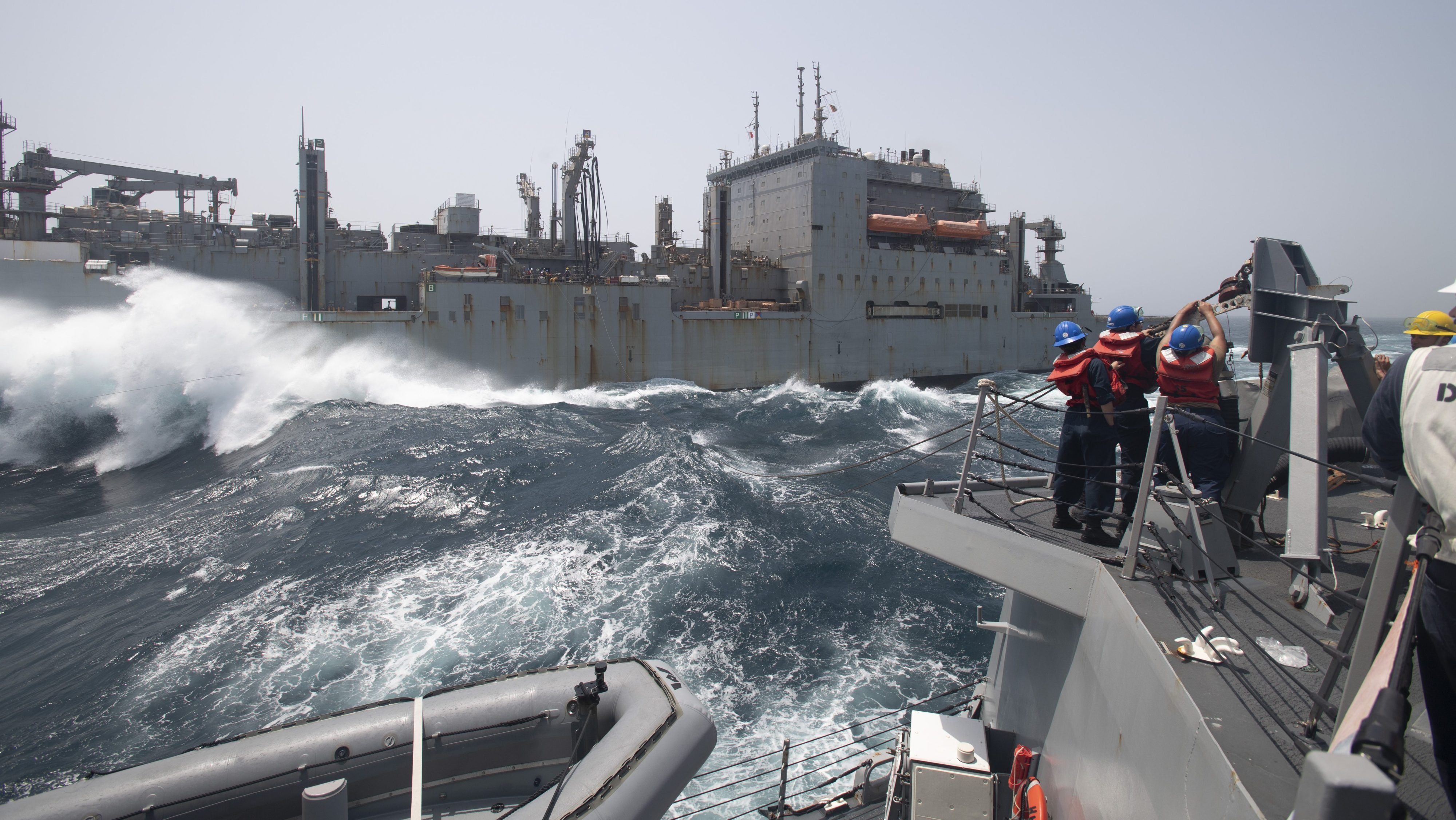
Sailors attach a span wire to a fuel intake port on the guided-missile destroyer USS Lenah Sutcliffe Higbee during a replenishment-at-sea with the dry cargo and ammunition ship USNS Cesar Chavez in the U.S. Central Command area of responsibility, July 25, 2025. Navy photo.
A dry cargo ship, the Chavez moves spare parts, food, ammunition, fuel and other supplies to Navy ships around the world. The crew conducts underway replenishments where the supplying and receiving ships hold course and speed next to each other and transfers cargo on lines strung up between them.
The Chavez has been busy this year, resupplying Navy ships in the Middle East amid the ongoing war with Iran.
Retired Marine Sgt. Maj. Bradley Kasal, a Navy Cross recipient who is perhaps best known for an iconic photo taken of him emerging from the “Hell House” during the Second Battle of Fallujah in the Iraq War, is under federal investigation, Task & Purpose has confirmed.
Marine Corps officials confirmed that Kasal is under investigation for allegations related to his time as a civilian Junior Reserve Officers’ Training Corps (JROTC) instructor at the Basic Academy of International Studies in Henderson, Nevada.
“The Naval Criminal Investigative Service is actively investigating the allegations, as the Department of the Navy’s lead for felony-level criminal investigations. To protect the integrity of the investigation, we cannot provide further comment at this time,” Marine Corps officials told Task & Purpose in a statement.
Kasal served in the Marine Corps from 1984 until his retirement in 2018.
On Nov. 13, 2004, in Fallujah, Iraq, Marines with 3rd Battalion, 1st Marine Regiment, went street-to-street in deadly and unforgiving house-to-house combat. Kasal was leading a section of Marines when reports came in that others were trapped in a nearby house by an unknown number of enemy fighters. As Kasal and his fellow Marines cleared the house in order to reach those pinned inside, he was repeatedly wounded — and in one case, he used his body to shield another Marine from a grenade blast. Kasal emerged from the building, bloody, gripping his sidearm and held aloft by two of his fellow Marines.
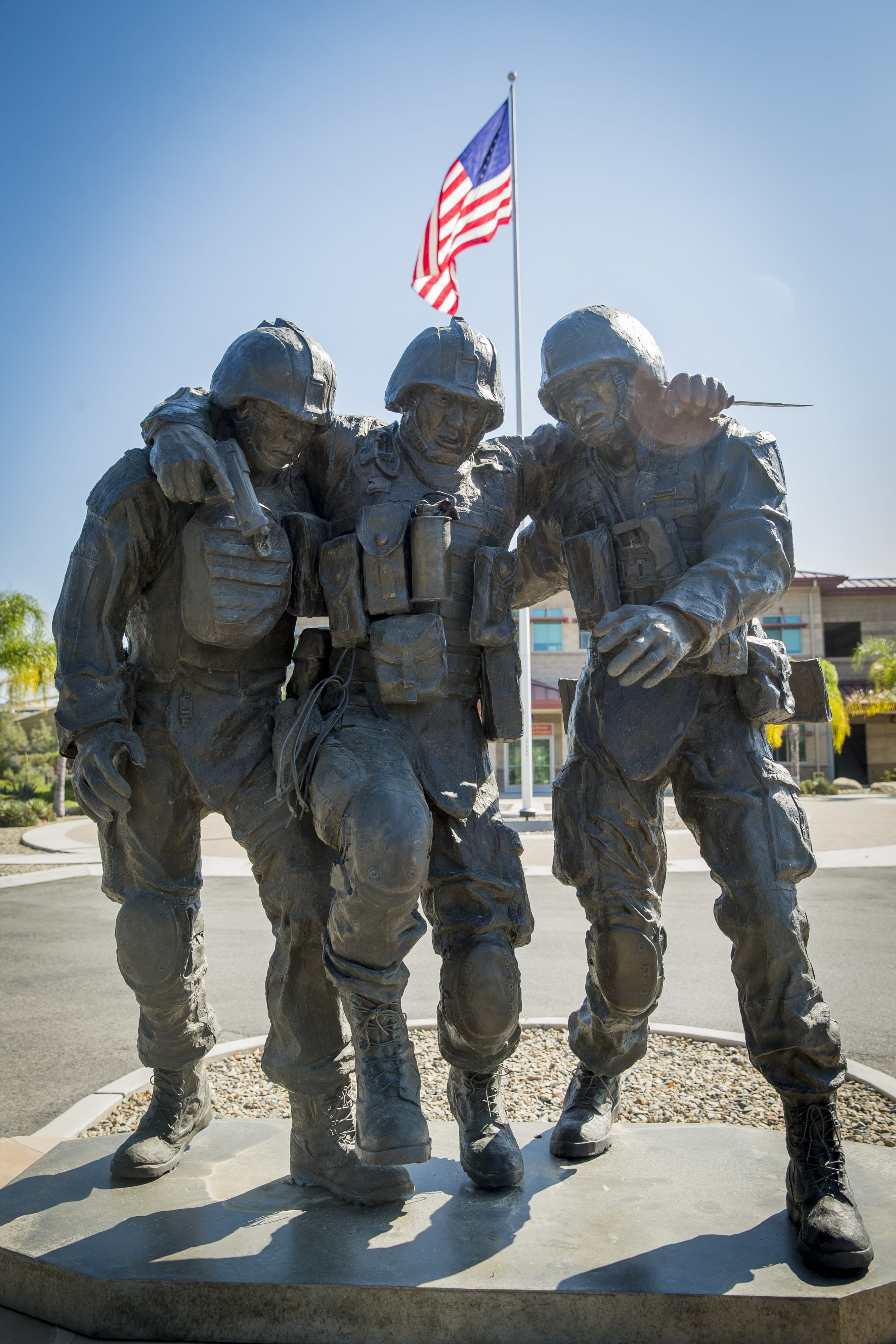
Sgt. Maj. Bradley Kasal statue at Wounded Warrior Battalion – West, Marine Corps Base Camp Pendleton, California, August 1, 2018. Marine Corps photo by Lance Cpl. Betzabeth Y. Galvan.
The moment was immortalized by photographer Lucian Read. In the ensuing years, after Kasal was awarded the nation’s second-highest award for valor, the Navy Cross, his story became Marine lore and is regularly taught across the Corps, including at boot camp.
Erin Kirk, founder of Not In My Marine Corps, said Kasal was legendary in Marine Corps history.
“For many Marines, his reputation and the reverence surrounding his service are comparable to the way we regard figures like Chesty Puller or John Basilone. That is what makes news of a federal investigation involving someone of his stature so significant,” Kirk said.
She also cautioned that the case is still in the investigation phase.
“An investigation is not a finding of guilt, and everyone deserves due process,” she said. “No individual’s reputation, combat record, or standing within the Marine Corps should place them beyond scrutiny. The public, and especially parents, deserve confidence that any allegations will be investigated thoroughly, independently, and without regard to rank or reputation.”
Kasal deployed in 1990 to support Operation Desert Storm, in 2003 to Kuwait in support of Operation Iraqi Freedom and then again to Iraq in 2004, according to an official 2022 agenda from a Marine Corps birthday celebration.
He served as the head enlisted leader for a recruiting station in Des Moines, Iowa, while he recovered from his injuries in Iraq. In 2010, he served as the sergeant major for the Marine Corps’ School of Infantry – West at Camp Pendleton, California. In 2013, he served as the Fourth Marine Division sergeant major in New Orleans, Louisiana.
Kasal’s awards include the Navy Cross, the Legion of Merit with one gold star, the Purple Heart with one gold star, the Meritorious Service Medal with one gold star, the Navy Commendation Medal with Combat V and two gold stars, the Navy Achievement Medal with two gold stars, and the Combat Action Ribbon with one gold star.
UPDATE: 11.20.2026;This article was updated after publication with a statement from Erin Kirk, founder of Not In My Marine Corps, a military veterans advocacy group.
The Air Force is turning to nets to prevent drones from destroying its most sensitive fighter jets. Former aircraft maintainers told Task & Purpose that it highlights the risks that drones also pose to the personnel who fix and sustain them.
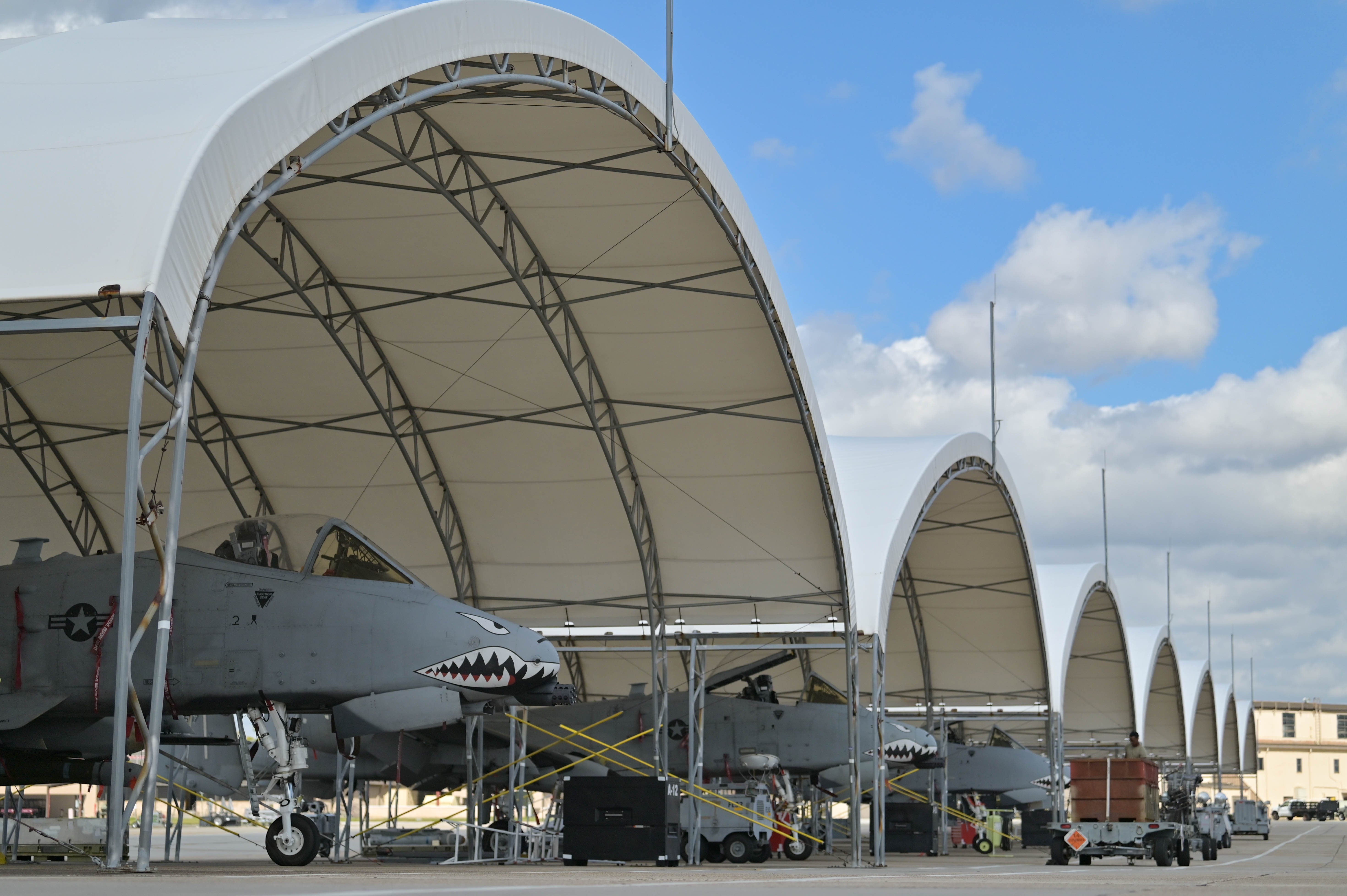
In March, officials at Shaw Air Force Base in South Carolina, where the 20th Fighter Wing flies F-16s, sought to add nets to their aircraft sunshades to “prevent intrusions” from small drones.
Earlier this month, Tyndall Air Force Base in Florida posted a market research solicitation asking private companies to pitch nets for the sunshades shielding their F-35s along the flight line. The objective, according to the Tyndall notice, is to prevent small drones from “penetrating the interior of the sunshade structures to protect aircraft and personnel.”
Chris McGhee, a former F-16 aircraft maintainer, said that although the solicitation highlights force protection, in reality, maintainers are still at risk.
“The aircraft is certainly going to be much safer than if there was no netting and the drone came in direct contact with the hull of the aircraft, the skin of the aircraft. But when I think about the aircraft maintainers working around the aircraft, they are going to be traveling in and out of that netting all the time,” he said. “The netting is to protect our aviation assets, and I think them framing it as its protection for personnel, I think fails the sniff check to me.”
McGhee said the nets, plus recent Iranian attacks on U.S. aircraft at bases, show the risks that maintainers could face as drones are increasingly used to target assets on the ground.
In March, an Iranian missile and drone attack damaged an Air Force E-3 Sentry AWACS command and control plane parked at Prince Sultan Air Base, Saudi Arabia. More than 10 service members were injured in the attack, according to reporting by Air and Space Forces Magazine.
“We lost an E-3. We’re pulling jets out of the f—ing UK because we don’t think we can protect them. We’re now talking about putting up nets in Tyndall,” McGhee said. “This is what happens when you don’t account for a very obvious technological capability of your enemy, and we as a nation, we are grossly misaligned in our defensive posture.”
Air Force solicitations show bases are seeking to add nets to sunshades to protect them from small drones. Air Force photo by Senior Airman Rebeckah Medeiros.
Anne Phillips, a retired U.S. Air Force master sergeant who worked on F-15s, B-1s, KC-135s, and KC-46s, has a similar worry. She said when it comes to drone threats, maintainers are an “afterthought.”
“Human capital has always been expendable in aircraft maintenance, an afterthought, a ‘we’ll cross that bridge when we come to it,’” she said. “But even when the bridge is crossed and off in the distance behind us, we still haven’t even so much as had a discussion.”
Phillips was deployed as an aircraft production expediter to a base in the Middle East in 2017 when airmen further down the flightline reported a drone hovering overhead.
“When we called security forces, we were told there was nothing that could be done. Now, this drone wasn’t capable of attack and appeared to be doing [reconnaissance] but it struck me how nonchalant the response was to a drone following my guys around,” Phillips said. “This was nearly 10 years ago and obviously the landscape has changed, but the threat remains the same.”
An Air Force official told Task & Purpose that the service is “actively” developing base defense capabilities to improve security and protect airmen, including maintenance personnel. The official pointed to its Point Defense Weapon System, which uses kinetic and nonkinetic capabilities for air base defense. In September, the Air Force also announced it was creating a new career field for airmen to man the system responsible for thwarting drone and missile attacks on bases.
“Protecting Airmen, infrastructure, and other critical assets from unexpected [small drone] activity is a critical focus area for Department of the Air Force leadership,” the official said.
‘We assumed none of them would ever die in combat ever’
“We have been cut to the bone as far as manpower for the last 15 years, and I think it has never accounted for: what if people can blow up our technicians? We are at the peacetime bare minimum for this population. It’s not like the infantry where they go, ‘We know we’re going to lose 10% during this surge in 2008,’” McGhee said. “We are so fat and bloated with complacency for this workforce population, which is why we have the gall to cut it so deep, because we assumed none of them would ever die in combat ever.”
Kelly Grieco, a senior fellow at the Stimson Center, said destroying aircraft before it actually gets up in the air is a relatively old strategy. What’s new about the drone threat now, Grieco said, is that it highlights newer vulnerabilities to bases which had been considered more or less a “sanctuary” for U.S. forces for the last 30 or so years.
Known as the father of air power theory, Giulio Douhet, an Italian Army general, theorized in the early 20th century that attacking an enemy’s “nests and eggs on the ground” is more effective than hunting “his flying birds in the air.” Grieco said Iran is using drones as a means to interrupt U.S. air power on the ground by making operations more “costly.”
“If you can find a weak point, say on the ground, like maintainers, and disrupt that link in that system, and I think that’s what Iran understands,” she said. “If you look at what it struck on these bases, it went after [air]-refueling aircraft, airborne early warning communications, radars, all of the things that are enablers. And if you look at Chinese military writings, in particular, they specifically talk about U.S. air power as a system, and they recognize explicitly the base as being a core vulnerability.”
Thursday evening, Acting Secretary of the Army Adam Telle said on social media that he directed Army Materiel Command to postpone the detonation of degraded lead azide — an explosive material used in munitions — for three days in order for the Army to “continue to actively engage with state and local officials throughout the region to distribute accurate, up-to-date information.”
The decision follows concern from several current and incoming elected officials, as well as local protests in Middletown, where the plant is located, and a lawsuit.
In March, the Army found that barrels of lead azide at the Iowa Army Ammunition Plant had degraded and the material had begun to crystallize. That change made the explosives more unstable and risked unplanned detonation if moved. Shortly after discovering the degraded lead azide, the plant and Joint Munitions Command said they were working with federal and state partners to develop a plan to dispose of the dangerous materials. By the fall, a controlled detonation was decided on, with the Army holding an open house on Oct. 15 with community members to discuss the planned explosion.
On Nov. 13, the Environmental Protection Agency issued a permit to the plant allowing for a controlled explosion. The barrels are being surrounded by concrete and other earthworks to contain the blast, and the Army planned on watering the soil to reduce the lead that could escape the area. On Sunday, the plant released a public advisory announcing the planned date of the blasts. Two controlled detonations were set for noon on Nov. 20, with nearby Middletown residents advised to evacuate between 8 a.m.-2 p.m. That notice included a plume map, showing that an air plume “with some lead-containing particles” was projected to expand north for dozens of miles. Per EPA requirements, an Army spokesperson told Task & Purpose on Wednesday, the plant was required to notify the public in a roughly 100-mile radius.
The risk of lead exposure prompted communities in the projected path of the plume to take action ahead of Friday. Some Iowans protested near an Army building in Middletown on Wednesday. Ahead of the planned detonation, several school districts had announced plans to cancel classes on Friday, as a precautionary measure.
In a statement to the Des Moines Register, current Gov. Kim Reynolds’ office said they became aware of the plan on Monday, Nov. 16, following the public advisory. Governor-elect Rob Sand called out “an unacceptable lack of communication and clarity,” something Senator-elect Josh Turek echoed. Sen. Chuck Grassley shared a reminder of the planned detonation and noted the Oct. 15 meeting.
Prior to Telle’s announcement, a bipartisan group of lawmakers from Iowa and Illinois wrote to Telle and the EPA calling on them to consider delaying the explosion.
According to Telle’s announcement, the new date “will delay the detonation until the latest possible moment prior to a forecasted temperature drop, which would risk further destabilization of the material.”
A 24-year-old man from San Antonio, Texas could face more than 30 years in prison for allegedly posing as an Army contracting officer and for selling counterfeit ammunition, weapon lights, and optics to the military.
An indictment announced Tuesday by the U.S. Attorney’s Office of the Western District of Texas accused Marcelo Fascino of committing fraud and impersonating a federal employee across at least 70 federal contracts totaling more than $1.6 million between October 2022 and May 2024.
The federal government regularly asks for bids from private companies when shopping for goods and services, and it aims to award a percentage of its contracting money to small businesses owned by veterans, service-disabled veterans or women.
According to the indictment, Fascino fraudulently claimed his company, PGCE (no breakdown of the initials was provided), qualified as all three. Fascino also allegedly misrepresented himself as a contracting officer so he could ask potential competitors for sensitive pricing information, giving him “an unfair advantage” in his own bids.
In some of those cases, the indictment said, competitors missed the deadline to send in their bid because they thought they already had when they sent it to Fascino. Some of the agencies Fascino allegedly falsely represented include the Army, the Marine Corps, the Air Force, the National Guard, the Coast Guard, the Army Corps of Engineers, the Department of Agriculture, the Department of the Interior and the United States Geological Survey.
While falsely representing the Army or the Marine Corps, Fascino allegedly referred to himself as “SSG Marcelo Fascino” or “SSG Fascino.” SSG is short for staff sergeant in the Army, but in the Marine Corps it’s SSgt.
The indictment said Fascino sold “nonconforming and counterfeit” ammunition, weapon lights, and optics to the Army, saying they were made in the United States when they had actually been made “substantially cheaper” in China. At one point, Fascino allegedly sent Army contracting staff a forged letter from a rifle optics manufacturer to try to persuade them that the optics were authentic.
Fascino faces three counts each of wire fraud and false personation of a federal officer or employee. A Justice Department press release said he faces up to 30 years in prison for each count of wire fraud and up to three years for each false personation charge. A federal district court judge will determine the actual sentence should Fascino be found guilty.
The Army plans to detonate 68 drums of explosive materials near a small Iowa town on Friday, and is advising nearby residents to prepare for loud noises, potential window damage and a dust plume that may contain some lead. However, the plan and the potential for an airborne dust cloud have some residents concerned and prompted several schools to announce closures.
The Army will detonate approximately 5 tons of lead azide on Friday, which is stored at the Iowa Army Ammunition Plant in Middletown. Several barrels containing lead azide — an explosive material — have been stored at the facility for decades and now show signs of deterioration. The chemicals have started to crystallize, making them more unstable and capable of potentially detonating on their own.
The two detonations are set for noon Central Time on Friday. The barrels will be detonated in a controlled space, surrounded by sand and concrete barriers. The Army is warning residents of loud noises and ground vibrations.
According to the latest public advisory, released Wednesday, some residents in Middletown have been asked to evacuate from 8 a.m. to2 p.m. on Friday, due to the possibility of shockwaves that could damage windows. The Army said that the Armed Forces Reserve Center in town is available for Middletown residents if they need a place to stay.
The plant, part of the Army Joint Munitions Command, is near Middletown, a town of roughly 400 people. In March, a safety review found that the lead azide was unstable. The Army began working with state and federal partners to devise a plan to dispose of the chemicals. However, it was determined that the drums of explosive material would need to be detonated on site. Due to the risk, the barrels cannot be moved.
The Environmental Protection Agency, which is working with the Army, said that it issued an emergency permit for the detonation after determining that the “explosion risk from the degraded condition of the lead azide presented an imminent and substantial threat to human health and the environment.”
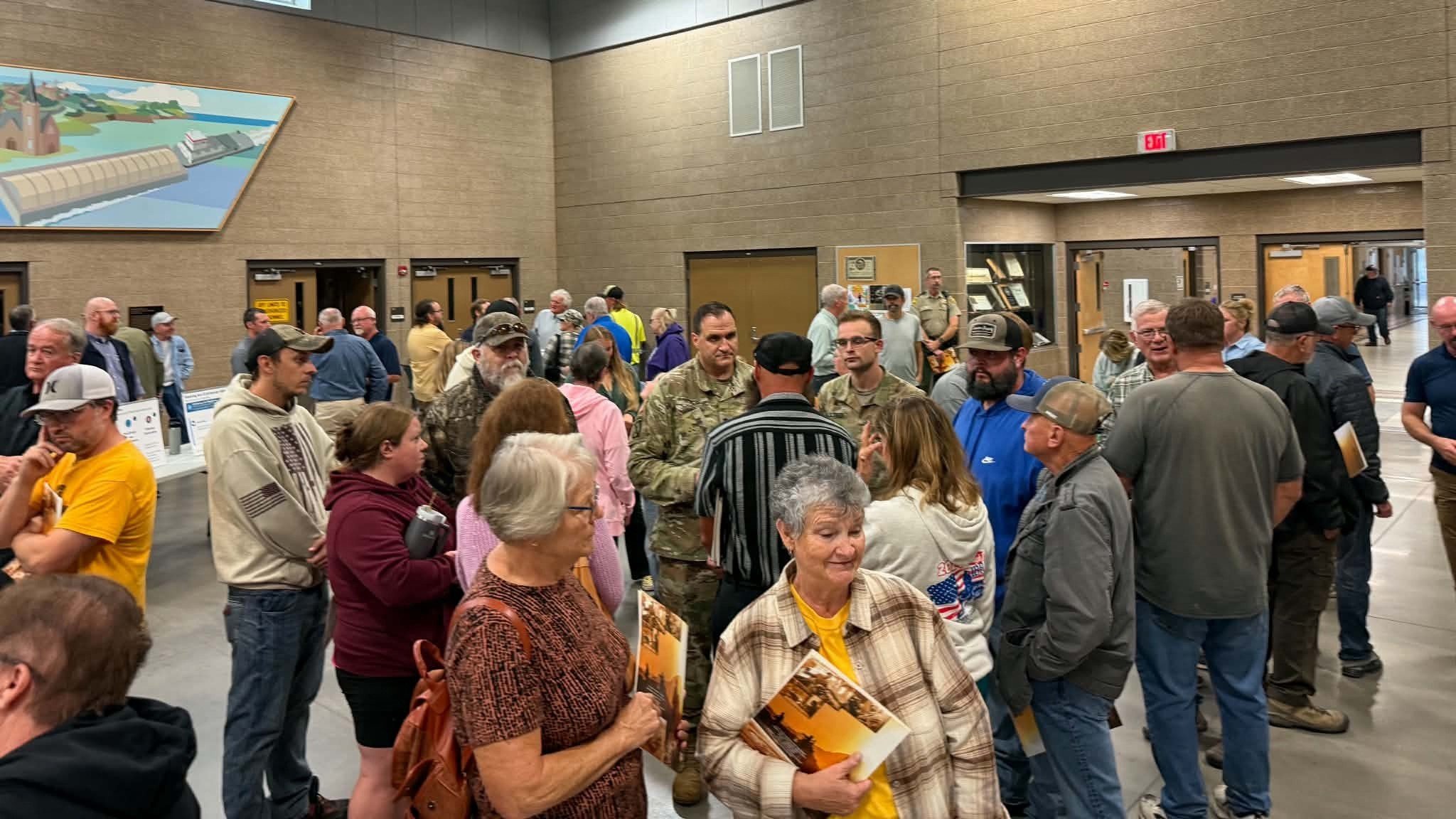
Community members and Army personnel gather at an open house on Oct. 15, 2026, to discuss a planned detonation of explosive material at the Iowa Army Ammunition Plant. Army photo by Lori McFate.
Justine Barati, a public affairs specialist with Army Sustainment Command, said that the Army had been working with local governments for weeks to inform them about how they might be impacted. That included an open house in October and a meeting with Middletown officials on Nov. 12. Barati said that when they received the detonation permit this past Sunday, it required the Army to notify the public in a 105-mile radius.
That alert prompted concern from the surrounding communities. Several school districts in the area announced this week that they would partially or fully close on Friday, after consulting with the Army and public health officials. On Wednesday, more than a dozen people protested outside of the Armed Forces Reserve Center, with some demonstrators telling local news they wanted more information about why a detonation was chosen as the best option and to see if there were alternatives.
Barati said that there is serious concern that the lead azide could detonate on its own in an uncontrolled way, with no warning. She said that the material becomes more unstable in colder weather, and the Army is working to resolve the matter before winter.
The Army is advising people in the impacted areas to avoid the facility where it is stored if possible, keep doors and windows closed, and clean indoor and outdoor surfaces once the exposure period has ended.
A parent who lives in the area north of the ammunition plant that could be impacted by the plume and who asked not to be named, citing privacy concerns, told Task & Purpose that she still has questions about how the debris could impact people’s health. She said it was still unclear what this would mean for farmland or people who can’t fully seal up their homes. She also expressed concerns that wiping off surfaces could be enough to deal with the lead risk.
The military said that it is taking some preemptive steps to reduce and mitigate the size of the dust plume. It is watering the ground and setting up earthworks to contain as much dust as possible, the advisory notice said. Barati also noted that rain is forecast this weekend, which the Army hopes will also reduce the spread of the dust plume.
An updated plume model will be released Friday morning.
The Army urgently needs to build concrete bunkers to replace shipping containers and T-walls that troops are using to shelter from drones across the Middle East, contract documents show.
The service needs contractors to build “fully operational indirect fire” bunkers in 45 days “due to extreme operational urgency,” according to a solicitation posted Nov. 13 to the federal government’s contracting database.
“Due to elevated regional force protection conditions, there is an urgent, high-priority requirement to replace non-standard personnel protection shelters,” Army officials wrote in contracting documents. “The objective is to safeguard U.S. and Coalition service members operating in potentially hostile environments across multiple countries in the [U.S. Central Command] Area of Responsibility.”
In all, contract documents indicate that the service needs five bunkers at two bases in Saudi Arabia, 47 at two sites in Lebanon and 10 at a site in Israel. Army Times’ Michael Peck was first to report on the contract posting.
The bunker solicitation comes as questions have been raised about whether U.S. bases had adequate shelters and overall force protection measures in the region when the war with Iran began. It’s also not the first time that the military has scrambled to buy shelters for troops in the Middle East. In March, the Pentagon asked contractors to submit proposals for “prefabricated, transportable, hardened shelter systems” that could protect personnel from the “highest threat level,” like blasts, shrapnel, or ballistic impacts. The notice told companies to submit offers that could be delivered in 3, 15 and 30 days.
The major also raised alarms about the medical care available for injured personnel, telling CBS’ 60 Minutes that the base had “no physician, no fixed aid station, and only one ambulance.” The Pentagon’s own Inspector General confirmed that higher levels of care for U.S. casualties in the Middle East were only available at local hospitals.
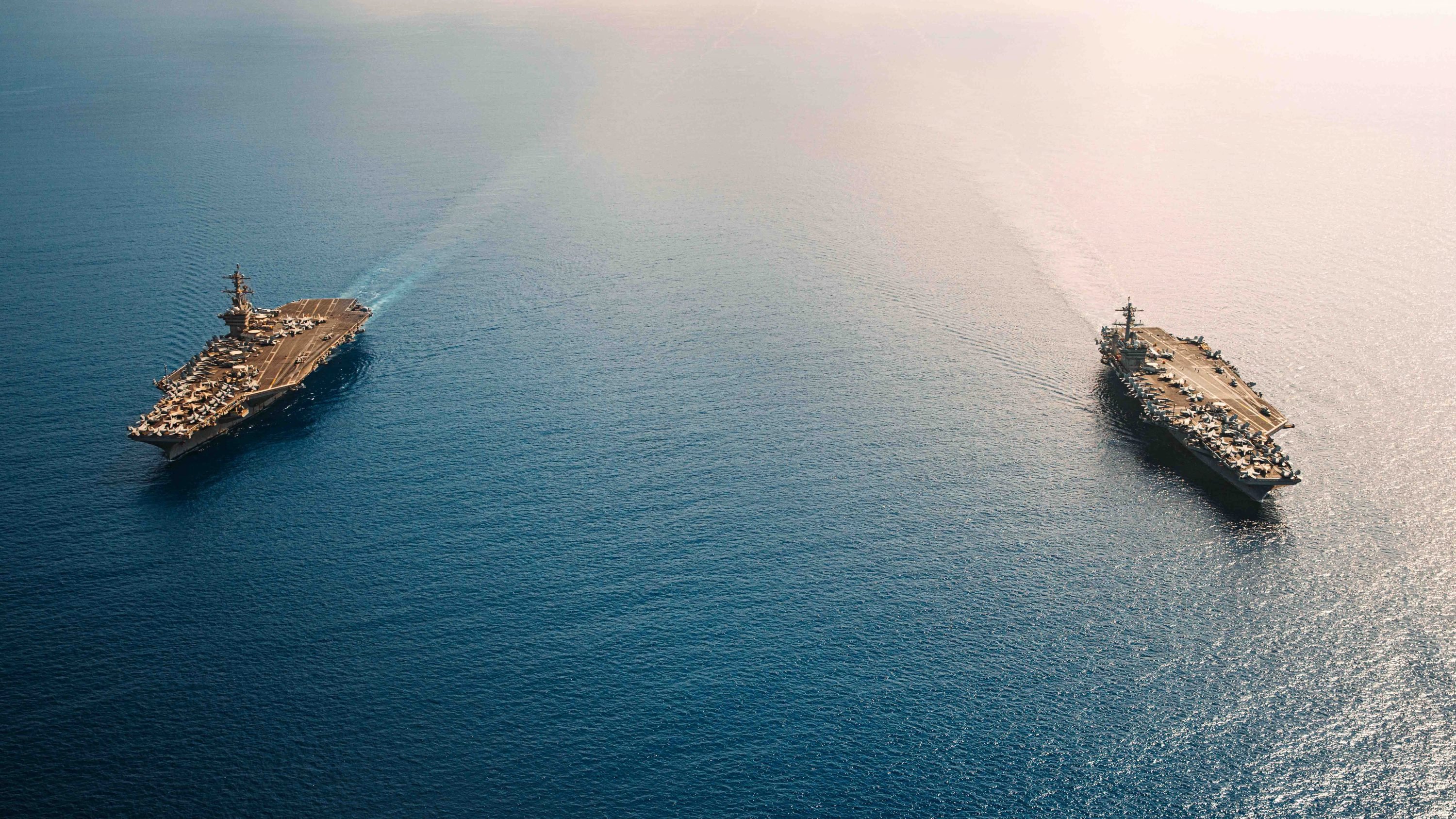
The USS George Washington left the Middle East after three months in the region, the Navy confirmed on Wednesday.
The Nimitz-class aircraft carrier departed the 5th Fleet area of operations and entered the 7th Fleet’s region, the Navy said, where it is set to conduct “routine operations,” a Pacific Fleet spokesperson said in a statement to Task & Purpose.
The carrier’s exit from the Middle East comes after the USS Theodore Roosevelt arrived in the region only days prior. The ship entered the area amid renewed, if low-scale, fighting between the United States and Iran.
The USS George Washington arrived in the 5th Fleet area of operations in August, after sailing in the South China Sea. The USS Theodore Roosevelt left its homeport in September, sailing in the Pacific before it was confirmed to head to the Middle East. The USS George H.W. Bush, which arrived in the region in the spring, has been active in the area since then, barring a brief port stop in Thailand in early October.
USNI News first reported on the USS George Washington leaving the Middle East.
The USS George Washington sails alongside the USS Theodore Roosevelt on Nov. 16, 2026. Navy photo.
Photos posted by the Navy showed the USS George Washington sailing alongside the USS Theodore Roosevelt on Nov. 15. It had been expected that the George Washington would be leaving the area once a new carrier arrived.
The USS George Washington reached the 5th Fleet’s area of operations in August, after sailing in the South China Sea. The USS Theodore Roosevelt left its homeport in September, sailing in the Pacific before it was confirmed to head to the Middle East.
For a brief period, the Navy had three aircraft carriers in the Middle East, a rare occurrence. The USS Theodore Roosevelt joined the USS George Washington and the USS George H.W. Bush, as the U.S. military rotated in new forces to the region to maintain its posture.
The USS George H.W. Bush, which arrived in the region in the spring, has been active in the area since then, barring a brief port stop in Thailand.
It’s not clear if the USS George Washington is on its way home to the United States or will remain in the Indo-Pacific for some time.
The Theodore Roosevelt is the fifth aircraft carrier to deploy in support of the war with Iran, following the USS Gerald R. Ford, USS Abraham Lincoln, USS George H.W. Bush and USS George Washington. The ship, which left port in September, is carrying additional supplies than normal, as the Navy plans for longer, extended carrier deployments.
Second chances don’t come around too often, but they did for the U.S. Coast Guard Cutter Storis, an icebreaker that started life as a failed towboat for offshore oil rigs but joined America’s maritime security service in 2024–despite one Coast Guard admiral saying at one point that the ship “may, at best, marginally meet our requirements.”
On Saturday, the ship returned to its temporary home port of Seattle after a 133-day, 17,000-nautical-mile deployment where Storis was the only U.S. surface ship in the High Arctic, the region’s northernmost section, according to a Coast Guard press release.
Along the way, the crew carried out the first law enforcement mission by an icebreaker in more than 20 years when they inspected fishing boats in the Bering Sea. They also practiced firing machine guns in extreme cold conditions; escorted a grounded fishing vessel to safety; tested out small drones in extreme cold and at high latitudes; and monitored Chinese-flagged research vessels, which experts say gather oceanographic information for China’s scientific, commercial and military fleets.
“The crew’s hard work exceeded expectations in turning Storis into an actionable, multi‑mission military vessel,” Capt. Corey Kerns, the ship’s skipper, said in the Coast Guard announcement. “Through their steadfast dedication and operational expertise, Storis has set the definitive precedent for the Coast Guard’s future operations in the Arctic region and Alaska theater of operations.”
Poor start
Storis started life as the Aiviq, and it was designed to tow and anchor offshore oil drilling rigs. But according to a ProPublica investigation, on its maiden voyage in 2012, Aiviq’s electrical system blacked out, one of its engines failed, and it lost control of the oil drill rig it was towing, which meant the Coast Guard had to fly through a storm to rescue the rig’s crew.
After that, oil companies were not interested in Aiviq and neither was the Coast Guard, with one admiral even saying the ship “may, at best, marginally meet our requirements,” according to ProPublica. But by 2024, the Coast Guard had few options to salvage its crumbling icebreaker fleet.
The Coast Guard has had just two polar icebreakers since 2010. Those are the Polar Star, which at 50 years old is 20 years past its expected service life and has a history of barely surviving its annual resupply trip to scientists in Antarctica.
Then there’s the Healy, which at 26 years old has had to cancel missions due to electrical fires. The Healy lost engine power during sea trials off the coast of Washington in July and had to be towed back to port.
U.S. Coast Guard Cutters Fir and Storis sail alongside each other as a USCG HC-130 aircraft soars overhead during a combined sail in the Bering Sea, July 21, 2026. Canadian Armed Forces photo by Sailor 1st Class Jordan Schilstra.
Urgent need
Melting Arctic ice is opening up new shipping lanes, resources, and potential for conflict with China and Russia, who also want to expand their Arctic presence. China has at least five icebreakers while Russia has more than 40.
Amid a slump in the U.S. shipbuilding industry, Congress made the case that the Coast Guard needed Aiviq to try to close the gap in icebreakers. In 2024, the service bought the Aiviq for $125 million and renamed it Storis. The ship had its maiden military voyage in June 2025 and was commissioned that August.
More icebreakers are on the way. The Coast Guard wants to buy up to 11 medium-weight Arctic Security Cutters, with the first due in 2028. There are also plans for three heavy-weight Polar Security Cutters to replace the current fleet, though the first of those may not arrive until 2033.
That means the Storis will likely play a leading role in the Coast Guard’s Arctic presence for the foreseeable future.
“We are serving in a moment of great change in our service, nation and world,” Kerns said in the release.
As gamers prepare for what’s expected to be one of the biggest video game launches in history, dozens of soldiers at Fort Stewart, Georgia are also gearing up for a long weekend in Vice City.
“Grand Theft Auto,” one of the most popular video game series of the century, gives players a choose-your-own-adventure experience. In “GTA”’s fictional Vice City, which is roughly modeled after Miami, Florida, players can interact with their surroundings and cause mayhem how they see fit: pull off a bank heist, run a criminal enterprise, play golf or tennis, or go on carjackings.
Two soldiers who signed up for the incentive told Task & Purpose that they’re looking forward to a long weekend off to play for a few hours — not endlessly, they clarified.
“I’m all campaign. I’m all about the heist,” said Sgt. Jamire Smith, a combat engineer, who signed up for the incentive along with six more years in the Army. “I think I have a good 24 hours to waste on it,” he joked.
The soldiers already had reasons for signing up for more service, but as avid video gamers, it was a plus. For Smith, his four-day weekend incentive also came with a $60,000 bonus since the Army wanted to retain him for his skillset he earned after finishing a course to drive heavy breaching vehicles.
“I was actually in the process of getting out, I was towards my final stages of getting out … but my company and the battalion helped me navigate through that and they showed me that there’s still a need for me, and that I am still a clear and value asset to the team, and so that’s really what drove me to say ‘let’s keep going, let’s keep driving,’” he said. “Maybe be a lifer in this, since I already made it my career.”
Staff Sgt. Brittany Wolfer, the career counselor who pitched the “GTA” incentive to her command, is a gamer herself. Wolfer doesn’t get the four-day weekend, but she’s also excited to see the new graphics and storylines. She’s purposefully avoided spoilers so she can be surprised.
“I actually went to basic training the week that ‘GTA V’ came out,” Wolfer said. “This is kind of like a weird arc in my life where it’s full circle to the new one coming out.”
Wolfer said the incentive is just that — it’s not the only reason that soldiers reenlist, but she said it was an “eye grabber.” Her battalion commander wanted a way to connect with soldiers who were on the fence about signing up for more years of service, she added.
“It’s not supposed to be the deciding factor,” Wolfer said. “There is always going to be a disconnect between your senior command and your lowest soldier. So how do you bridge that gap to where that lower soldier still knows that their battalion commander or their senior leadership cares about them and sees what they’re interested in. And that’s kind of what this was for.”
Staff Sgt. Floyd Maxwell said he’s excited to eventually play the game’s multiplayer online mode, which lets up to 30 people roam the streets or run businesses together and build their own kind of community within the game.
The new Grand Theft Auto VI has generated over $1 billion in pre-order sales. Getty Images photo by Roslan Rahman via AFP.
Maxwell, a network systems and communications specialist, has been in the Army for four years and signed up for three more. He said he signed up for more years of service because of his dad and the family he found at the battalion.
“What inspired me to reenlist was my dad. He was a big part of my life growing up, and he was like, ‘You should take this further as a career,’” Maxwell said. “He passed a couple months ago. I do appreciate the positive impact that he had in my life, so that’s the reason why I keep going. And the family environment that I have here at 9th Engineer, they do a great job of making me feel like I’m valued.”
Wolfer said she got the “GTA” reenlistment idea from Army senior career counselor, Sgt. Maj. Celeste R. Spencer, who posts about retention incentives on TikTok. Spencer floated the idea off-hand in a video that units should offer a four-day weekend for the game’s release on Nov. 19 — also ahead of the long Thanksgiving break.
“I brought it to my battalion commander and he’s a little bit older, but he did play ‘GTA 2‘ at some point, so he was like, ‘Yeah I’m down for it,’” Wolfer said. “I came into [the unit], there hadn’t been a counselor for about eight months, so there was a lot of gaps and things that were falling through because the soldiers didn’t have that presence within the formation. This kind of was just a way to grab people’s attention and kind of be like, ‘Hey, here I am. I’m the person you’re gonna come talk to,’ and [it] kind of snowballed from there.”
Beyond the Georgia unit’s “GTA” reenlistment pitch, the latest “GTA” also has some Army flare with its new main character, Jason Duval. According to video game maker Rockstar Games, “Jason grew up around grifters and crooks. After a stint in the Army trying to shake off his troubled teens, he found himself in the Keys doing what he knows best, working for local drug runners.”
With all of the hubbub that the Fort Stewart battalion got, Wolfer said gamemakers should give them a shoutout with Rocky the Bulldog, the 3rd Infantry Division’s official mascot.
“Put Rocky in ‘Grand Theft Auto.’ Absolutely, that’d be, like, peak in my career, honestly,” she said. “Have the Ranger holding Rocky.”
An Irishman could go to prison for up to 10 years for allegedly destroying a $60 million U.S. Air National Guard C-130H while it was parked for an en route stop at Shannon Airport in Ireland earlier this year.
On Tuesday, the U.S. Justice Department announced charges against Daithi O’Corrain, 48, for destroying government property. FBI Assistant Director in Charge James Barnacle Jr. said O’Corrain allegedly spent months researching where to infiltrate the airport, how to break into the C-130, which systems to sabotage, and what tools to do it with.
“This was not an act of spontaneous vandalism,” Barnacle said in a Justice Department press release.
Sabotage
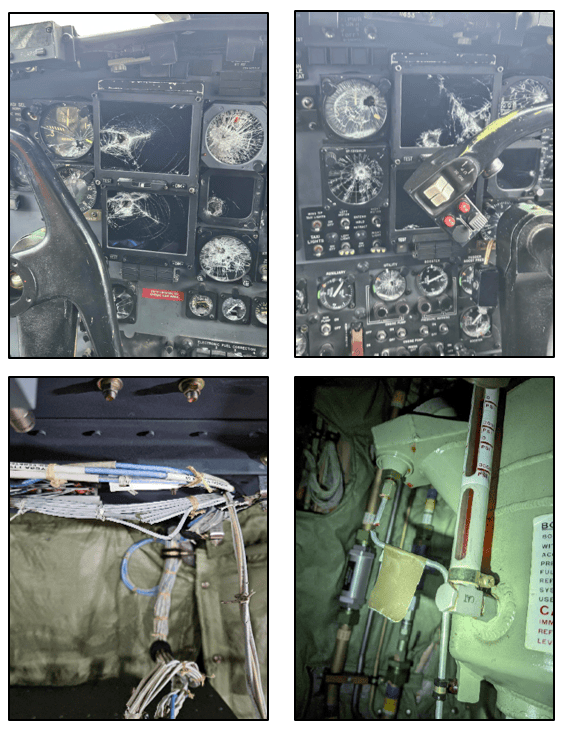
On April 11, at about 4:39 a.m. local time, O’Corrain breached the airport’s security perimeter, according to the indictment. He allegedly broke the locking mechanism on the rear crew door of the C-130, located on the side of the fuselage, then barricaded himself inside and covered all the windows, except the cockpit windows, using the flight crew’s hammocks.
“O’Corrain attached straps, brackets, and screws to various fixed parts of the aircraft’s interior in order to secure the aircraft’s doors; he also placed ball bearings mixed with epoxy into the aircraft’s door tracks in order to prevent the doors from opening and closing,” the indictment read.
Multiple photos showing the damage done to the interior of the C-130. Department of Justice photos.
The Irishman then allegedly cut wire bundles and hydraulic lines, crimped a liquid oxygen line, destroyed every gauge in the cockpit, and punctured air ducts. He also allegedly burned through parts of the C-130H with gallium, “a highly corrosive metal that is a liquid at room temperature, and which eats through aluminum in minutes and causes long-term corrosion to steel,” the indictment said.
After about five hours, the flight crew showed up at about 9:40 a.m., when they spotted O’Corrain through the cockpit window. They flagged Shannon Airport security, only to witness O’Corrain allegedly climb out of a hatch in the airplane’s roof and smash up the exterior with an axe.
Documenting damaged and lost aircraft as a result of (or related to) the Iran War.
O’Corrain was also accused of pouring “unknown substances,” ball bearings, and other objects into the C-130’s fuel tanks to contaminate them before Irish police used portable stairs to climb onto the aircraft’s wing and arrest him.
Months of Preparation
According to the indictment, April 11 was the culmination of months of preparation where O’Corrain researched the C-130’s layout online, ordered gallium, bought tools and equipment, looked for places to sneak onto the airport, and subscribed to an aircraft tracking app that notified him when the C-130 arrived.
That research was evident in the work, the indictment said: O’Corrain allegedly knew how best to destroy the C-130’s critical components; which wires to cut; how to break into the aircraft; and how to crimp rather than cut the liquid oxygen line. If cut, it could have led to “a massive explosion,” the indictment said.
C-130s are tough aircraft that have flown in combat since the late 1950s, but O’Corrain’s alleged sabotage was irreparable, and this tail will never fly again, the indictment said.
Not the first airfield break-in
Photos identify the stricken aircraft as tail number 91-1653, assigned to the Missouri Air National Guard’s 139th Airlift Wing. The wing currently flies the older C-130H model, though Missouri legislators have sought to replace them with newer C-130Js.
Shannon Airport is a major gateway for U.S. aircraft heading to and from the Middle East and Europe, which has angered some Irish who oppose the U.S. and Israeli war with Iran.
“It’s a contentious issue in Ireland; many people are furious in terms of the U.S.’s use of the airport and they want the Irish government to stop the U.S. from using that airport,” RTÉ News journalist Tommy Meskill told U.S. Air Force Gen. Alexus Grynkewich in an August interview. “If the Irish government were to stop the U.S. military from using Shannon, how much of an effect would that have on the U.S. military?”
“It’s a very important logistics hub; it allows America to project power and keep threats at bay from all over the world,” said Grynkewich, the head of U.S. European Command and NATO Supreme Allied Commander Europe. “There are some significant security implications to losing access there.”
O’Corrain is just the latest alleged intruder at Shannon Airport. The indictment cited three other individuals who were arrested on May 1, 2025, after driving a van through the perimeter fence. About two weeks later, another three people spray-painted a U.S. military aircraft, while three more people were detained in November after driving onto a restricted area where a U.S. military C-40 transport was parked.
Acting Navy Secretary Hung Cao said eight sailors deployed in support of the Iran war attempted suicide. On Tuesday, when pressed by Congress about the declining mental health of deployed sailors, Cao said repeatedly that he saw them as eight “mitigations.”
“You see as eight suicide attempts, I see eight suicide mitigations because of the chaplains we have on board, the deployment resiliency counselors, as well as mental health specialists. Normally, most carrier strike groups, when they deploy, have about one or two suicides. This is well before [Operation] Epic Fury,” Cao said at his Senate Armed Services Committee confirmation hearing Tuesday morning.
At the hearing, Senators pushed Cao to answer questions about quality-of-life issues aboard Navy ships in the Middle East following reports of a lack of nutritious food, plumbing issues, and growing mental health concerns among crews deployed for the ongoing Iran war.
Military Times first reported in August that two sailors on the USS Abraham Lincoln attempted to jump overboard. In the following weeks, the Navy denied reports of growing mental health issues. Cao said at the time that a “small number of mental health cases were treated with no loss of life,” and Secretary of Defense Pete Hegseth said the reports of the USS Lincoln’s conditions were “completely misrepresented.”
Two days after pushing back on media reports on conditions aboard the carrier, Navy officials told Task & Purpose that the service was routing additional mental health support to the Carrier Strike Group’s flagship and its supporting vessels.
Sen. Kirsten Gillibrand (D-N.Y.) criticized Cao’s language, calling his use of the word “mitigation” insulting and said it was “compartmentalizing” what was a “mental health failure.” She then pressed him on the case of a sailor who attempted to jump overboard in March. Cao said that sailor had not been attempting suicide.
“What was he trying to do? Swim to Guam?” Gillibrand said. “Is there a logical explanation of jumping overboard to get out of service? It will result in death.”
“He jumped overboard with a life preserver on, and again he admitted it to the commanding officer afterwards,” Cao answered.
Gillibrand argued it was likely that the sailor lied to “save” himself from facing discipline for jumping off of a ship.
In another case, a 19-year-old sailor who jumped from the USS Lincoln in August in an attempt to end his life told the New York Times that he was accused of “malingering,” and faking a mental health crisis to leave his deployment. He is receiving a general discharge under honorable conditions, which will cut off his access to post-service education assistance.
Acting Navy Secretary Hung Cao says sailors are facing longer deployments at sea “because” the service doesn’t have enough ships.
Cao’s comments came during his confirmation hearing before the Senate Armed Services Committee Tuesday morning. Cao was nominated to the position in September but still needs to be confirmed by the Senate.
“The reason why we had to have these extended deployments is really because we only have 286 ships today,” Cao said. “As of today, there’s only 286 ships in the battle force. We need 355, and we’re doing the best we can to get these ships out there as quickly as we can so that sailors are not extended on deployment for a long time away from their families. It causes a lot of maintenance issues for our ships as well.”
The hearing comes a week after Cao reportedly told family members of the USS George H.W. Bush carrier strike group that their sailors would not be coming home before the holidays, and that the deployment might stretch a year. A senior Navy official could not confirm the deployment extension for Task & Purpose, citing operational security.
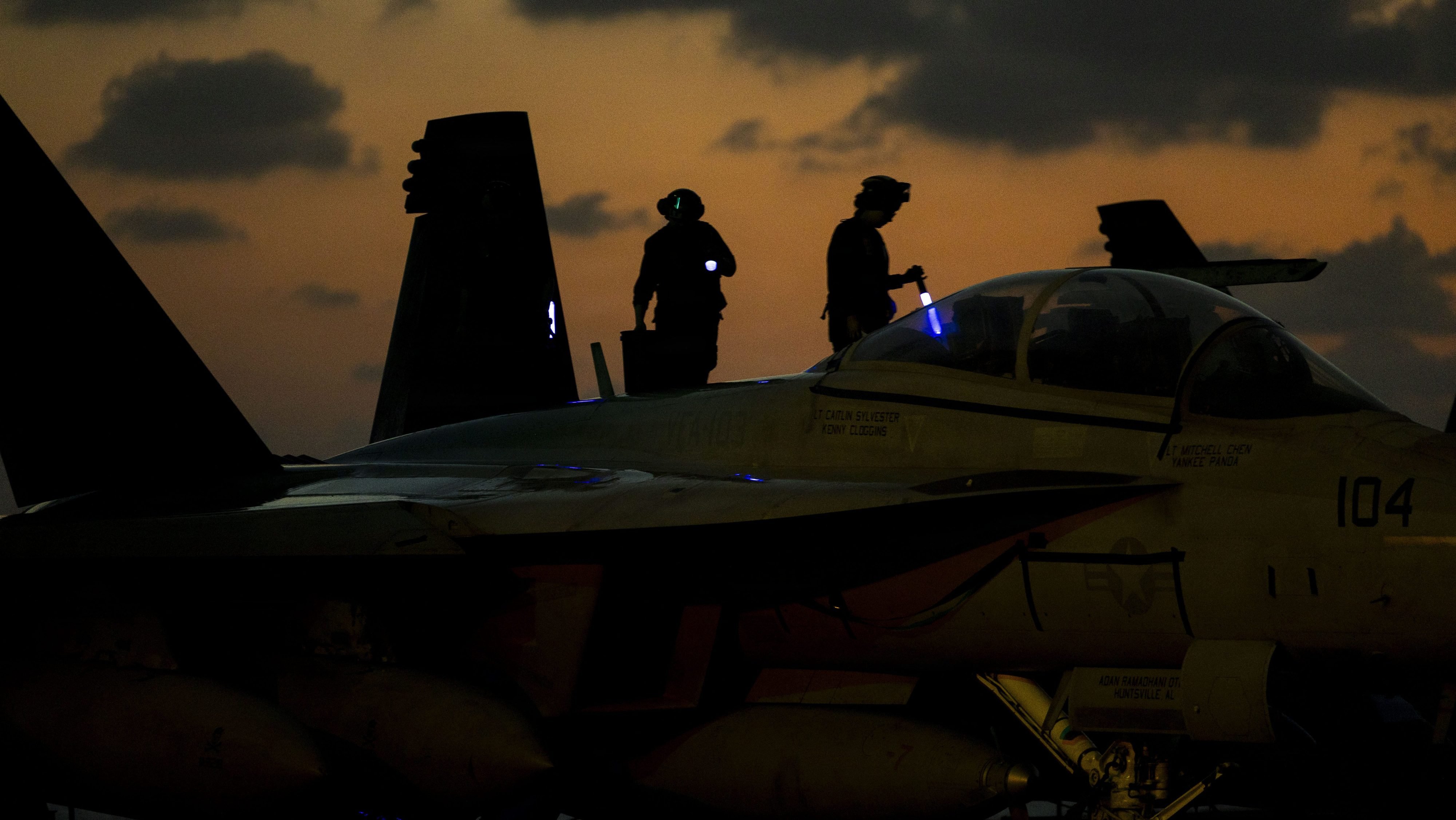
Sailors assigned to Strike Fighter Squadron 103 conduct maintenance on an F/A-18F Super Hornet aboard Nimitz-class aircraft carrier USS George H.W. Bush, Nov. 15, 2026. Navy photo.
One naval historian said the problem of not having enough ships to meet demand has been brewing for decades. Steven Wills, a former Navy officer and expert for the Center for Maritime Strategy, pointed to a 1993 report that said the Navy would need 15 aircraft carriers to sustain a constant carrier presence in Europe, the Middle East, and the western Pacific.
But the fleet size has hovered around 11 carriers since the 1990s, and today several of those are currently in long-term overhaul. The problems snowball, Wills said. First, the Navy sets out scheduled ship maintenance periods, and when those periods get skipped due to extended deployments, it saddles them with longer and more expensive maintenance sessions.
“In your car there’s a little sticker in the upper left-hand driver’s side window that says ‘bring me back to your dealer at X number of miles,’” Wills said. “You might be able to drive a lot longer [than that]. But when you come back to your car dealer, then they’re probably going to find more things wrong with your car than what the maintenance plan said.”
Cao also told Congress that the service is working to “accelerate” the deployment of unmanned surface vessels to “relieve” the 17 destroyers supporting the Naval blockade in the Strait of Hormuz and “reduce the strain on the fleet.” In October, Cao said that the Teddy Roosevelt Carrier Strike Group was the first carrier strike group to deploy with an unmanned surface vessel.
The Navy announced a plan in September to buy 30 medium unmanned surface vessels that could carry sensors or missiles, or act as electronic warfare or logistics platforms. The problem, Wills said, is that the Navy is still figuring out the concept for how to use those ships.
For example, some say drone ships should act as escorts for larger crewed vessels, while others argue they should form “ghost fleets” that act autonomously deep in hostile waters. There are also lingering questions such as how to keep the ships from being hacked or seized.
“I think we’re making progress, and the unmanned revolution is definitely underway, but we’re not there yet,” Wills said.
Amid a physical fitness reform effort across the military, the Navy is expanding a wellness program meant to help sailors live healthier through access to nutrition, strength, and mindfulness coaches.
The Human Performance Optimization program (HPO) launched in February at Naval Base San Diego. Rather than focus on twice-a-year fitness tests, HPO aims to help sailors build tailored, holistic fitness habits so they can stay in shape both on shore and at sea.
After a nine-month pilot program, the Navy announced on Monday that it is expanding HPO to nine more Navy bases around the world over the next 12 months. The new bases are:
Naval Station Norfolk, Virginia
Naval Station Mayport, Florida
Naval Base Kitsap, Washington
Joint Base Pearl Harbor-Hickam, Hawaii
Commander Fleet Activities Yokosuka, Japan
Naval Support Activity Naples, Italy
Naval Air Station Patuxent River, Maryland
Naval Construction Battalion Center Gulfport, Mississippi;
Naval Station Rota, Spain.
“HPO gives sailors access to specialized expertise and science-backed resources to improve performance, prevent injuries, and build resilience,” Vice Adm. Brad Collins, head of Navy Installations Command, said in a press release. “Expanding these services is an investment in our people and the Navy’s ability to execute its mission.”
The three elements of HPO are cognition, nutrition, and strength. For the cognitive side, sports psychologists might work on mindfulness and breathing exercises with sailors, HPO assistant Kyle Morrison explained in a Navy video published Sept. 9. These include “day-to-day” tools that can help manage stress at work, at home, or on deployment, he said.
Vice Chief of Naval Operations, Adm. James Kilby, participates in physical training at Naval Base San Diego, California, Aug. 31, 2026. Navy photo by Mass Communication Seaman Barellie Thompson.
Diet and nutrition plans might be guided by an InBody body composition diagnostic test; while strength coaches can help sailors come up with workouts that they can apply on shore or on a ship, or anywhere their schedules or exercise equipment might be more limited.
“It allows us to program for specific situations that the Navy or any sailor in the Navy will experience … from the ships, from being on land,” Morrison said. “This prepares them for most, if not all, of what they’ll see on the physical side.”
A spokesperson for Navy Installations Command told Task & Purpose that the expansion requires 151 staff across the 10 bases. A few of the roles include cognitive specialists, performance dietitians, and installation wellness directors.
A long-coming fitness overhaul
The move is the latest in a series of efforts across the military to help service members stay healthy year-round, not just ahead of a physical fitness test.
One such program is the Army’s holistic health and fitness program, or H2F, which emphasizes mental and spiritual well-being, getting enough rest, and eating right, as well as hitting the gym.
A sailor competes in a weightlifting competition in the hangar bay aboard the USS George Washington on Nov. 9, 2026. Navy photo.
“Modeled after Special Forces and professional/collegiate athletics, the H2F system moves away from a one-size-fits-all model and acknowledges every soldier is unique, and different units have different missions,” the Army writes on its H2F website.
Meanwhile, the Space Force has an ongoing fitness assessment where guardians sport wearable fitness trackers, while the Air Force Fitness Program aims to encourage a “year-round physical conditioning program” that includes healthy eating and “an active lifestyle.
The military’s holistic health push was brought about, in part, by high rates of preventable injuries among troops. A 2019 study found that non-combat-related musculoskeletal injuries put about 68,000 troops on nondeployable status every year, and those injuries were often incurred during sports and training. These injuries result in millions of clinic visits, lost duty days, and dollars spent paying for treatment every year, the study said.
Meanwhile, a 2022 study found that behavioral health conditions such as posttraumatic stress disorder, depression, and anxiety are the second most common medical reason for nondeployability in the Army.
But as the individual services strive for holistic fitness, Defense Secretary Pete Hegseth has pushed for stricter traditional physical fitness goals. In August, the Pentagon issued a memo calling for all troops in dedicated combat jobs to maintain a fitness score of at least 70%, though it let the services determine what that looks like in their service-specific scoring systems.
The Pentagon also issued a policy that unit leaders would be “held accountable” for their troops’ performance on physical fitness tests through Inspector General inspections.
Eventually, the Navy says it plans to expand its HPO program across all its shore bases worldwide.
UPDATED: 11.17.26;This article was updated with additional details from Navy Installations Command on the staff required to support the expansion and the results of HPO survey performance.
An Army lieutenant colonel attached to a NATO headquarters in England is suspected of spying for Russia. The soldier was originally arrested in the United Kingdom, where it was expected he would face an indictment over the alleged national security breach, but now he may face espionage charges in the United States, an Army official said.
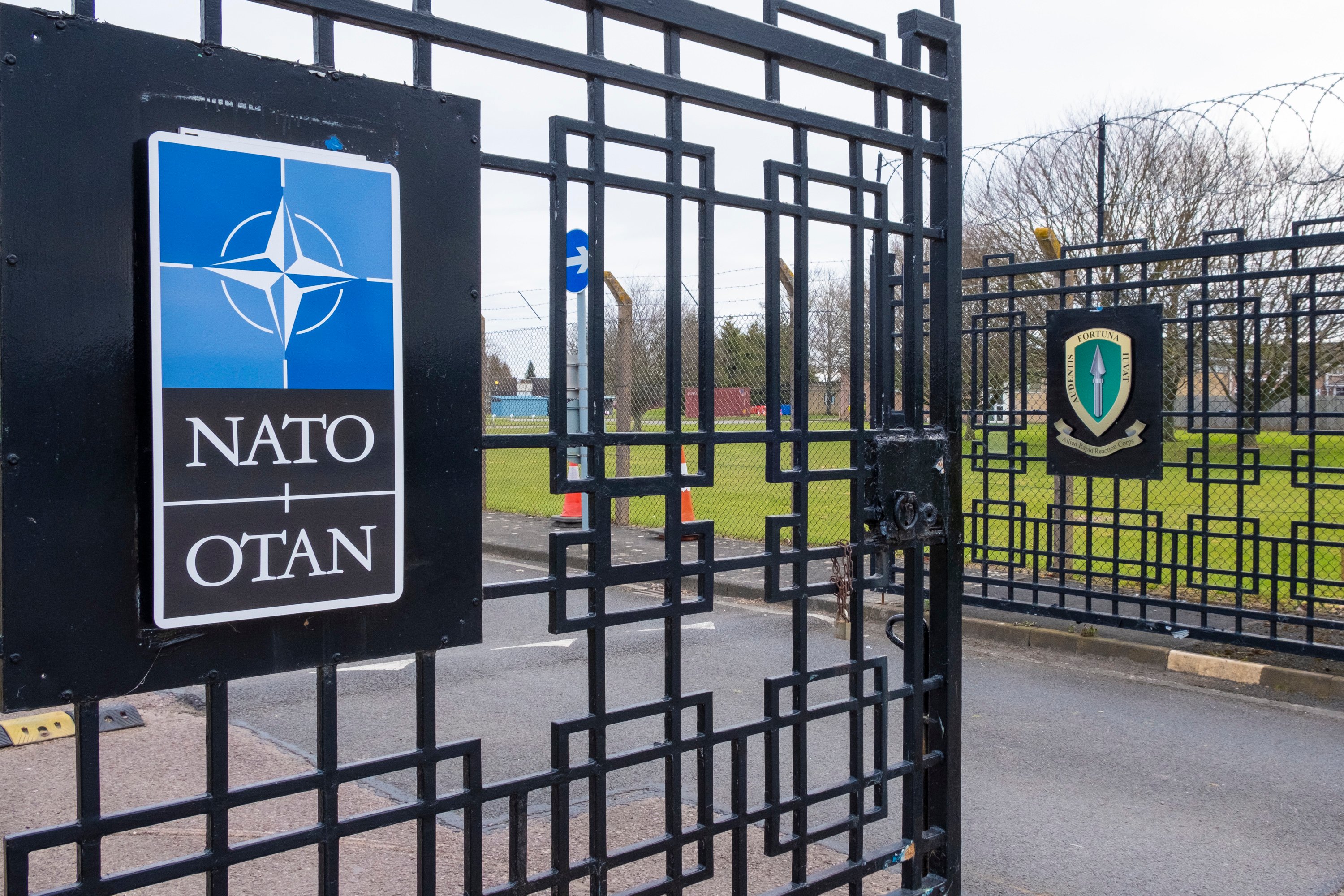
The Army announced that a senior officer was arrested Nov. 10 near Gloucester, England. Media outlets reported, and Task & Purpose confirmed, that the soldier involved is Lt. Col. Brandon Tyner, 41, who was assigned to NATO’s Allied Rapid Reaction Corps headquarters. The headquarters is a British-led unit with 20 countries assigned to it.
Army officials said Tyner was arrested on suspicion of violating sections of the U.K.’s National Security Act of 2023 for obtaining, copying, recording or disclosing protected information, and assisting a foreign intelligence service.
Media outlets reported over the weekend that Tyner’s indictment in the U.K. was expected in the coming days. An Army official told Task & Purpose on Monday that it’s unclear whether Tyner will face British charges or be released into U.S. custody and face espionage charges from the Department of Justice.
The official said the original plan was for the U.K. to charge Tyner, have the case play out, and send him back to the U.S. where he could face a separate legal case under the Uniformed Code of Military Justice. On Sunday, U.S. officials requested that Tyner be released to American custody with officials asserting they have primary jurisdiction over the soldier’s alleged crimes under the NATO Status of Forces agreement.
The soldier was assigned to NATO’s Allied Rapid Reaction Corps in Gloucester, England. Army photo by Sgt. 1st Class Elvis Umanzor.
The official said that as to whether the U.K., Department of Defense or DOJ charges him first, “that part has gotten a lot squishier in the last 24 to 48 hours.”
DOJ officials did not immediately respond to a request for comment.
In 2024, two sailors were arrested on charges of selling information about U.S. weapons systems and Pacific operations to China. Petty Officer Wenheng Zhao was sentenced to two years in prison and Petty Officer Jinchao Wei got more than 16 years — both sentences issued by federal civilian judges.
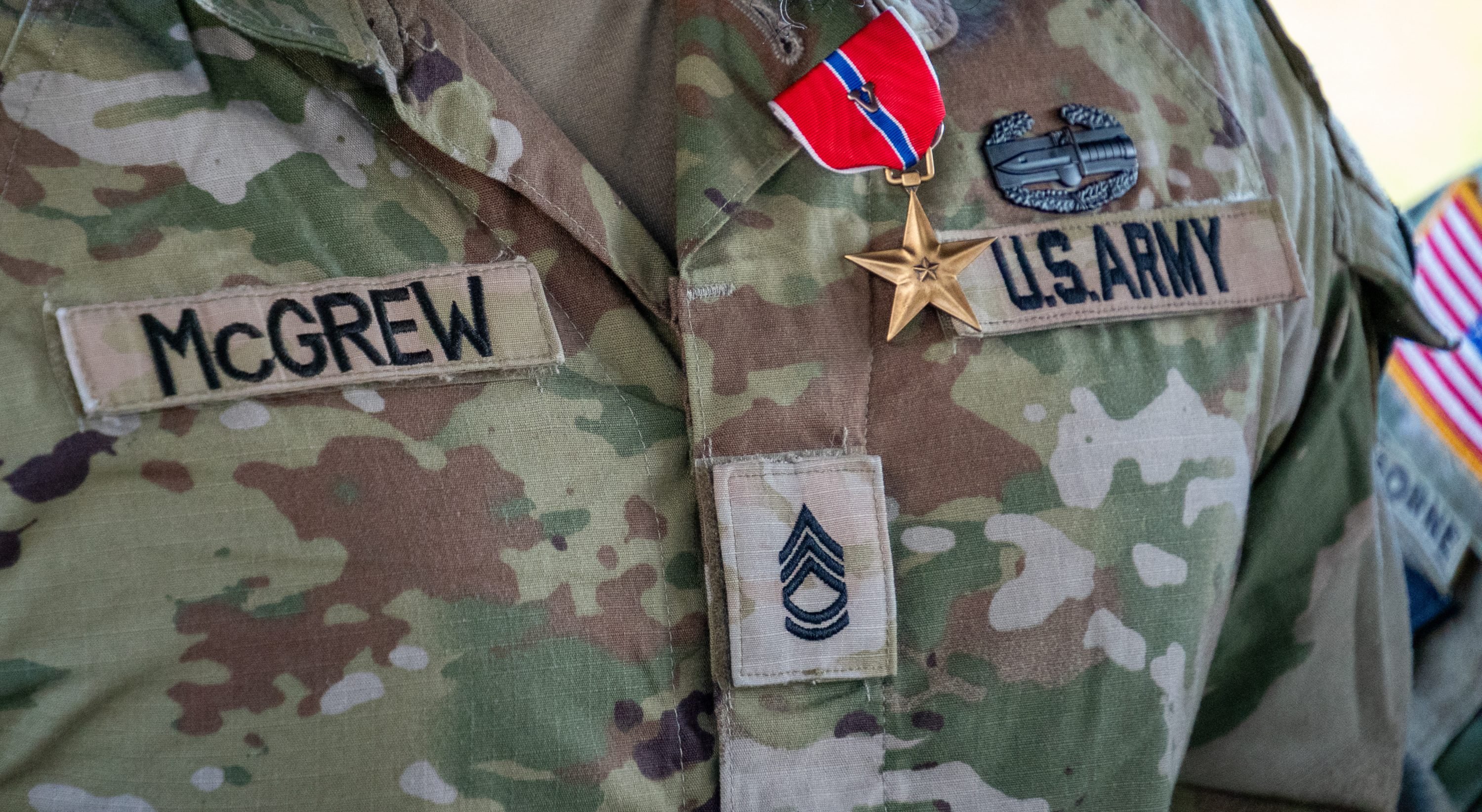
Tyner enlisted in the Army in 2008 as a senior human resources officer. He deployed to Iraq in 2019, Afghanistan in 2013 and Qatar in 2016. He has received a Bronze Star Medal and two Meritorious Service Medals, among others, according to details of his Army record provided to Task & Purpose.
The arrest was the result of a joint investigation by the UK’s Counter Terrorism Policing, U.S. military and the FBI, Army officials said. After his arrest last week, Brig. Gen. Sean Stinchon, the commanding general of U.S. Army Counterintelligence Command, said in a statement that the alleged actions are “a sobering reminder that insider threats are real and persistent.”
“This matter shows that partnerships are essential to protect our countries and I want to express my thanks to UK Counter Terrorism Policing, MI5, UK Defence Counter Intelligence, and the U.S. Army Counterintelligence Command for their outstanding work,” FBI Director Kash Patel said in a statement after the arrest.
The director of the Marine Corps’ Tactical Training Exercise Control Group at Marine Air-Ground Task Force Training Command, Twentynine Palms, California, was relieved from his post this month without explanation, Task & Purpose confirmed.
Col. Eric Meador was removed from command of Tactical Training Exercise Control Group, a major training group that stages combined arms drills for Marines in Marine Air-Ground Task Forces, on Nov. 9. A Marine Corps spokesperson confirmed on Sunday that Meador had been relieved. No reason was given for his removal, with the Marine Corps citing the “administrative nature of this action” as the reason for the lack of additional information. His biography was scrubbed from the group’s website.
Meador had served as director of the unit since August 2025, according to the Marine Corps. The unit, in California’s Inland Empire region, is based at Twentynine Palms. Col. Benjamin Adams was appointed director after Meador was fired.
According to a previous biography still on an official Marine website, Meador joined the Corps in 1991, serving in several roles from platoon sergeant to company commander to eventually battalion executive officer. He led 1st Battalion, 3rd Marine Regiment from 2017 to 2019. Prior to serving as the director of the Twentynine Palms-based training unit, he led the Headquarters Battalion, 3rd Marine Division. He deployed to Iraq and Afghanistan, as well as the Gulf of Aden, Djibouti, and other areas. His decorations include the Combat Action Ribbon with a gold star — indicating a second award for another qualifying campaign or operation — a Bronze Star with combat distinguishing device and the Navy and Marine Corps Commendation Medal, among others.
Though the U.S. military services regularly announce firings and dismissals, they rarely cite the reason, whether the leader in charge was dismissed for a serious infraction, alleged misconduct, or forced out.
If you have information about this dismissal and the reasons behind it, please email Nicholas@taskandpurpose.com.
Troops living in barracks with “emergency conditions” that pose health or safety risks can get temporary lodging on or off base, according to new rules set by the Pentagon.
In a Nov. 10 memo, Secretary of Defense Pete Hegseth directed the services to follow barracks standards laid out in October by the Assistant Secretary of War for Energy, Installations, and Environment, Mark Dale. The new guidelines classify barracks maintenance work orders into three categories: emergency, urgent and routine.
The military services were told to inspect barracks by Monday and take actions to address “emergency conditions” within 24 hours, which includes providing troops with temporary quarters if their room isn’t “safe” enough to live in.
Rob Evans, founder of the barracks review app, Hots&Cots, and an advocate for junior enlisted housing, said the urgency behind these instructions is right, but “service members have been through this before.”
In October 2025, the Department of Defense launched the Barracks Task Force to address subpar housing conditions for junior enlisted service members. By December 2025, the Pentagon announced that it had completed “wall-to-wall” barracks assessments across most of the force, and pledged $400 million to go towards “immediate work” like renovating aging, faulty and dilapidated housing. Evans also noted that the Department of Defense and military services already have several digital work order systems for service members to record barracks issues.
“The Department has more barracks data than it has ever had,” Evans told Task & Purpose. “We’re still relying on someone walking into a room to see the problem.”
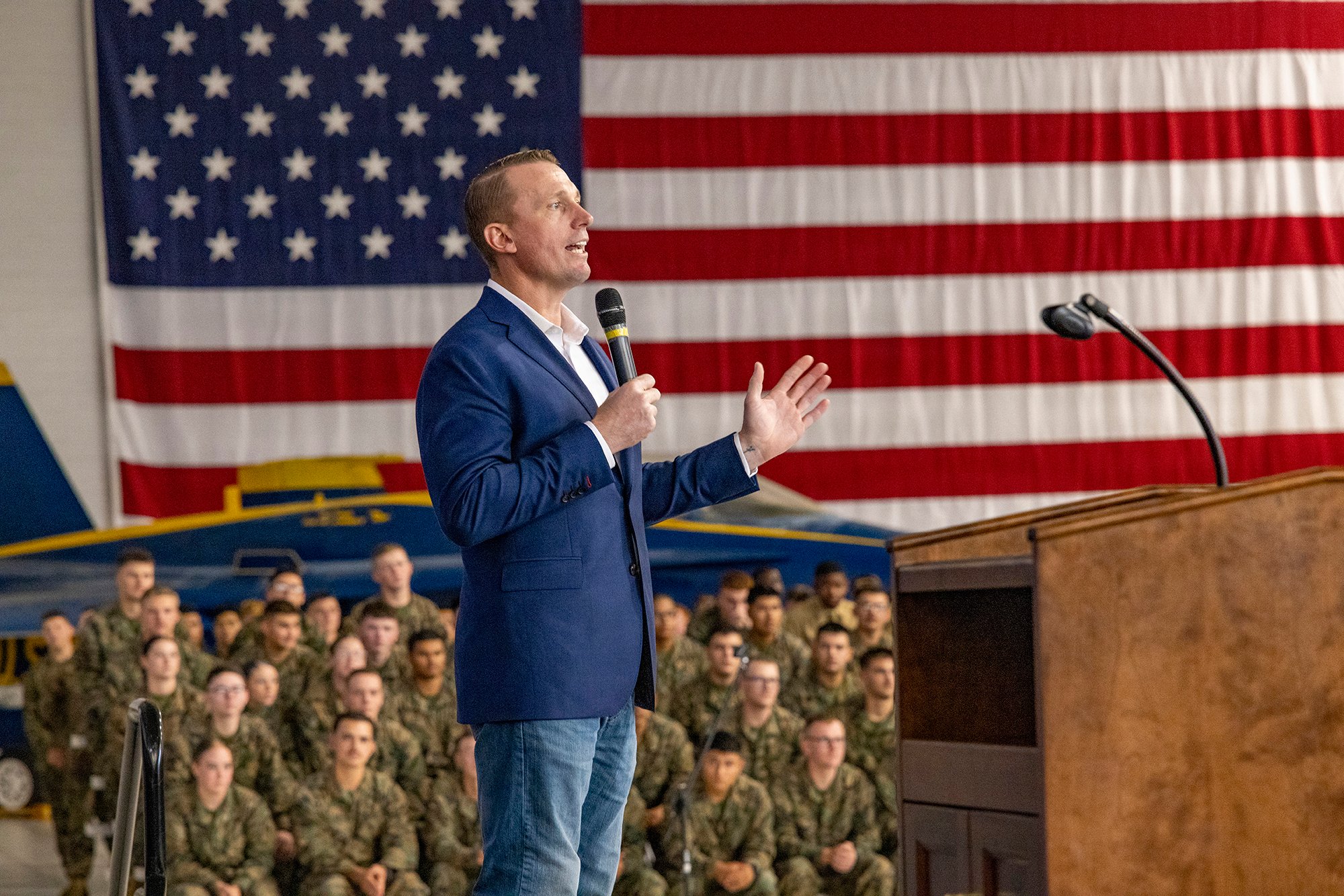
Dakota Meyer talks to troops at Naval Aviation Technical Training Center on Nov. 3, 2026. Navy photo by Chief Mass Communication Specialist Ian Cotter.
“This isn’t a swipe at Dakota Meyer. Seeing conditions firsthand matters. But it’s been 25 days since he was named to the task force, and most of what we’ve seen from social media is him walking [through] barracks. Whether it’s an installation commander who already knows the conditions or a Medal of Honor recipient, how many more walkthroughs are needed?” Evans said. “At some point you have to ask how much data is enough to start acting on it.”
Emergency, urgent, routine work orders
The October memo from the assistant secretary for installations, Mark Dale, includes new guidelines for classifying barracks maintenance work orders into three categories: emergency, urgent and routine. All three types should be addressed within 15 business days.
“Emergency” orders are described as barracks with issues that require “immediate attention to eliminate life, health, and safety hazards,” or to prevent loss or damage to the property. These issues can warrant relocation and a response to fix the actual barracks should begin within 24 hours.
The memo authorizes local commanders to take “immediate action” to coordinate and pay for temporary living arrangements either on-base or off-post, if no other option is available. Commanders can sign off on commercial lodging reimbursement forms for hotels or apartments, which are typically used by service members on temporary duty assignments (TDY) orders for up to a few months to attend conferences, training schools or leadership programs.
“Installation and unit commanders are empowered and directed to prioritize the quality of unaccompanied service member housing, respond rapidly to conditions that threaten life, health, and safety, and communicate clearly with affected service members until deficiencies are resolved,” according to Dale, who is also head of the Barracks Task Force.
Evans said relocating troops can have second- or third-order effects.
“Relocating people when there’s no spare space means doubling them up, as the Army is already doing in Hawaii, and that cuts into the minimum living space the DOD Housing Manual has set,” Evans said. “Then there are [lodging reimbursements] which may be temporary. A service member may have to furnish an off-post apartment, and the certificate can be withdrawn.”
The other two barracks maintenance categories are less intensive. “Urgent” work orders are not quite as serious as emergencies, but can still pose security or health risks if repairs are delayed. “Routine” work orders are non-emergencies, but should be addressed to keep barracks “safe, clean, or comfortable.”
“Unit integrity, room availability, manpower shortages, maintenance delays, lack of funding or conflicting Military Department policies do not justify continued occupancy of unacceptable housing,” Hegseth wrote in the November memo. “Any barrier to prompt relocation will be elevated immediately through the Military Department’s chain of command to the Barracks Task Force.
On Sunday, the 18th Wing said that the first F-15EX, with new electronic warfare systems, was delivered to the base. Kadena is the first overseas U.S. base to get the fighter jet.
The new fighter jets are operated by the 67th Fighter Squadron. Crews trained and qualified on the F-15EXs in the United States ahead of the fighters’ arrival.
“Getting the F-15EX to Kadena is just the beginning,” Lt. Col. Ajay Dua, 67th Fighter Squadron commander, said in the Air Force’s announcement. “Now our focus shifts to integrating the aircraft into our flying operations, building experience as a squadron, and learning how to get the most out of its capabilities. It’s an exciting time to be part of the 67th Fighter Squadron.”
Kadena had been home to dozens of permanently stationed fighter jets, and its fleet makes up a large portion of fighters deployed to Japan. But the F-15s stationed there were aging airframes, and the Air Force wants to modernize its forces in the country. In that four-year period since the replacement plan started, the Air Force has rotated in several other fighter units to Kadena on temporary deployments, to maintain air power in the region. Those have ranged from F-15s to F-22s and F-35s. Even though the first of the new F-15EXs are beginning to arrive, those temporary deployments continue. A contingent of F-15s from the 122nd Expeditionary Fighter Squadron arrived in late October, according to Air & Space Forces Magazine.
Alongside modern electronic warfare systems, the new aircraft also feature expanded weapons capacity and improved avionics, which the Air Force says improves its ability to carry out counterair operations.
The Air Force plans to permanently station 36 F-15EXs at Kadena Air Base, to be flown by the 67th and 44th Fighter Squadrons.
“The arrival of the F-15EX at Kadena marks a significant milestone for American airpower in the Pacific,” Brig. Gen. John Gallemore, 18th Wing commander, said in the Air Force announcement. “These aircraft strengthen our ability to deter aggression, respond to emerging threats, and defend Japan alongside our allies and partners. Their permanent presence at Kadena reinforces our commitment to the U.S.-Japan Alliance and ensures we continue to bring advanced combat capabilities to one of the most strategically important regions in the world.”
Soldiers serving under V Corps in Europe are directed to not visit bars, strip clubs, night clubs as a whole as well as karaoke or hookah lounges, the formation’s leadership said this month.
The Army’s V Corps announced the expanded rules earlier in November, as part of an update to orders covering a sweeping range of prohibitions for soldiers. The directives, which also include rules against buying electronic cigarettes from unauthorized vendors and orders not to disturb wildlife, were done to preserve “good order, discipline, and the safety of our personnel,” a V Corps spokesperson told Task & Purpose.
The new order, issued Nov. 5 and effective immediately, replaces an existing version issued August 2024. It was signed by Lt. Gen. Thomas Feltey, who took over command of V Corps this fall. The order applies to soldiers under V Corps, not just in Poland but those assigned to 15 other European nations.
Feltey’s order notes that “common sense and good judgment” should be used when evaluating if an establishment is considered off limits. If they aren’t sure, soldiers have a “duty” to get clarity from their leaders. The order takes the time to differentiate each type of establishment.
“I expect all individuals to be disciplined and professional on and off duty, ready to assure our Allies and Partners, deter our adversaries, to build and maintain readiness, and to continuously strive to uphold the Army Values,” Feltey wrote. “A careful balance must be achieved in order to accomplish our mission while also maintaining morale within our ranks.”
V Corps, headquartered in Fort Knox but forward deployed to Camp Kościuszko, Poland, is one of the Army’s main forces in Europe and works closely with NATO partners.
A bar in Wroclaw, Poland in July 2026. Photo by Klaudia Radecka/NurPhoto via Getty Images.
Several parts of the order are focused on the consumption of alcohol. The 2024 rules stipulated that soldiers on orders for more than 30 days were barred from drinking for the first 96 hours in the European Command area of responsibility. That is not in the new version. The 2026 update does specifically bar troops from drinking within eight hours of assuming duty, operating any vehicle (including rentals), possess or drink on an installation or forward operating site and not drink to the point of being drunk.
According to a spokesperson for V Corps, the move is not a “reaction to a single spike in misconduct, but rather a deliberate and proactive alignment of force standards.”
“As a forward-deployed warfighting headquarters, we must ensure our force is disciplined and combat-ready. Minimizing alcohol and safety related risks prevents friction and keeps our units optimized to ‘Fight Tonight.’”
The new order also adds a prohibition against “approaching, handling, feeding, capturing, adopting, harassing, disturbing, or otherwise interfering with wildlife” in the area. It is not clear what prompted that to be added to the general order.
Additionally, soldiers are not allowed to be off the installation or forward operating site between 10 p.m.-5 a.m. local time without a battle buddy. Soldiers are also barred from purchasing e-cigarettes, vape juice or “similar devices” from non-authorized vendors (as opposed to U.S. military or allied forces’ exchanges).
The Navy is doing away with its iconic peacoat next year, as part of an overhaul of the uniform items issued to sailors in seabags.
The revised uniform options were confirmed in an administrative message released on Friday. Alongside previously announced changes to PT uniforms, the biggest overhaul is the Navy fully getting rid of the peacoat after years of trying. The coat, also known as a “reefer,” is currently authorized an optional item, but that is going away effective Oct. 1, 2027.
The outwear, described by the Navy as a “double-breasted, hip length coat made of dark blue 100% melton wool fabric with a convertible collar,” The Lone Sailor statues, including the original at the United States Navy Memorial in Washington, D.C. and others around the country, show a sailor with his hands tucked into his peacoat’s pockets.
The Navy reformed its uniform board last year with the intent of reviewing and revising the list of mandatory and optional uniform pieces. The board’s proposals were approved by the Navy, and are meant to be in line with Chief of Naval Operations Adm. Daryl Caudle’s directive to simplify the overall uniform and reduce the amount of items sailors are meant to have in their seabag.
The Navy has been aiming to phase out the iconic coat for years. Starting in 2016, the Navy began working to do away with the coat, instead offering a black parka that would serve as outerwear. Congress pushed back, citing the impact it would have on the United States’ domestic textile industry. The parka was adopted, but the peacoat has been authorized as an optional piece of outerwear for sailors.
Alongside the peacoat’s exit from the seabag, the Navy is also ending authorized optional wear for the acrylic V-neck sweater; sailors can still wear the wool V-neck. For formal wear, the dinner dress white jacket is also terminated come October, with the dinner dress blue jacket approved for year-round wear. One uniform item is leaving use much sooner. The Navy Working Uniform Type II, known for its desert camouflage pattern, will not be worn after the end of November.
Meanwhile, the Navy is officially replacing its existing PT uniform, known for its gold shirt, with the Improved Physical Training Uniform. The new one, a blue-on-blue shirt and shirts combination, was originally approved in 2018 and now will officially replace the gold one. The Navy first announced plans for that change earlier this year, but this NAVADMIN codifies the rollout plan.
The Navy quietly relieved Cmdr. Caitlin Cunningham, skipper of the guided-missile destroyer USS Michael Murphy, on Sept. 27 “due to a loss of confidence to command,” a Navy official told Task & Purpose.
The relief came nine months into the ship’s 11-month deployment to the Middle East, where the USS Michael Murphy helped enforce a naval blockade of the Strait of Hormuz, escort tankers, launch Tomahawk cruise missiles, and defend against Iranian drone and missile attacks. The USS Abraham Lincoln Carrier Strike Group, which the Murphy was a part of, was later awarded the Presidential Unit Citation.
No reason was given for Cunningham’s firing. The Navy regularly uses the term “loss of confidence” as a catchall for the many reasons a commander can be relieved. The term is used for everything from mishaps onboard the vessel to personal misconduct by an officer.
Cmdr. David Nicholas has helmed the destroyer since Cunningham was relieved.
The USS Michael Murphy left its homeport of Pearl Harbor, Hawaii, on Dec. 1, 2025, and returned on Nov. 12. It spent 346 days deployed, and stayed at sea even after the Abraham Lincoln returned to its homeport after an extended and trying deployment. Both the Michael Murphy and the USS Spruance — another destroyer in the strike group, which spent 357 days away before returning Friday — have conducted some of the longest destroyer deployments since World War II.
The USS Abraham Lincoln returned to San Diego in early October. The carrier and its strike group received the Presidential Unit Citation, the highest award for valor that a unit can receive. The Lincoln strike group received it, the second to earn it for the Iran war after the USS George R. Ford strike group was given it in May. The honor has historically been given to units that took part in some of the most intense combat missions, such as major operations in World War II.
While Cunningham was relieved in September, the Navy did not announce the change until the U.S. Naval Institute News broke the story on Nov. 12.
‘Failure to communicate’
In October, the Navy fired the commanding officer, executive officer, and enlisted chief of the submarine USS South Dakota, also without public announcement until Connecticut newspaper The Day reported it.
The quiet removals break with the Navy’s tradition of announcing leadership changes, drawing the ire of members of the House Armed Services Committee. Rep. Joe Courtney (D-Conn.), the ranking member of the House Seapower and Projection Forces Subcommittee, and Adam Smith (D-Wash.), the ranking member of the House Armed Services Committee, called the submarine omission “unacceptable,” in particular because they said the submarine leaders were removed because the boat struck the bottom of the ocean.
“As a result of the Navy’s failure to communicate, what should have been a standard exercise in information sharing has instead raised questions about the Navy’s commitment to transparency and its commitment to a productive working relationship with Congress,” Smith and Courtney wrote in a Nov. 12 letter to acting Navy Secretary Hung Cao and Chief of Naval Operations Adm. Daryl Caudle.
Rear Adm. Brian Monahan, the attending physician for Congress and the Supreme Court, also resigned without announcement from the Navy amid a Defense Department inspector general investigation.
The Office of Strategic Services, the intelligence and commando arm of the U.S. military during World War II, might live again, at least in name, as part of a reorganization of the Pentagon’s special operations civilian leadership.
Defense Secretary Pete Hegseth issued a memo on Nov. 2 that renames the Assistant Secretary of Defense for Special Operations and Low-Intensity Conflict to the Assistant Secretary of War for the Office of Strategic Services, though permanently doing so would require congressional approval.
As part of the renaming, Hegseth wants to move the assistant secretary of defense for special operations and low-intensity conflict position higher up the leadership ladder, marking the latest in a decades-long effort to put civilian oversight of special operations forces (SOF) on an even footing with the secretaries of the Army, Navy, and Air Force.
He also wants to expand the assistant secretary’s staff by 75 civilians and 25 service members; and increase funding by $45 million. Hegseth believes the changes will help direct more resources to special operations at a time when commanders say they are turning down dozens of missions every month because they are stretched too thin.
“[R]esourcing for SOF remains behind current operational and force posture,” Hegseth wrote in the memo, dated Nov. 2 but publicly released on Nov. 12. “It is time for a bold, foundational change.”
Secret service history
The OSS coordinated U.S. intelligence and special operations during World War II: spying on Axis weapons programs; training resistance groups against the Nazis and Japanese troops; and scouting, sabotaging or outright attacking enemy positions ahead of conventional forces.
The OSS was so successful that the Central Intelligence Agency, Army Special Forces (better known as Green Berets), and Navy SEALs trace much of their inspiration and early membership to the group. But bureaucratic infighting, primarily with the Army and the FBI, led to the OSS being disbanded in 1945.
New OSS recruits received small arms training at Prince William Forest Park in Virginia. National Park Service photo.
While the CIA was established in 1947, special operations did not get a house of its own until 1987, when Congress stood up U.S. Special Operations Command (SOCOM) and the office of assistant secretary of defense for special operations and low-intensity conflict (SO/LIC).
As a combatant command, SOCOM is in charge of real-world operations, while SO/LIC serves as civilian oversight and advocate for SOCOM in strategic and budget discussions. The problem, according to the Government Accountability Office, was that SO/LIC lacked the resources and staff to provide adequate oversight, and it was separated from the Secretary of Defense by layers of bureaucracy, which hampered its advocacy efforts.
“At a time [after 9/11] when special operators were deployed around the world and bravely fighting the war on terror on multiple fronts, few Americans questioned the lack of effective civilian control and oversight,” wrote Green Beret veterans Mark Mitchell and Doug Livermore in a 2020 essay for War on the Rocks.
“Since at least 2003, however, acquisition issues, proposed changes to headquarters structure, and poor communication with Congress have led to many questions about civilian oversight,” they said.
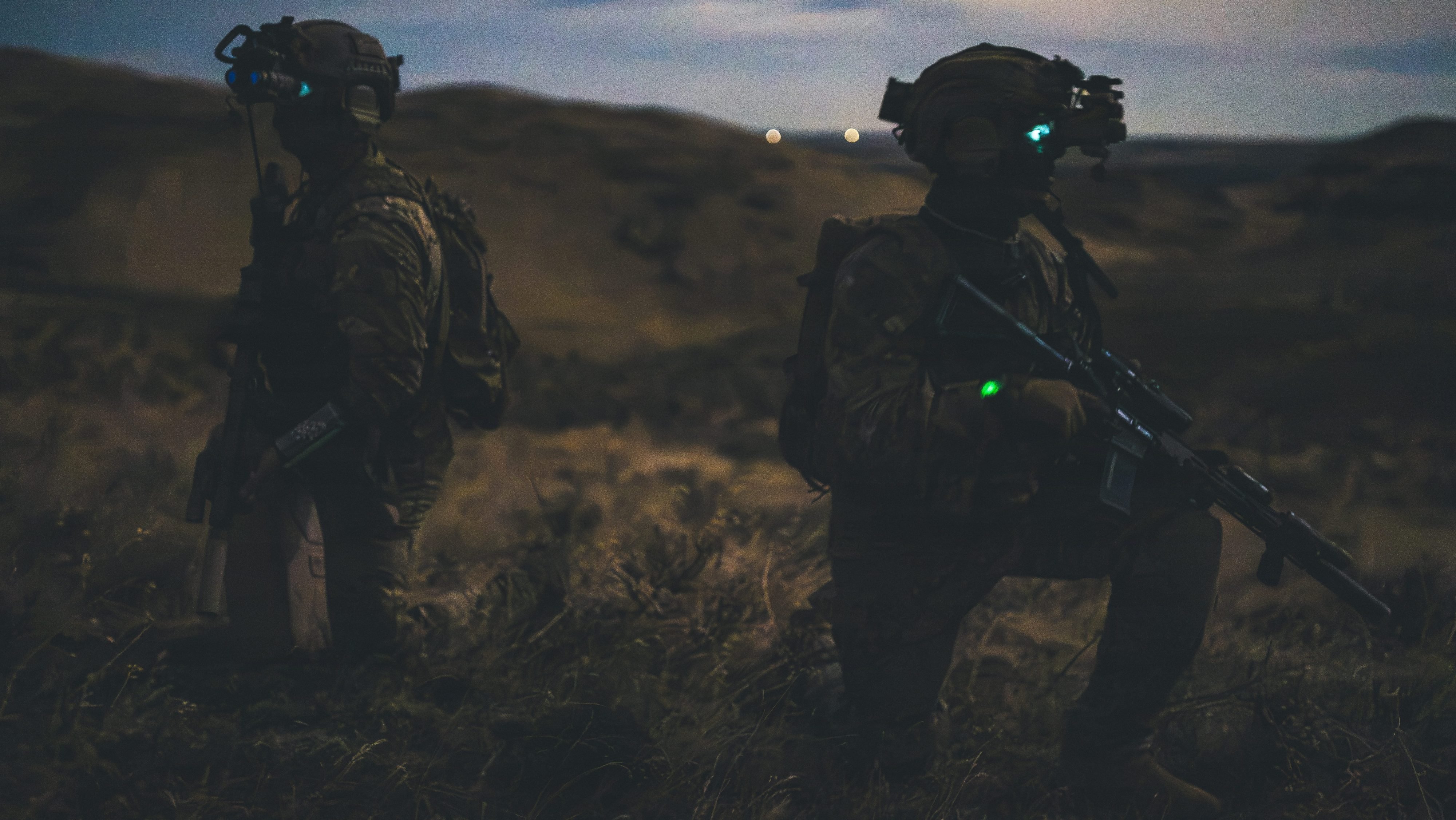
Green Berets assigned to 1st Special Forces Group (Airborne), kneel while establishing security during Tahoma Strike, at Yakima Training Center, Washington, Oct. 24, 2026. Army photo by Staff Sgt. Brahim Douglas
Widespread confusion
In 2020, then-Acting Defense Secretary Christopher Miller, a former Green Beret himself, announced SO/LIC would report directly to him, same as the service secretaries, in a bid to “streamline information flow, enhance decision-making, and more adaptively and adeptly support” special operators, he said at the time.
Mitchell and Livermore praised the move, but it came just before a change of leadership. Under President Joe Biden’s new administration, then-Defense Secretary Lloyd Austin retained some of SO/LIC’s new powers, but reversed others. By 2024, the Government Accountability Office reported widespread confusion over what SO/LIC could do.
“The Secretariat has at times had limited input into how its hiring, office space, and IT needs are met because of confusion about [SO/LIC]’s administrative role, given [SO/LIC]s unique position within DOD,” GAO wrote, which GAO said limited SO/LIC’s ability to effectively oversee SOCOM.
The OSS might live again
Hegseth’s memo goes further than Miller or Austin did. The embattled defense secretary can move out on some of his proposed changes, such as transferring 100 new staff and $45 million, treating the OSS head on par with the service secretaries, and telling the services to prioritize support for special operations.
However, the most significant change requires Congress’ permission: formally moving the SO/LIC a.k.a. OSS position up a rung from an assistant secretary of defense to an under secretary of defense position. That would unlock significant resources and authority for the OSS head, and Hegseth’s memo called for legislative proposals to pitch the idea to Congress.
For now, the Office of Strategic Services name change is a secondary title for SO/LIC, the same way the Department of War is a secondary title for the Department of Defense. Making the name change official requires congressional approval.
Congress has legislated for stronger civilian oversight of SOCOM in the past. In fact, Miller’s 2020 change was meant to finally fulfill a Congressional requirement that the Pentagon had slow-rolled for years. But whether that support continues under intense scrutiny of Hegseth and a new, Democratic-controlled Congress in 2027 remains to be seen.
The top leadership team of the nuclear-powered USS South Dakota submarine was removed from their posts last month.
The firing was first reported by the Connecticut newspaper The Day, which said that Cmdr. Dan Goodwin was removed from the post on Oct. 14. Alongside Goodwin, the submarine’s executive officer and chief of the boat — the top enlisted leader aboard a submarine — were also relieved that day. Two members of Congress wrote to acting Navy Secretary Hung Cao and Chief of Naval Operations Adm. Daryl Caudle over the matter, accusing the Navy of failing to notify the House Armed Services Committee about the command triad’s removal.
The letter, from Rep. Joe Courtney (D-Conn.), the ranking member of the House Seapower and Projection Forces Subcommittee, and Adam Smith (D-Wash.), the ranking member of the House Armed Services Committee, cites The Day’s reporting and says the committee had not been informed for nearly a month, which they called “unacceptable.”
“In the wake of the collisions affecting USS Fitzgerald (DDG 62), USS John S. McCain (DDG 56), and the grounding incidents involving USS Hartford (SSN 768) and USS Connecticut (SSN 22), clear and timely communication with Congress was necessary to make informed decisions to ensure personnel safety and readiness of the fleet,” Courtney and Smith wrote.
The cause of the removal, Courtney and Smith say, was a “grounding incident” involving the submarine.
The removals come after the submarine experienced an unspecified but “immediate navigational hazard” in September, The Day reported, citing the report of a sailor from October. That incident was first revealed in an award certification for a sailor on the submarine, who was given the Navy and Marine Corps Commendation Medal, with the certification signed by Capt. Thomas Flaherty, commodore of Submarine Squadron 4. According to the sailor’s family in a post on social media, the submarine was underwater while at sea, and the sailor “recognized a potential navigation hazard involving shallow water or in his case the bottom of the ocean.” The sailor called out a warning, giving the crew time to save the submarine.
It is unclear if the submarine was damaged or if any crew were injured. The congressmen’s letter said that the lack of transparency leaves “many outstanding questions about not only what occurred, but the impact of the events leading the triad’s dismissal on the structural health of [the USS South Dakota], the well-being of the crew, and whether the incident laid bare any systemic issues with training to standard procedures that must be addressed.”
“As a result of the Navy’s failure to communicate, what should have been a standard exercise in information sharing has instead raised questions about the Navy’s commitment to transparency and its commitment to a productive working relationship with Congress,” Smith and Courtney wrote.
Goodwin has been in command of the submarine for less than a year, taking over leadership on June 30. Virginia-class submarines are fast-attack subs, use nuclear power, and are built for stealth and surveillance missions. The USS South Dakota is a relatively new submarine, commissioned in 2019, according to the Navy. The vessel is assigned to Submarine Squadron 4.
A divisive bill that cuts disability benefits for veterans with sleep apnea and tinnitus while simultaneously granting compensation for combat veterans was passed by the House on Veterans Day — evoking condemnation from Democrats and veterans groups.
The Take Care of America’s Veterans Act is a large legislative package with dozens of bills, including a controversial set of policies that drew strong opposition from the start. Veteran Service Organizations said that the package would cut disability benefits from one group — veterans with sleep apnea and tinnitus ratings — and act as an “offset” to pay for another group, combat wounded veterans.
Democrats and veteran advocates criticized House Republicans for passing disability cuts on Veterans Day — and doing so with a voice vote where members call out “aye” or “no” the loudest, instead of recording an official vote under their name.
“On a day when America honors the brave men and women who stepped forward to defend our freedom, House leaders chose to sneak through legislation threatening earned benefits for millions of veterans, their families and survivors,” Disabled American Veterans National Commander John Donovan said in a statement. “Veterans risked their lives to guarantee our right to vote, and those who have the privilege of serving in Congress should have the backbone and decency to openly stand behind their votes, not hide like thieves in the night.”
Republicans declared the Take Care of America’s Veterans Act passage a “historic healthcare and benefits expansion,” noting that the bill gets rid of limits for combat wounded veterans, expands mental health options, and improves veteran transition programs.
“We have found a pathway to finally get these historic healthcare, benefits, and transformations done at VA for veterans and American families for the first time in years and I am committed to working with the Senate to get this bill over the finish line and to the president’s desk before the end of the year,” House Veterans Affairs Committee Chairman Mike Bost (R-Ill.) said in a statement.
The legislative package would implement a rule change proposed by the Department of Veterans Affairs in 2022 for how sleep apnea and tinnitus disability ratings are assessed. Both health conditions would lose their current stand-alone ratings. Sleep apnea would be assessed based “on the effectiveness of medical treatment and intervention,” and tinnitus would be treated as a symptom of an underlying condition, like hearing loss or a traumatic brain injury. According to the VA’s analysis for the proposed 2022 rule, the changes could reduce disability compensation payments by $57 billion over the next 10 years.
In his reaction to the House’s voice vote Wednesday, House Veterans’ Affairs Committee Rep. Mark Takano (D-Calif.), said that he was ready to pass a “clean” version of the Major Richard Star Act.
On Thursday, the House passed the Richard Star Act again, but this time as a stand-alone bill. Before it can become law, the Senate will also need to pass one of the two versions of the Maj. Richard Star Act.
A Senate aide familiar with proceedings said they expect the large legislative package to fail because it would need 60 votes to pass the legislative body, which would require some Democrats to also sign on. In June, 45 Democrats signed a letter indicating that they would not support the offsets included in the Take Care of America’s Veterans Act.
The Army recently published a series of photos of an award ceremony for a soldier credited with saving lives following an Iranian drone strike on U.S. troops in Kuwait at the start of the Iran war.
Sgt. 1st Class Oscar M. McGrew was awarded a Bronze Star with “V” device for valor during an Oct. 23 award ceremony at Fort Hood, Texas. The images, which were uploaded on Oct. 26 to the military’s image database, mark one of the rare instances in the ongoing conflict where an enlisted soldier has received the award for valor.
Task & Purpose was the first to report that Sgt. 1st Class Oscar M. McGrew had been recognized for his response during the March 1 Iranian one-way drone and ballistic missile attack on Port Shuaiba, Kuwait.
The attack was part of a series of Iranian retaliatory strikes on American bases around the Middle East in the opening hours of the war. The strike killed six Army Reserve soldiers and injured more. To date, it remains the deadliest of the war.
The Army confirmed to Task & Purpose in September that McGrew was the Directorate of Logistics noncommissioned officer-in-charge for Area Support Group-Kuwait.
Sgt. 1st Class Oscar McGrew, center, during the award ceremony at Cooper Field on Fort Hood, Texas, Oct. 23, 2026. Army photo by Spc. Michelle Lessard-Terry.
Captions for the photos of the award ceremony identify McGrew as a member of the 215th Brigade Support Battalion, 3rd Armored Brigade Combat Team.
“His fearless actions directly saved lives and prevented further casualties during an active enemy attack,” the photo caption reads.
When the Army confirmed McGrew’s award to Task & Purpose in September, officials said additional details of the Kuwait attack would not be released until the families of the six soldiers who were killed in the incident received an official 15-6 command investigation brief. Inquiries sent to the Army for details of McGrew’s now-public award were not immediately returned on Thursday.
McGrew is credited with taking direct action that saved lives following the Iranian drone strike. Army photo by Spc. Michelle Lessard-Terry.
The Pentagon has released minimal information on the toll that the Iranian attacks have taken on U.S. troops. The details contained in personal awards, particularly in their citations, narratives, and speeches during award ceremonies, are one of the key ways that the media and the public can get a sense of the challenges and risks service members are facing in America’s latest conflict.
According to the Pentagon’s public-facing casualty database, 23 service members have died while deployed in support of the Iran war. Eleven were killed in hostile incidents, and 12 were classified as non-hostile deaths. According to the Defense Department, 867 troops have been injured in combat operations against Iran.