
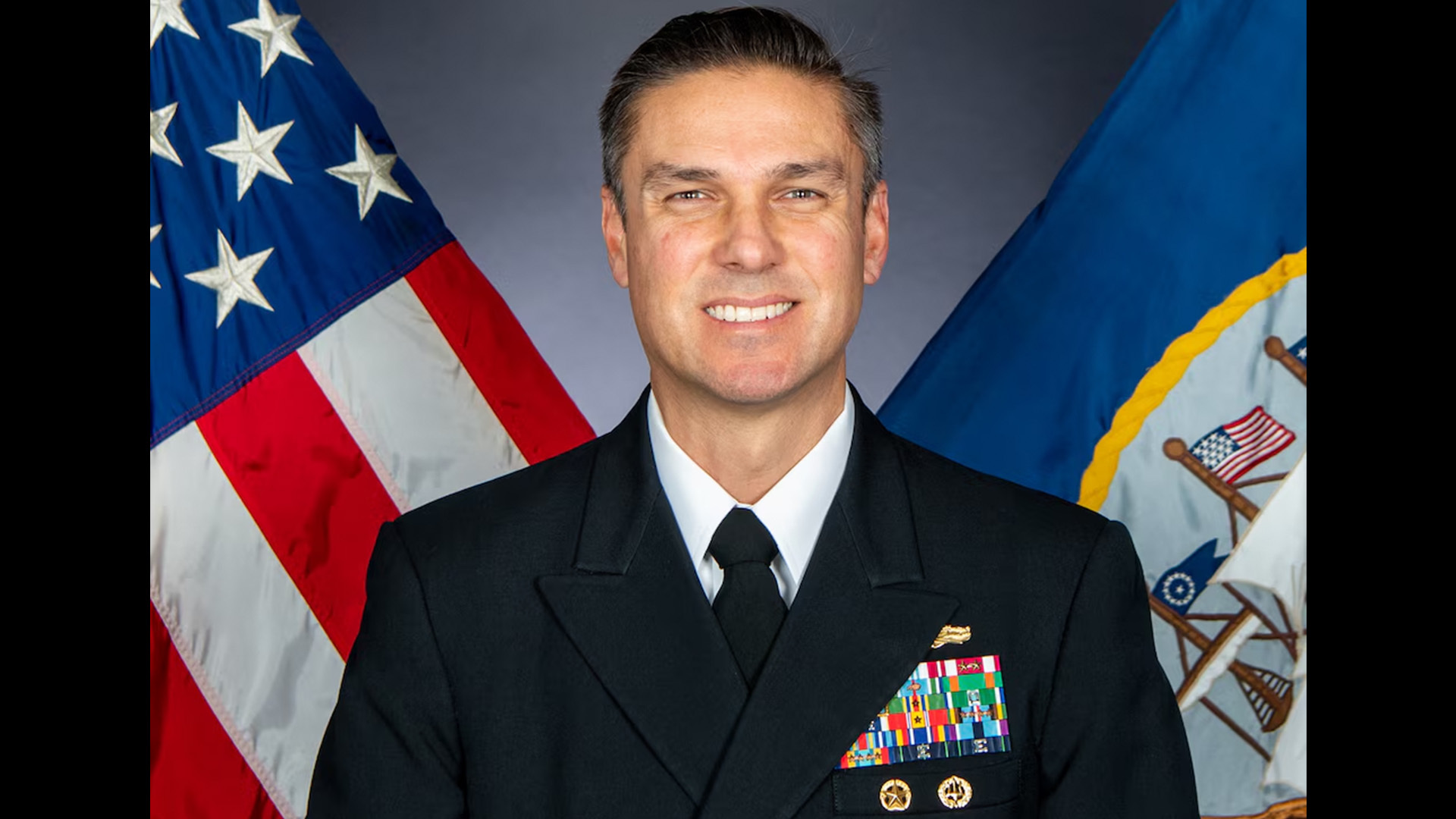
In the third major leadership change in less than six months at the U.S. Naval Academy, the senior officer who directly oversees the school’s 4,400 midshipmen was relieved of his position Monday, less than six months into his tour on the Annapolis, Maryland campus.
Capt. Gilbert Clark Jr. was removed as the Naval Academy Commandant by the school’s Superintendent, Lt. Gen. Michael Borgschulte, on Monday. Capt. Austin Jackson, a Navy SEAL and former troop commander at the secretive SEAL Team 6, was named the interim Commandant. He had been serving as the Deputy Commandant.
Clark graduated from the school in 1998, where he played on the water polo team.
Clark’s departure is the third turnover among senior officers at the school in six months. Both Clark and Borgschulte are in their first semester at the school. Clark took over in June after Captain Walter H. Allman, also a SEAL, left the position after about a year, following a promotion.
Top Stories This Week
Borgschulte took over as Superintendent in August when Navy Vice. Adm. Yvette M. Davids was moved out of the position about 18 months into the job. Under the school’s legal charter, the superintendent is slated as a three-year tour. Davids was one of several high-ranking women in the military fired or moved out of high-visibility jobs in the early months of Secretary of Defense Pete Hegseth’s time on the job.
Davids was the first woman to hold the position of Superintendent, while Borgschulte became the first Marine in the job.
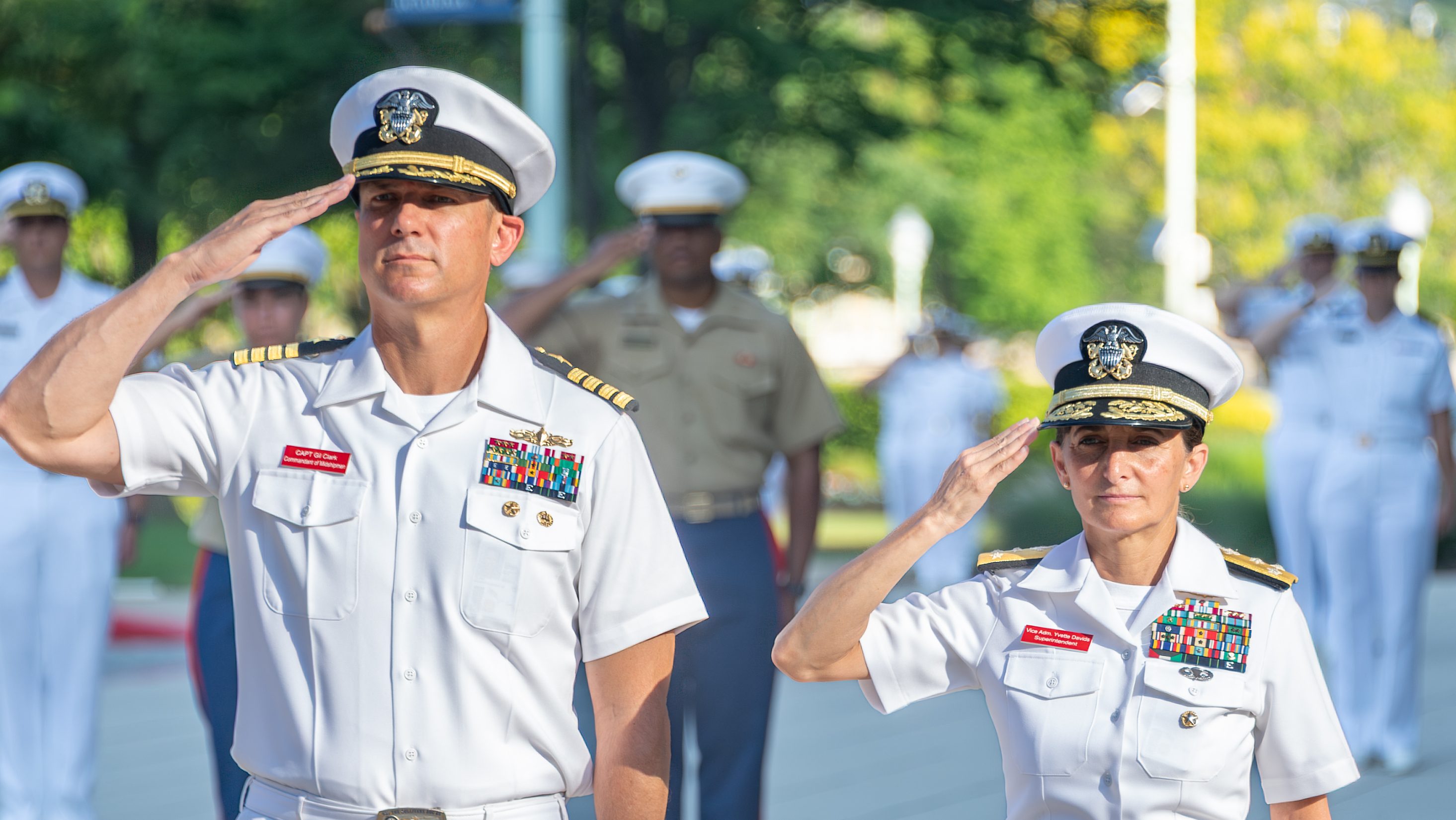
The superintendent is the school’s commanding officer, while the commandant is responsible for the day-to-day operations and conduct of the midshipmen enrolled at Annapolis, equivalent to a dean of students or provost at a civilian university.
Both Davids and Allman moved to other positions in the Navy with promotions or the same rank, while Clark’s departure was announced as a firing “due to a loss of confidence in his ability to effectively lead the Brigade of Midshipmen.”
The term “loss of confidence” is a catch-all term widely used by the military to cover a variety of reasons someone might be relieved of their position. Officers in all branches are regularly relieved for a wide range of reasons, including personal matters unrelated to work, professional misconduct, poor on-the-job performance, and major errors committed by subordinates.
“The Naval Service maintains the highest standards for leaders and holds them accountable when those standards are not met,” the Navy’s statement continued.
An on-campus shooting
No reason was given for Clark’s removal, except for “loss of confidence” but his short tenure included a chaotic night in September when a false report of an on-campus shooter led to a student being shot by a police officer.
In that event, a student who had dropped out of the academy made comments on a popular social media app that officials interpreted as an active threat. The threat was false (and the student was in Indiana, not Maryland), but a current student hiding in the school’s massive dormitory, Bancroft Hall, mistook police sweeping the building to be a threat and attacked them.
A Navy police officer shot the student, wounding him.
Clark was, at least in the initial hours, the public face of the school during the incident, sending out an email to students and staff on the details of the event that circulated widely.
“Misinformation was the biggest threat today,” he wrote. Parents and others around the school left numerous messages of thanks for Clark on social media.
After graduating from the academy, Clark served as a surface warfare officer. His last post prior to taking over as commandant was as commander, Naval Surface Group Southwest.
