
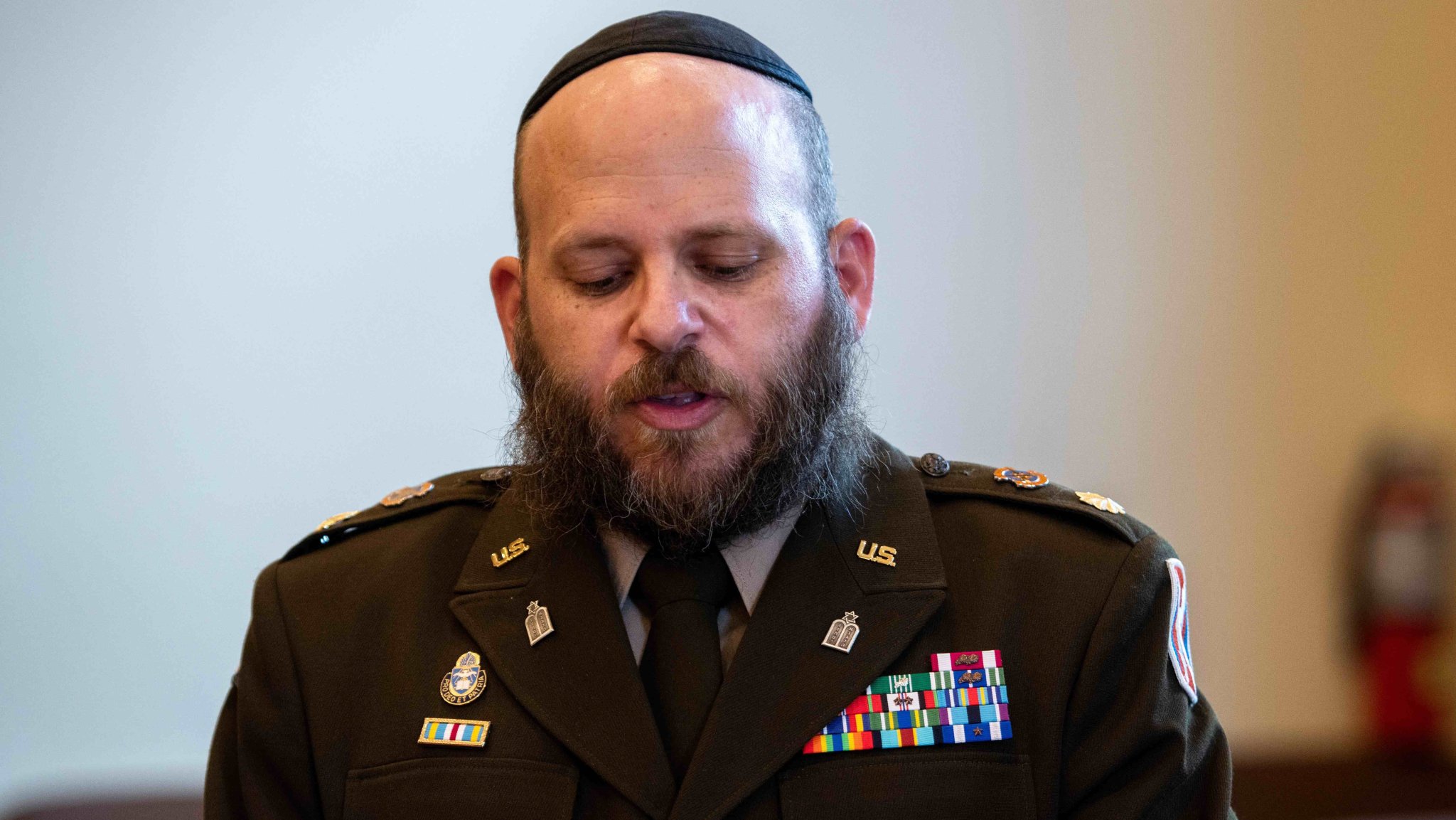
A new Army directive outlines how service officials will examine the religious basis and sincerity of soldiers’ requests for waivers to wear beards.
Published on Thursday, the directive implements Defense Secretary Pete Hegseth’s mandate from March that troops meet new requirements for submitting such requests. The new rules include having to provide sworn statements and other supporting evidence to prove that their religious beliefs include growing beards.
The directive stresses that soldiers may only request religious waivers for grooming and uniform standards for “sincerely held religious beliefs,” adding that “secular beliefs, no matter how sincerely or closely held, are not grounds for accommodation.”
“Commanders, chaplains, and reviewing authorities should look at the Soldier’s overall conduct — past and present — to determine whether the stated beliefs consistently guide the soldier’s actions,” an enclosure at the end of the directive says. “This includes reviewing the application, supporting documents, demeanor, and observable behavior. Requests that do not show a consistent link between the asserted beliefs and the Soldier’s actions, or that appear driven by convenience or avoidance of Army standards, may be disapproved.”
Top Stories This Week
As part of the application process, soldiers must be interviewed by chaplains, who will use two types of assessments to help evaluate the basis and sincerity of their requests for waivers, the directive says.
The first assessment, called the “Religious Basis Tool,” involves asking soldiers several questions including why they understand their requested waiver is encouraged or required by their religion; how military service and regulations interfere with the practice of their religion; and what they expect the practical, ethical, or spiritual consequences to be if their requests are denied, according to an enclosure at the end of the directive.
For the second assessment, known as the “Sincerity Tool,” Army officials look at whether soldiers requesting religious waivers engage in certain activities related to their stated faith, according to a second enclosure. Those include observing holidays; abiding by dietary practices; engaging in study, training, or contemplation; attending gatherings; and making financial contributions “to the furtherance of the stated faith/belief.”
The assessment also looks at whether the timing of a religious request suggests “ulterior motives,” such as trying to avoid being disciplined, the enclosure says.
Under the latest changes to Army policy, the Assistant Secretary of the Army (Manpower & Reserve Affairs) has the authority to approve or deny requests for religious waivers to wear beards, the directive says.
Commanders can also modify or suspend a soldier’s religious waiver due to a “specific threat to health and safety” such as the possible exposure to chemical, biological, radiological, and nuclear threats, according to the directive.
The new policy also requires that soldiers with existing religious waivers for beards and “religious headgear” such as hijabs and turbans, patkas, kufis, and feathers must resubmit their request for waivers to grooming and uniform standards.
Those soldiers will have 45 days after being counseled by their leadership to resubmit their requests, said Maj. Tavis Shaw, an Army spokesperson.
“Soldiers must resubmit requests through the Integrated Personnel and Pay System–Army (IPPS-A) for transparent tracking,” Shaw told Task & Purpose. “All requests are adjudicated on a case-by-case basis, ensuring every soldier is treated with dignity and respect.”
If soldiers’ requests for religious waivers are denied after being reevaluated, they have 24 hours from when they are notified to meet Army standards, the directive says. Soldiers who do not have a religious, medical, or other form of deception to grooming and uniform standards face the possibility of being administratively separated.
Loading comments…
Comments couldn’t be loaded. Please refresh the page.