
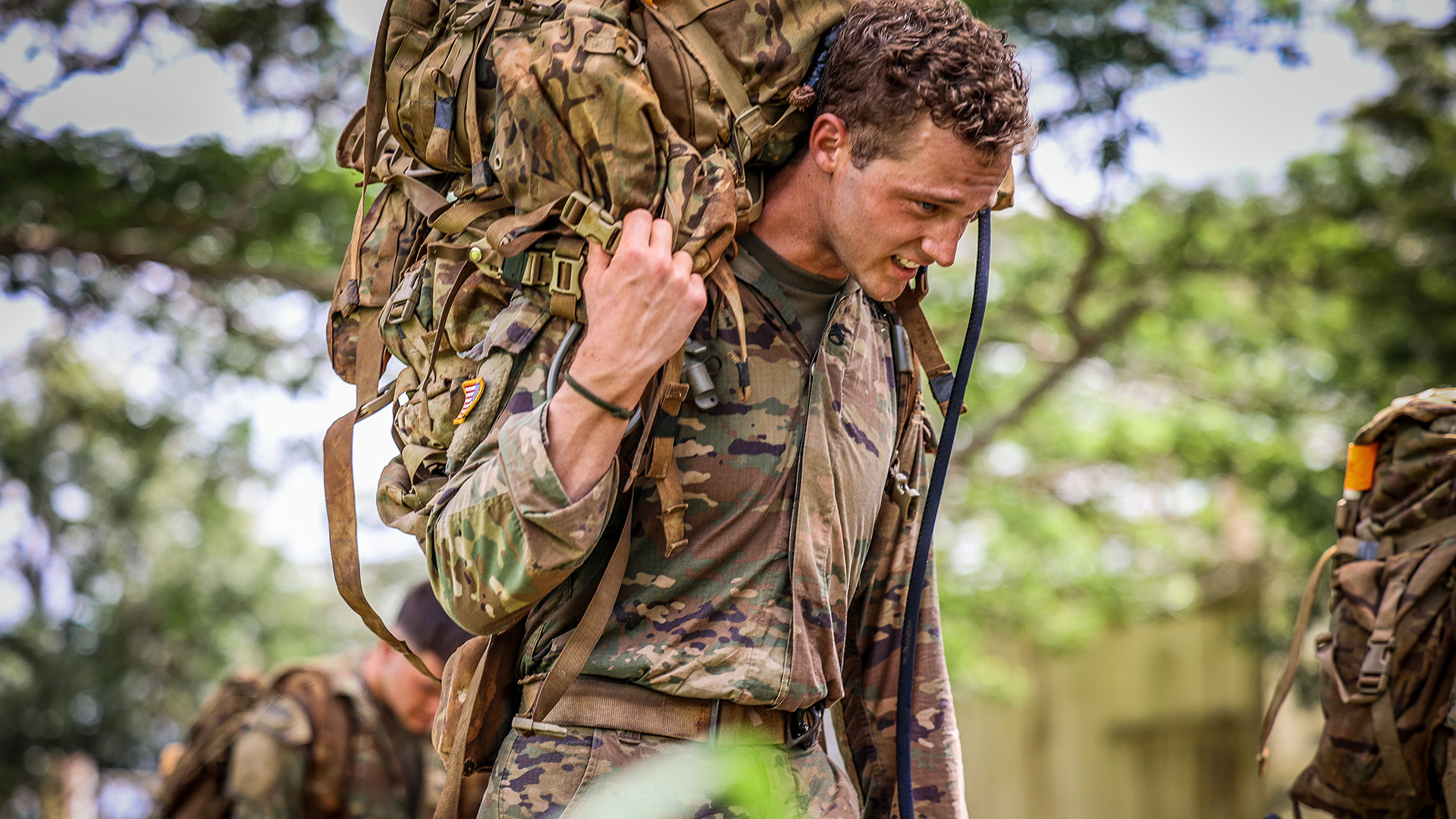
About 4,000 soldiers assigned to Hawaii are in barracks without central air conditioning due to mechanical failures at a water treatment plant, which left only one pump able to provide water to installations in north and central Oahu, according to U.S. Army Garrison Hawaii.
Underground water pumps at the plant began experiencing problems on July 10, a garrison official told Task & Purpose, drastically reducing the water available to Schofield Barracks, Wheeler Army Airfield, Helemano Military Reservation, and other bases. As a result, the garrison has turned off water-cooled chiller systems in certain barracks to conserve water.
“With only one deep well pump operating, we must keep those chillers offline to preserve essential water service,” said Nathan Wilkes, a spokesman for U.S. Army Garrison Hawaii. “The chiller systems alone make up nearly 40% of normal daily water demand.”
Family housing on the bases, he said, is unaffected.
Top Stories This Week
With central air conditioning in water-cooled barracks offline, soldiers are allowed to open their windows and use fans and other cooling equipment from their units, Wilkes said. He added that he did not have an exact figure for how many soldiers may be using portable air conditioning units. Weather on Oahu this week is forecast to be balmy, ranging from the high 70s to mid 80s during the day with fairly nominal humidity percentages.
“Leaders across the force are aware of the issues and are engaged with their units to provide what relief they can while the repairs continue,”Wilkes said.
Soldiers can also move into air conditioned morale, welfare, and recreation facilities such as conference rooms overnight to cool down.
It is unclear for how long the roughly 4,000 soldiers will not have air conditioning, said Wilkes. Fixing the broken pumps at the water treatment plant requires specialized parts to be shipped to Hawaii, he said, and each must be tested before pumps can resume operating.
The pumps are also deep underground, making them hard to access for repairs, and getting backup pumps for the water treatment plant has proven to be difficult, said a U.S. Army Garrison Hawaii official.
“Repairs to the deep well pumps are underway, but we cannot provide a precise timeline for repairs at this time,” Wilkes said.
The exact cause of the water pump failures is not currently known, but their age and extreme heat caused by ventilation system repairs are believed to be contributing factors, Wilkes said.
All barracks and residential areas continue to have access to drinking water, Wilkes said. Toilets, sinks, and sanitation systems continue to function. The 25th Infantry Division is also operating four High Incentive Portable Potable Water Systems to provide potable water for household use.
The current water conservation efforts apply to all soldiers, families, civilians, and troops from other military branches assigned to bases in the region, Wilkes said.
Soldiers and their families assigned to those installations are asked to tell the Directorate of Public Works, or DPW, if they see any sprinklers or hoses running while repairs are underway, said Wilkes, who added, “Military Police and DPW are actively working these reports.”
“These conservation measures help preserve the limited water supply while repairs continue, but only the service members in the water‑cooled barracks are experiencing the loss of central AC,” Wilkes said.
Loading comments…
Comments couldn’t be loaded. Please refresh the page.