Ever since Russia launched its full-scale invasion of Ukraine in 2022, the headlines have been filled with HIMARS rockets that can hit targets nearly 200 miles away; hypersonic missiles that can reach Mach 11, and loitering munitions and one-way attack drones that can literally put warheads on foreheads.
Meanwhile, the U.S. Marine Corps traded two-thirds of its howitzer batteries for rockets and anti-ship missiles, and the U.S. Army’s 25th Infantry Division started down a similar road this summer.
So are we seeing the end of old-fashioned tube artillery, the kind that fires a hunk of metal into the air and lets gravity sort out the rest? Probably not, but it needs to change to keep up with modern warfare.
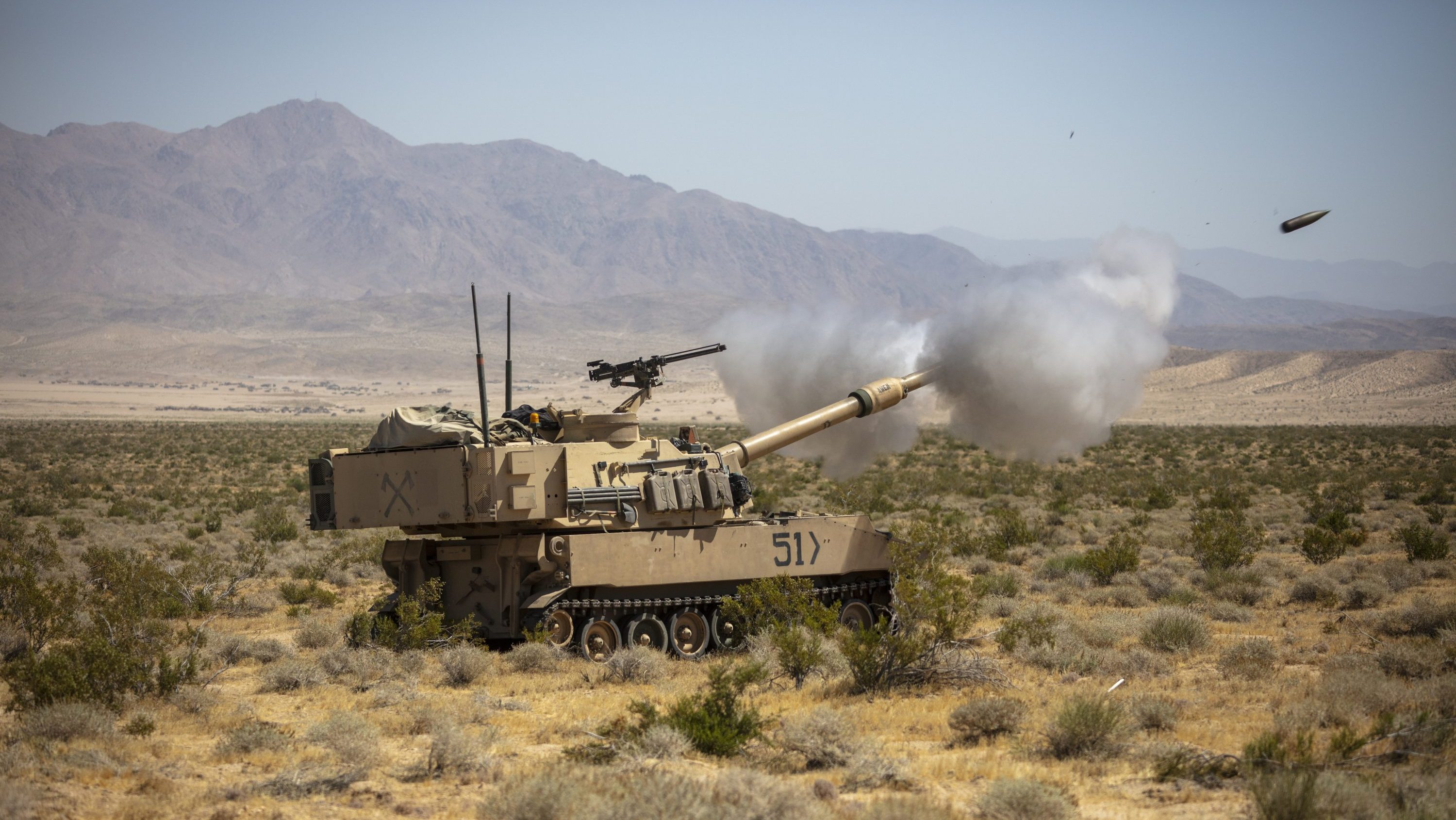
Today, the U.S. military fields two kinds of howitzers: the self-propelled kind, which looks like a tank but with an artillery gun on top, and the towed kind, which are pulled behind a truck or lifted by a helicopter to move around the battlefield.
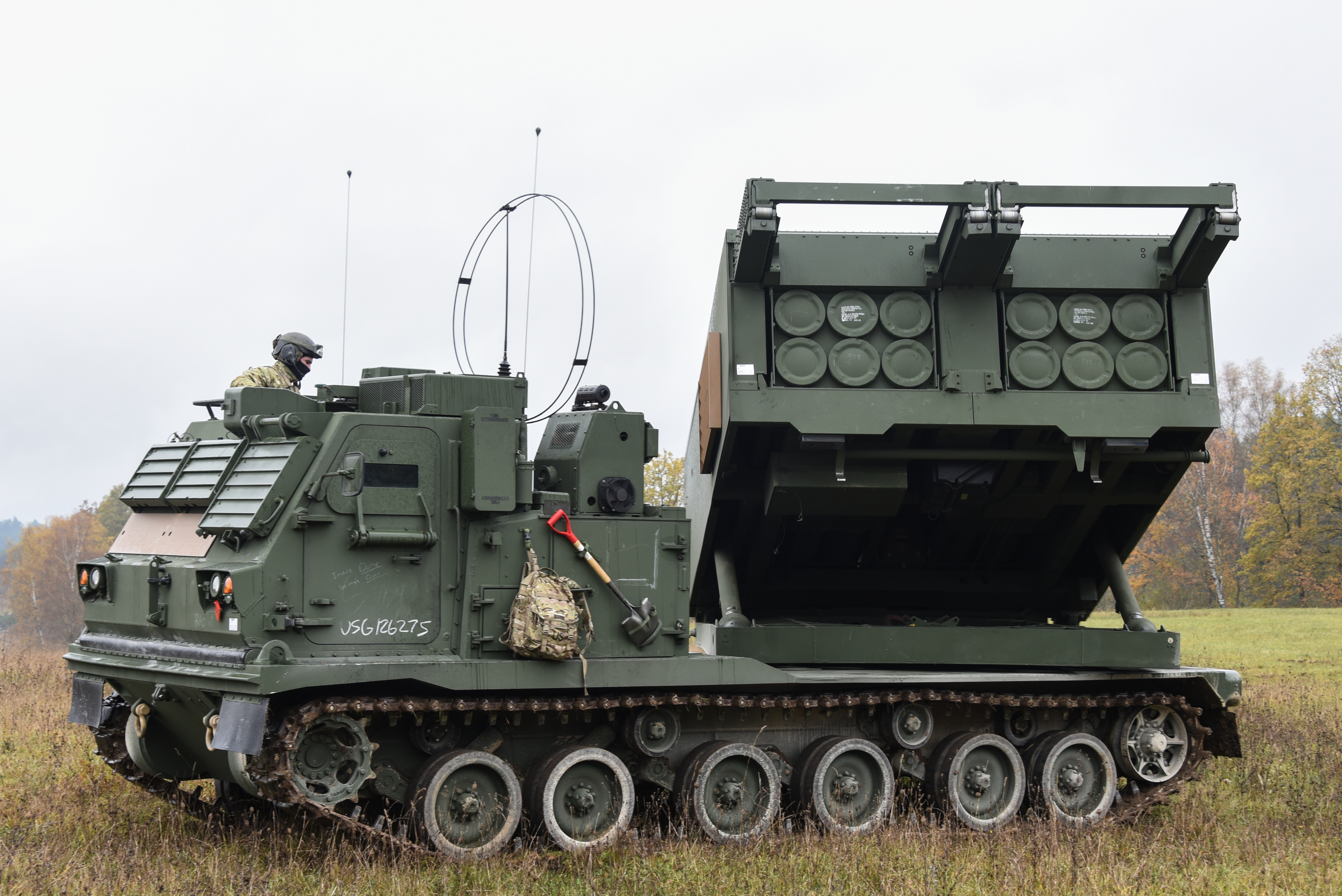
Then there’s rocket artillery, which in the U.S. Army and Marine Corps takes the form of the M142 HIMARS, while the Army also has the larger M270. Ukrainian troops use rocket systems such as HIMARS to hit Russian command-and-control nodes, logistics centers, and high-ranking officers. And since the launchers are mobile, they can scoot away before the enemy can target them.
Scooting is a critical ability because the battlefield in Ukraine is under constant watch by drones, sensors, satellites, and, well, people with cell phones, which makes it hard to hide.
But while long-range precision rockets serve as a kind of scalpel, tube artillery does the knock-down, drag-out work of suppressing the enemy. Ukraine peaked at firing about 9,000 artillery shells a day early in the war, but that petered off to fewer than 1,800 a day in early 2024, according to the Royal United Services Institute. Russia, meanwhile, has fired between 7,000 and 16,000 shells a day, though it peaked at around 38,000 a day in June 2022.
Artillery shells are usually cheaper than rockets. They have a higher sustained rate of fire, and they work regardless of weather or enemy jamming, which can disrupt the guidance systems of precision missiles. Ukrainian soldiers and officials told Reuters last year that the 155mm shell in particular provides a crucial combination of explosive power and extended range.
To keep Ukraine shooting and stocked, the U.S. and Western Europe plan to open new factories for artillery shells and M777 howitzer barrels, which wear out after heavy use.
All of this suggests that tube artillery is far from dead. In fact, it’s in higher demand now than it’s been in decades. But that doesn’t mean it’s easy. Drones, sensors and satellites mean some Russian artillery units can start counter-battery fire in just three to five minutes, but it takes seven to eight minutes for a towed gun such as the M777 to pack up and get moving, one retired artillery officer named Bill Koziar wrote for Defense News.
By comparison, a self-propelled howitzer can set up in less than three minutes and be on the move in less than two, and it has a lot more armor for the crews. Gen. James Rainey, the head of U.S. Army Futures Command at the time, said in 2024 that “I personally believe that we have witnessed the end of the effectiveness of towed artillery.”
That’s not exactly breaking news. Even the Army’s fire support field manual says “field artillery units should be as mobile as the units they support.” But the Army has been using the same self-propelled howitzer, the M109 Paladin, since the early 1960s, with no clear successor after 30 years of failed replacement efforts.
Top Stories This Week
In 2026, the Army will take a close look at self-propelled howitzers used by other militaries around the world. Most of them are heavily automated so that just a two-person crew can set up, fire six rounds, and get moving again in under three minutes.
But self-propelled howitzers are heavy, which makes them tough to airdrop into battle. The Marines also need an amphibious version. In an essay for the U.S. Naval Institute, Marine Capt. Karl Flynn proposed using howitzer and heavy mortar variants of the amphibious combat vehicle for the Marine Corps, while writers elsewhere suggested 105mm howitzers mounted on a Humvee for airborne troops.
In other words, HIMARS is great, but the war in Ukraine shows that tube artillery is still a huge factor on the battlefield; it just needs to move around a lot faster nowadays. We break this down in much more detail on our YouTube channel, so watch that here.