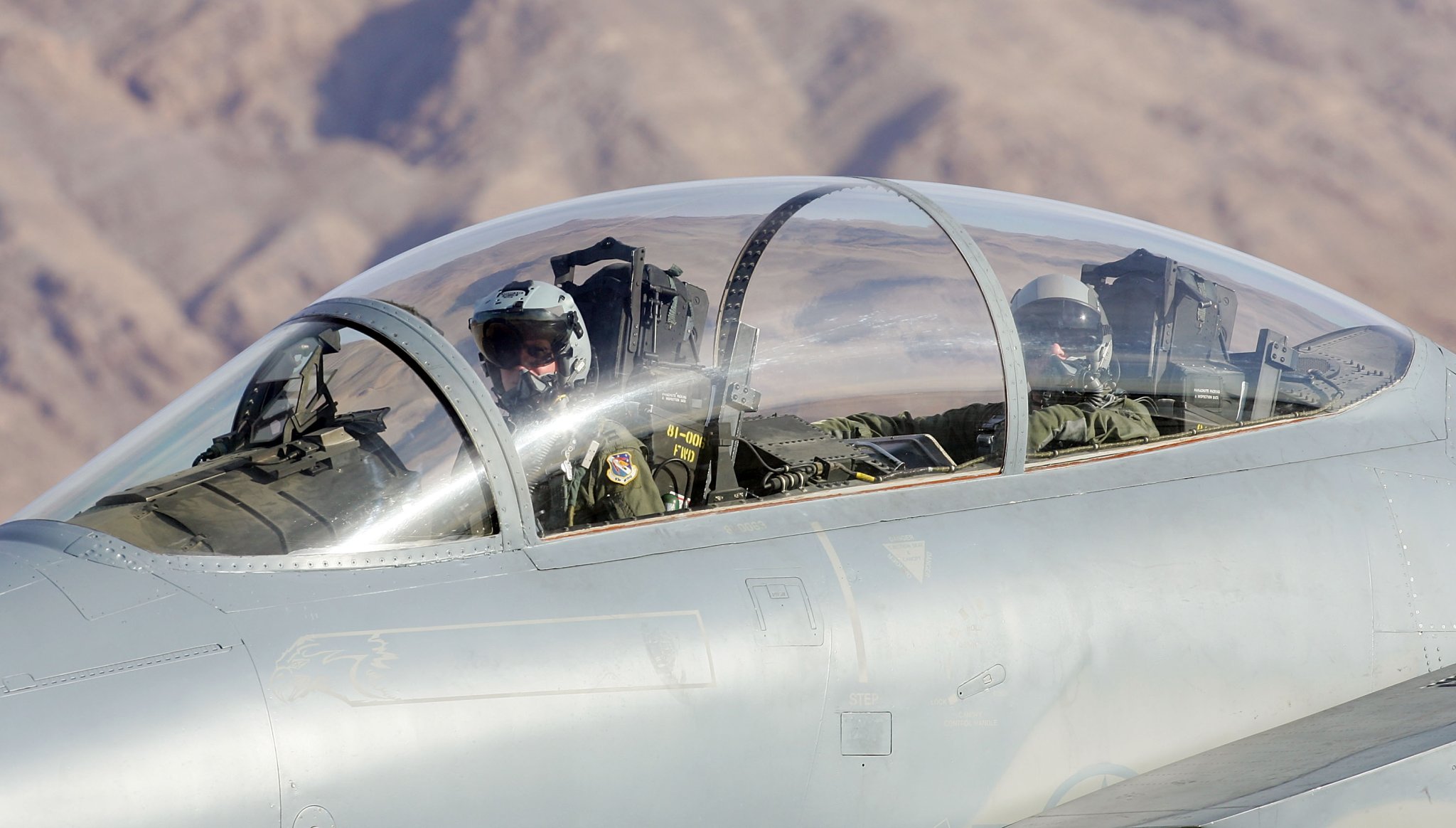
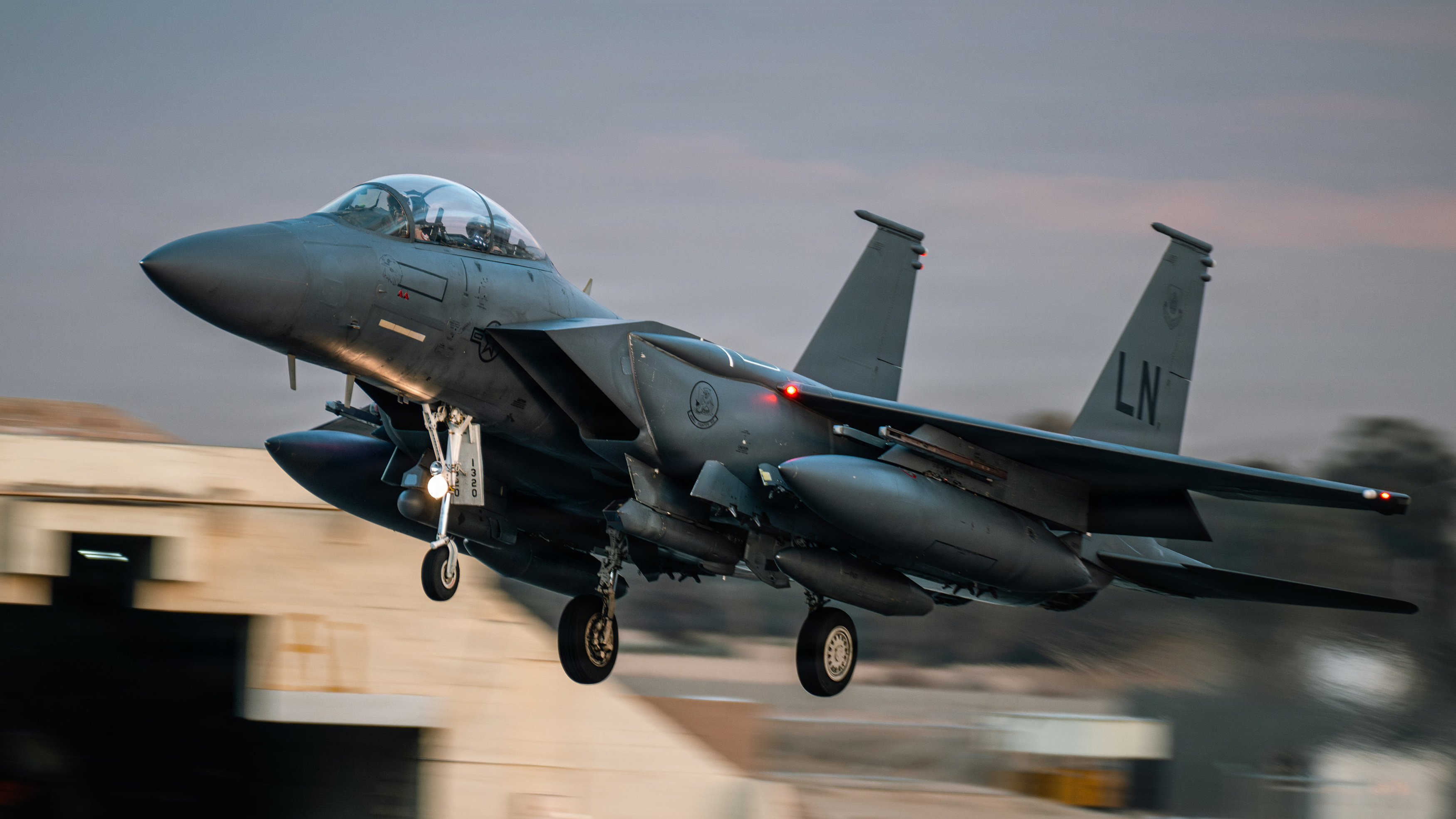
The six American flyers who ejected from F-15E Strike Eagles over Kuwait on Sunday experienced a moment that pilots pray never happens but train for as if they know it will.
The pilots and weapons officers all ejected from their two-seat fighters, U.S. Central Command said Sunday, after being shot down over Kuwait by U.S. Patriot missiles fired by Kuwaiti air defense forces. All six flyers safely parachuted to the ground, where they were reported to be unhurt.
The fact that all six flyers survived was a bright spot in the otherwise disastrous series of mishaps. Their safe return to solid ground under parachutes also highlights a paradox of fighter pilot life: relentless training on ejection protocols they hope to never use. All U.S. fighter jets and bombers fly with ejection seats designed to launch pilots and crew clear of a crashing plane using rockets that produce more than 10Gs of force in less than two seconds.
“An ejection is about 70 unrelated miracles that happen in about seven seconds,” said Gen. David Goldfein, who ejected from an F-16 in 1999 after it was hit by a surface-to-air missile over Serbia. “Any one of which could go wrong.”
Goldfein is one of three retired senior Air Force pilots who spoke to Task & Purpose about the experience of surviving an ejection from a fighter jet, along with retired Gen. C.Q. Brown and retired Maj. Gen. Ronald Bath. Both Brown and Goldfein went on to serve as Chief of Staff of the Air Force, with Brown rising to Chairman of the Joint Chiefs of Staff.
The primary memory each pilot had of ejecting, they said, was how effective their training turned out to be.
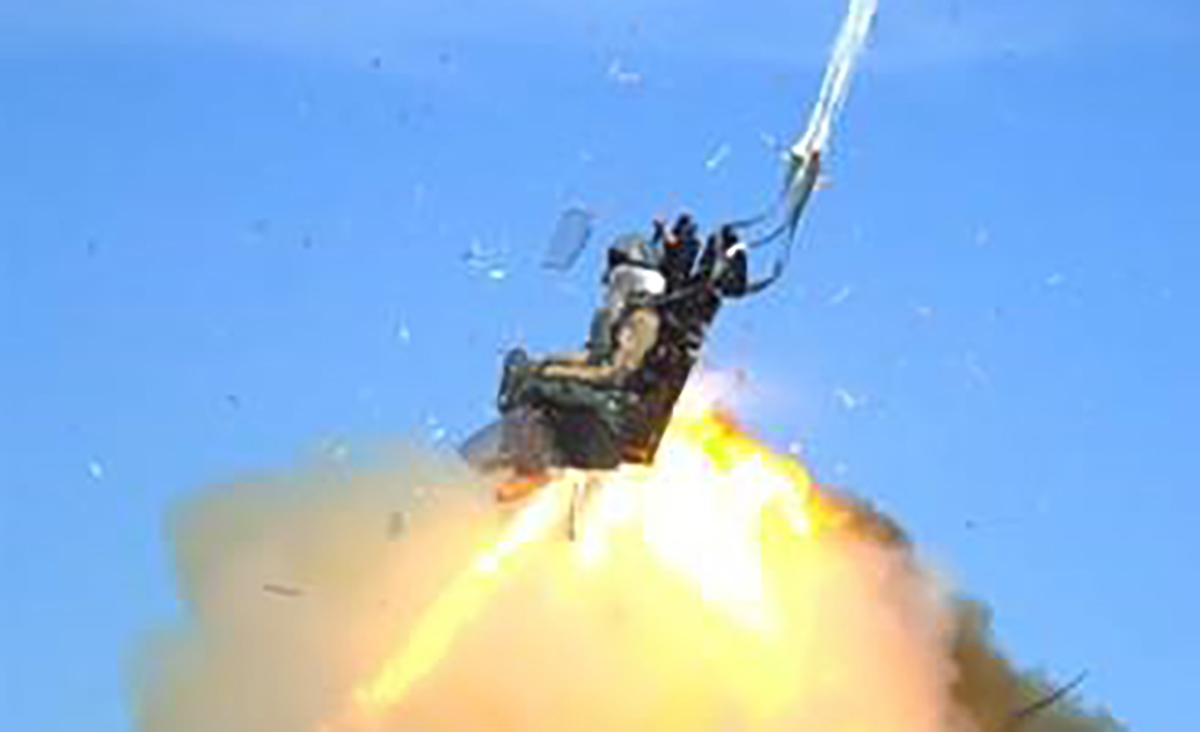
“You’re trained from the day you get into pilot training when you’re flying in an airplane with an ejection seat. You go through this training over and over and over and over, and it’s just second nature,” said Bath, who was ejected from an F-4 in 1988.
All three described a sense of time slowing down — two used the term “temporal distortion” — recalling the near-instantaneous process as an extended event that felt much longer, even like minutes.
Each also recalled tiny, unique details of sight and sound, and all three emphasized that they owed their lives to the often-junior enlisted troops of their unit’s Life Support shop.
“It’s not something you wanna do, but when you do it, you’re glad all the stuff works,” said Brown. “My hats off to the life support personnel who pack all those chutes, and the maintainers that actually maintain the seat. They’re real specialist. That’s one of the things we want to do when we first get back on the ground. We go back and thank those junior service members, who are often in their early 20s, that are doing a lot of that work.”
Moment of decision
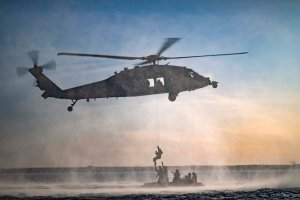
Goldfein ejected in combat and holds particular gratitude for the Air Force helicopter crew that retrieved him behind enemy lines. After a missile knocked out his engine, he was able to prepare for several minutes as the plane glided, a luxury he noted that the crews in Kuwait might not have had.
“You know the airplane is going to hit the ground, the question then becomes, are you going to be in it?” he said. “I stopped focusing on trying to fix the airplane and all my emergency procedures, and then you shift into the process of getting ready for the ejection.”
If time allows, he said, pilots run through an ejection checklist that includes stowing classified materials in their flight suit and disabling systems.
Top Stories This Week
Brown had to eject when his F-16 was hit by lightning during a routine training flight over the Florida Everglades in 1991. The bolt was so powerful that it shattered the centerline fuel tank on Brown’s jet, then reached across and left burn marks on his wingman’s plane. The pod exploded upwards into Brown’s plane’s engine, which was quickly engulfed in flames.
“Knowing there were residential areas between me and the base, it was a pretty easy decision,” he said. “It’s often talked about that during an ejection, there is ‘temporal distortion,’ where everything slows down. And that is a fact. I mean, I could see the canopy leave. I could see the condensation coming to the cockpit. I could feel myself slowly going up the rail and from the time you pull the handle to the time you’re under a parachute, it’s about two seconds. That whole initial part just slows down dramatically.”
Brown landed in a swampy Everglades field, toppling over into 6 inches of soft mud, earning him the career-long callsign “Swamp Thing.”
Time slows down
Bath remembers an array of tiny sounds from a particularly dangerous ejection in 1988. After a high-speed birdstrike, Bath landed a badly damaged F-4 in Reno, Nevada, but a malfunction triggered a dreaded “zero-zero” ejection — zero altitude, zero airspeed.
“The only thing I knew is that I heard a loud smack, okay? And there was fire everywhere. And I said to my back seater, ‘oh, shit, we’re on fire.’ And the next thing I knew, there was no answer,” Bath said.
The fire that Bath thought was engulfing his cockpit was actually the rockets of his weapons officer’s seat, firing just 0.4 seconds before his own. As his own seat lifted off, he heard a whirring noise from a timing device that whizzes loudly for an instant.
“I’m hearing this unwinding clock that takes literally a half-a-second. But I’m hearing it take 20 seconds,” he said.
He also vividly remembers hearing individual threads rip as his parachute shot free.
“The chutes are tied with little threads. And when they come out, they go, ‘zip!’ it’s out. But I hear each thread going, ‘Pop. Pop. Pop. Pop.’ My sequence in my head took probably 45 seconds to a minute, right? And the next thing I know is I’m hitting the ground. So the temporal distortion was astronomical.”
Return to flight
Both Brown and Goldfein flew again within days, a common Air Force practice. Bath was badly injured when his parachute only partially deployed, but flew again six months later (his backseater’s parachute, he said, fully opened and the man “went bowling that night.”)
Goldfein said he felt pressure to fly right away as the squadron’s commander.
“I needed to get back as quickly as possible and put this behind us,” he said. “I had met a number of Vietnam veterans who had got shot down more than once. I mean, I met a guy that got shot down three times. As soon as he got rescued, what did he do? He just quietly got back up in the air the next day.”
What he did not expect, he said, was what happened on his next sortie.
“As I taxied out of the hangar, every taxiway was lined with people, active, Guard, Reserve, Italians, Americans, contractors, and every one of them was standing out there. The word had gone out, I guess, quietly, that I was getting back in the air. And they were all there wishing me well on that flight the next night. That’s a scene I’ll never forget.”